Repeasantisation in Araponga, Brazil – a quest for space

By Leonardo Ayabe van den Berg, MSc graduate International Development Studies

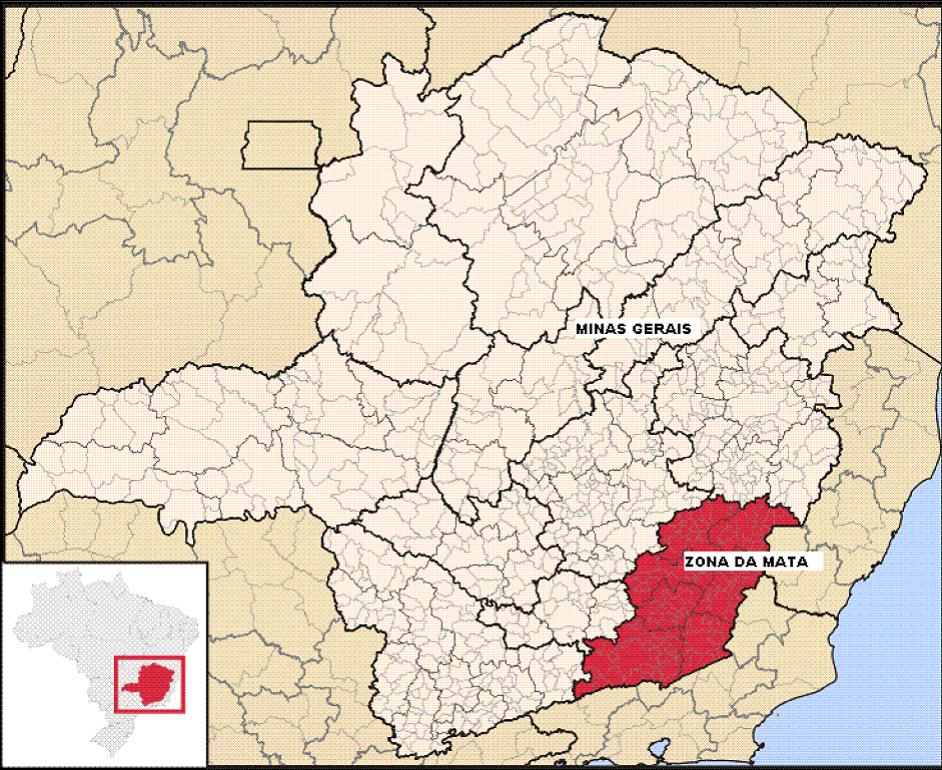
Recently I completed my MSc-thesis. The thesis research is set in the municipality of Araponga in Brazil, where (re)peasantisation occurred and continues to occur. Here I describe some of the findings of my research.  When interested you can downlaod a pdf of my thesis ‘Invisible peasant movements: A case study of (re)peasantisation in Brazil‘.

Araponga

Araponga

When I started to read about the peasantry there were two major things that occurred to me as striking. First, in policy peasants are often considered as a group of laggards: who are unable to take care of themselves and therefore need social assistance; who rely on primitive forms of technology and therefore must be modernized; or who are impeded by a stagnant, traditional mentality and must therefore be converted into small entrepreneurs. The peasant mode of farming is seldomly considered in its own right. Second, in academic theory peasants are predicted to disappear, weaken or live a life of poverty as a result of their inferior mode of production and their helplessness. Departing from the assumption that actors are driven by a specific economic-rational logic, neo-liberal approaches roughly theorise that peasants commoditize, compete with other farms as a result of which there will be regional growth. Tradition or culture can block economic rationality and the transition from peasant to entrepreneur. The peasant will then be doomed to poverty. In contrast to the neo-liberal approach, neo-Marxist approaches, most of which also assume that the peasant is driven by an economic logic and commoditize, theorise that commoditization will either lead to the destruction of the peasant enterprise or to a fate of poverty. This is the result of price fluctuations, squeeze in agriculture (caused by the trend of decreasing produce prices and increasing input prices for farmers), or newly emerging food networks (through which income from weaker, peasant, parts of the chain are squeezed in favour of the more powerful, retailers, part of the chain). These predictions and preconceptions contradict with what happened in Araponga, a rural municipality in the state of Minas Gerais in Brazil where there was a rise in the number of peasants and an increase in welfare. The objective of this thesis was to find out how this was possible: how had (re)peasantisation occurred in Araponga. Continue reading

AspergeGilde Peel en Maas

Het AspergeGilde Peel en Maas is een samenwerking van 25 aspergetelers uit de gemeente Peel en Maas. De telersgroep werkt samen met een aantal lokale restaurants, kookstudio’s en recreatieondernemers, ook wel de vrienden van het AspergeGilde genoemd. Het AspergeGilde heeft de volgende doelstellingen:

  • promotie van de Peel en Maasregio als aspergeregio
  • bevordering van de aspergeconsumptie door nadere kennismaking met deze groente en de productiewijze ervan

Met doet dit onder andere door het organiseren van aspergearrangementen (bezoek aan een aspergeteler in combinatie met een aspergemaaltijd in een lokaal restaurant), fietstochten door het gebied, kookworkshops, etc… Elk jaar wordt het aspergeseizoen geopend door middel van een aspergemaaltijd voor een grote groep genodigden. Dit jaar vond de seizoensopening plaats op 28 maart.

Voor meer informatie over het AspergeGilde Peel en Maas verwijs ik naar het onderstaande promotiefilmpje.

Vitaal Oldambt – film over bijdrage ondernemende vrouwen aan vitaal platteland

Wiebke Wellbrock berichtte al over netwerken van ondernemende vrouwen in Groningen, die door de Vereniging Groninger Dorpen worden ondersteund met een bijdrage vanuit een LEADER-gelden (Mit mekander), en in het bijzonder over het netwerk Wichterwest in het Westerkwartier en bijeenkomst van 8 december 2009.  Harry van Schokkenbroek heeft een mooie film gemaakt over ondernemende vrouwen in Oldambt en hun bijdrage aan een vitaal platteland. De film is te bekijken op de website www.h-schokkenbroek.nl/Film.html (in de map films 2009/2009).

Kennis arrangeren voor gebiedsontwikkeling II – verslag vanuit de gebieden

In een eerdere post is al bericht over een verkenning van regionale kennisarrangementen. Van de bevindingen is verslag gedaan in het LEI-rapport “De werkvloer van een Kennisnetwerk Vitaal Platteland; kennis maken met regionale kennisarrangementen’. Het eindigt met aanbevelingen hoe het samen leren doen in en tussen gebieden kan worden bevorderd en ondersteund vanuit beleid en kennisinstellingen met kennisarrangementen. 

In opdracht van LNV is inmiddels voor vijftien gebieden een overzicht gemaakt van ambities, afspraken en behoefte aan ondersteuning bij het inzetten van onderwijs, onderzoek en advies voor gebiedsontwikkeling. De uitkomsten zijn op 6 oktober 2009 met de vijftien gebieden besproken. Van de inventarisatie en de uitwisseling tussen de betrokken gebieden wordt verslag gedaan in ‘Regionale kennisarrangementen; verslag quick scan en kennisdag.

De bedoeling is dat deze vijftien gebieden het voortouw nemen bij het opzetten van kennisarrangementen die het leren doen in en tussen gebieden moeten bevorderen. Ze kunnen daarbij rekenen op ondersteuning van o.a. Netwerk Platteland, Wageningen UR en de Groene Kennis Coöperatie (m.n. Programma Regionale Transitie).

Wichterwest: A network meeting with gains for everybody

Yesterday, I – together with 66 rural business women- attended a meeting of the rural women’s business network ‘Wichterwest’ at Restaurant Samiramis in Grootegast.

 The establishment of women business networks was initiated by Groningen Province in an attempt to stimulate networking amongst rural business women in the province. Today, each region within Groningen province has a rural women’s network. In the Western region of Groningen province (a.k.a. Westerkwartier) the network is called ‘Wichterwest’ and is organised by the project leader ‘Vereiniging Groningen Dorpen.

 ‘Wichterwest’ acts as a platform for business women to network, to exchange ideas and to receive information about business. The organisers also arrange offers for business courses and trainings. For example, the organisers are arranging a new training programme which will focus on three different business aspects: a) business start-ups, b) business management and c) market/ marketing strategies. To respond to the great interest of business women in the network and to accommodate its growing number of participants, the organisers are now considering options to set up a foundation with the aim to increase income and offers.

 Yesterday’s meeting started with a speed dating session in which everybody got to know the fellow participants and their businesses. I was impressed by the variety of activities carried out by the women of the Westerkwartier. For example, I met a photographer, a Bed & Breakfast owner, an administrator, a clothes designer, several advisors, an interior designer and the owner of an online farm shop for regional products. The evening proceeded with an exercise to practice efficient networking skills and a delicious three course menu made of organic products produced in the Westerkwartier. Filled with food, excitement rose as the winners of a lottery game were announced. Each business woman was asked to bring a gift made by her company. By winning vouchers for advice, massage and acupuncture sessions, bags of sheep wool and cushions for man and beast, everybody was able to get an impression of the variety of products offered by business women in the Westerkwartier. The evening was completed with three different workshops concerning a) optimal business plans, b) press releases and c) the importance of the entrepreneur for making business.

Even though I am not a business women myself, I returned home filled with positive impressions regarding the innovative spirit and versatility of business women in the Westerkwartier- and a business arrangement made during the networking game- let me recall, I said I was not a business women?