75th Anniversary: 53) Research at the Rural Sociology Group: Agriculture, Decolonization and National-Popular Development

Max Ajl

What has been the role of poor rural people in the periphery in changing the world? How can the world change so that poor rural people are no longer poor? How does putting the social inclusion or exclusion of poor rural people front-and-center change how we understand politics, planning, methodology, and epistemology? And what happens to these questions when we place them in the broader framework of ecology and the ecological crisis? These questions have been central to development theories over the last decades or even the last century, and have inflected discussion of the agrarian question, in its political, social, ecological, and national aspects. Yet there has remained a nagging gap between (1) work on decolonization, including contemporary epistemological inquiries; (2) work dealing with macro-economic planning; (3) work on agro-ecology, food sovereignty, pastoralism, and sustainable livelihoods.

Over the last decade, I have tried to address these questions in a variety of ways. Spatially, I have worked outwards from Tunisia to North Africa, the Arab region as a whole, and world ecological crisis. In terms of disciplines, I have worked outwards from rural sociology into historical ecology, the intellectual and social history of planning, and the intellectual history of heterodox post-colonial theories of development.

My dissertation research (Ajl 2019a) started with a puzzle: why and how did Tunisia come to be a poor country, and specifically how did state policies reproduce rural poverty? It tried to understand this through the phenomenon of state price engineering. Yet prices reflected social and political power balances, and the origins of those balances were unclear to me: why and how had poor rural Tunisians been excluded from development? This led to work on the political-historical sociology of anti-colonial revolt, decolonization, and post-colonial political management, especially focused on how the political mobilization of the peasantry/pastoralist population of Tunisia was sheared and blocked from becoming inclusion in Tunisian developmentalism.

In parallel, I worked on other cases in the Arab region, including Syria (Ajl 2019b; Ajl et al. 2020), Yemen (Ajl 2018a), and the Arab region more broadly (Ajl 2021a) tracing how different constellations of social forces, domestically and internationally, led to different agrarian trajectories: partially rural-incorporating as in Syria and Egypt, for example. Or, how the Green Revolution manifested in the Arab region (Ajl 2017; Ajl and Sharma Forthcoming). These studies showed the agrarian question was central to world geopolitics, with more rural-incorporating governments understood as antagonistic to the established order because of their partial endogenization of productive forces. In this way, they showed that national agrarian question were local expressions of a global process (McMichael 1997), wherein political shifts in some Arab nation-states changed the parameters of agrarian/developmental politics in others. In this way I was able to think about how to break from methodological nationalism not only at the level of capitalist accumulation (Wolf 1969) but also resistance to it.

Examining the politics of national liberation and post-colonial planning led me into critiques of those processes from heterodox planners, agronomists, and economists in the Arab region, extending to West Africa and especially Senegal, the home of Samir Amin. In a series of essays (Ajl 2021b, 2019c, 2018b, 2022) I have examined notions of self-reliant or auto-centered development. This idea is based on the diagnosis that countries’ insertion into global capitalism pushes them to pursue policies inimical to the well-being of their poorest sectors. It would follow that more auto-centered policies, focusing on fulfilling the basic needs of the poorest, would lead to superior development outcomes. I examined this idea theoretically through the work of Amin and at the level of intellectual history, as it emerged in planning proposals from Chinese-influenced Egyptian and Tunisian planners.

A third ‘track’ has been my concern with climate change, in particular how to connect the problems of Northern planning and social and ecological crisis with southern aspirations for national popular and ecological development planning. This has resulted in a book (Ajl, 2021c) and a series of articles and chapters (Ajl 2021d, Forthcoming; Ajl and Wallace 2021; Tilley and Ajl 2022) focusing on various aspects of this question: critiques of green modernization, green demographic management, intervention in pastoralist livelihoods, and above all a program for national development planning North and South: bringing what I have learned into Tunisia about popular planning, developmental needs, and appropriate technologies into the northern planning conversation, to think about how to make a world big enough for everyone, North and South.

  • Ajl, M., 2022. Food Sovereignty, the National Question, and Post-colonial Development in Africa, in: Ben Gadha, M., Kaboub, F., Koddenbrock, K., Mahmoud, I., Samba Sylla, N. (Eds.), Economic and Monetary Sovereignty in 21st Century Africa. Pluto, London, pp. 238–258.
  • Ajl, M., 2021a. Does the Arab region have an agrarian question? The Journal of Peasant Studies 48, 955–983. https://doi.org/10.1080/03066150.2020.1753706
  • Ajl, M., 2021b. Delinking’s Ecological Turn: The hidden legacy of Samir Amin. Review of African Political Economy.
  • Ajl, M., 2021c. A People’s Green New Deal. Pluto Press, London.
  • Ajl, M., 2021d. A People’s Green New Deal: Obstacles and prospects. Agrarian South: Journal of Political Economy 10, 371–390. https://doi.org/10.1177/22779760211030864
  • Ajl, M., 2019a. Farmers, Fellaga, and Frenchmen (PhD). Cornell University, Ithaca, N.Y.
  • Ajl, M., 2019b. The Political Economy of Thermidor in Syria: National and international dimensions, in: Syria: From National Independence to Proxy War. Springer, pp. 209–245.
  • Ajl, M., 2019c. Auto-Centered Development and Indigenous Technics: Slaheddine el-Amami and Tunisian delinking. Journal of Peasant Studies 46, 1240–1263.
  • Ajl, M., 2018a. Yemen’s Agricultural World: Crisis and prospects, in: Crisis and Conflict in Agriculture. CABI.
  • Ajl, M., 2018b. Delinking, Food Sovereignty, and Populist Agronomy: Notes on an intellectual history of the peasant path in the global South. Review of African Political Economy 45, 64–84.
  • Ajl, M., 2017. Field Notes on Tunisia’s Green Revolution. Viewpoint Magazine.
  • Ajl, M., Forthcoming. Everything Changes While Everything Stays the Same. Development and Change.
  • Ajl, M., Haddad, B., Abul-Magd, Z., 2020. State, Market, and Class: Egypt, Syria, and Tunisia, in: A Critical Political Economy of the Middle East and North Africa, !!046316523!School for Advanced Research Advanced Seminar Series. Stanford University Press, pp. 46–67.
  • Ajl, M., Sharma, D., Forthcoming. Transversal Countermovements: The afterlives of the Green Revolution in Tunisia and India. Canadian Journal of Development Studies/Revue canadienne d’études du développement.
  • Ajl, M., Wallace, R., 2021. Red Vegans against Green Peasants [WWW Document]. New Socialist. URL http://newsocialist.org.uk/red-vegans-against-green-peasants/ (accessed 11.1.21).
  • McMichael, P., 1997. Rethinking Globalization: the agrarian question revisited. Review of International PoIiticaI Economy 4, 630–662.
  • Tilley, L., Ajl, M., 2022. Eco-socialism Will be Anti-eugenic or it Will Be Nothing: Towards equal exchange and the end of population. Politics 02633957221075323. https://doi.org/10.1177/02633957221075323
  • Wolf, E.R., 1969. Peasant Wars of the Twentieth Century. University of Oklahoma Press.

Grond van Ons

Op maandag 31 januari om 20.00 uur organiseert Pakhuis De Zwijger in samenwerking met Trouw De Duurzame 100 onder de titel ‘Grond van Ons’ een gesprek over de waarde van een gezonde bodem voor burgers.

Zonder gezonde grond, geen gezond voedsel. Op steeds meer plekken staan burgers op om samen grond te kopen en duurzame productie van voedsel door boeren mogelijk te maken. Verschillende initiatieven hebben letterlijk het heft in eigen handen genomen, want de betrokken burgers werken soms mee en brengen de producten rechtstreeks van het erf naar de keuken. In overleg met lokale bewoners en boeren ontstaat een nieuwe sociale gemeenschap. Deze ontwikkeling legt de basis voor de democratisering van de landbouw. De stad en het platteland, de burger en de boer raken weer met elkaar verbonden. De volgende vragen staan centraal in deze bijeenkomst. Zijn deze initiatieven dé oplossing voor verduurzaming onze bodem? Hoe gaan deze initiatieven te werk? Waar komt de toegevoegde waarde van deze initiatieven terecht?

Voor meer informatie over dit evenement of om je aan te melden om hierbij aanwezig te zijn (fysiek of online), ga naar https://wemakethecity.green/programma/grond-van-ons

75th Anniversary: 49) Hofstee has left his mark on Wageningen studies on extension communication

Cees Leeuwis*

Prof. Anne van den Ban is generally regarded as the founding father of the Wageningen communication sciences. He was appointed as Professor of extension communication (‘Voorlichtingskunde’) in 1964,  which became the cradle for a rich and influential array of academic endavours at the intersection between communication, innovation and change in the sphere of health, environment and agriculture. These activities have continued until today and now take place across several chairgroups and sections at Wageningen University.

Hofstee and Van der Ban

While Prof. Van den Ban certainly deserves a lot of credit for developing the new discipline and building an internationally recognized group, it is important to acknowledge the contribution of Prof. E.W. Hofstee in getting Van den Ban started. Hofstee was promotor of Van den Ban’s 1963 PhD dissertation on the communication of new farm practices in the Netherlands, and he no doubt inspired Van den Ban in choosing his topic. In fact, already in 1953 Hofstee wrote about the importance of studying ‘sociological aspects of agricultural extension’ in the first (!)  ‘Bulletin’ that was published by his group (Hofstee, 1953).  He was also in touch with the public extension services that had been established by the Ministry of Agriculture a few decades earlier, and gave lectures to Ministry staff on the significance of group-based agricultural extension approaches (e.g. Hofstee, 1960). Reading these early works by Hofstee made me -as one of the successors of Van den Ban- realize how much we still owe to Hofstee today.

In essence, Hofstee criticizes the then prevailing extension services and practices for assuming that farmers take decisions according to an individualistic economic rationale. He points to the importance of social, collective and cultural dynamics in shaping what farmers do or do not, and also to the importance of social differentiation and regional ‘farming styles’ in explaining farmers’ economic activity. In order to be effective, extension organisations and professionals should -according to Hofstee- understand the importance of such ‘sociological aspects’ and anticipate these in their work (Hofstee, 1953). This implies that extension workers should look at extension and knowledge transfer as an inherently social process rather than as a series of communicative ‘tricks’  and also be reflective about their own social positions (Hofstee, 1960) The concern with the ‘effectivess of extension’ (or better: the lack of it) demonstrates Hofstee’s commitment to the post second world war modernisation project and his own normativity in this regard. Despite his sensitivity for social and normative issues, he continued to talk in terms of ‘good, progressive’ and ‘bad, backward’ farmers (Hofstee, 1953), thereby (re)producing the paternalistic connotations of the Dutch word for extension communication: ‘Voorlichting’. This term literally means something like ‘holding a light in front of someone to lead the way’ assuming apparently that people are ‘in the dark’ and need to be ‘enlightened’ by those with scientific training.

While today’s studies on communication, innovation and change have arguably left this ‘enlightenment’  and ‘deficit’ thinking behind, we also see traces of Hofstee coming back in our current work. We still criticize simplistic individualist conceptualizations of change, as is reflected in today’ attention for ‘social-technical configurations’, ‘system transformation’ and ‘responsible innovation and scaling’. Similarly, Wageningen trained communication scientists are known for their interactional and socio-political conceptualization of both professional and everyday communication and meaning making, and for their interest in the social challenges to facilitating dialogue among different interpretative communities. These sociological perspectives on communication and change have now spread to other Universities in the Netherlands and elsewhere. The continued prevalence of sociological connotations is not surprising if one considers that most of Van den Ban’s successors indeed had a sociological training as well. Clearly, that is not accidental but part and parcel of Hofstee’s legacy.

*Cees Leeuwis is Personal Professor at the Knowledge, Technology and Innovation group, Section Communication, Philosophy and Technology

References

Hofstee .E.W.  (1953) , Sociologische aspecten van de landbouwvoorlichting. Bulletin 1, Afdeling Sociale en Economische Geografie, Landbouwhogeschool, Wageningen.

Hofstee .E.W.  (1960) Inleidende opmerkingen over de voorlichting: Groepsbenadering in de voorlichting. Voordracht gehouden op de Tuinbouwdagen 1960. Mededelingen van de Directeur van de Tuinbouw, 23, 10,  pp 621-624

Van den Ban, A.W. (1963) Boer en landbouwvoorlichting: De communicatie van nieuwe landbouwmethoden. Pudoc, Wageningen.

75th Anniversary: 48) Research at Rural Sociology: Urban gardens as alternative economic spaces  

Lucie Sovová

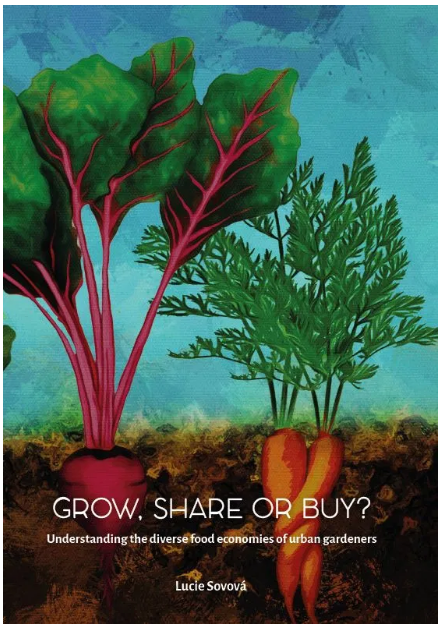
My doctoral research explored the role of urban gardens in people’s food provisioning practices, framing them as spaces of diverse food economies operating largely outside the market. In order to understand how gardens work as food sources, I observed the food provisioning practices of 27 households involved in gardening in Brno, Czechia, throughout a period of one year.

The research contributes to the broader discussion about more sustainable ways of food production and consumption, alternative food networks and urban agriculture. Research on sustainable food systems is often biased towards initiatives embedded in market relationships (Rosol 2020). Literature on urban gardening in global North mostly focuses on a specific kind of this practice (community gardens), and it discusses the multiple non-productive functions of these spaces, such as community building (Veen et al. 2016), place-making (Koopmans et al. 2017) or the improvement of urban environment (Timpe et al. 2016). Another stream of literature presents urban gardens as activist spaces questioning the status quo of neoliberal urbanism (Tornaghi 2017, McClintock 2013). This literature recognizes the potential of urban gardens to contribute to localized and sustainable food provisioning (Kosnik 2018). Nonetheless, actual data on food self-provisioning (FSP) in urban areas of the global North remains insufficient (Taylor and Lovell 2013).

Furthermore, some geographical areas seem to be excluded from the debate. FSP is wide spread in the post-socialist countries of Central and Eastern Europe (CEE): 50% inhabitants of the region grow some of their food, compared to 10% in Western European countries (Alber and Kohler 2008). Despite this potential, lessons from CEE are only recently appearing in the literature on urban gardening or alternative food networks. This discrepancy can be explained by an unequal geography of knowledge production, in which CEE rarely figures as a source of original knowledge (Jehlička 2021). In light of the failed experiment of state-socialism, CEE countries are often regarded as underdeveloped and in need of catching up with the West (Kuus 2004, Müller 2019). This transition discourse results in the framing of local informal economies (such as FSP or informal food sharing) as remnants of the past which will be eventually substituted by market economy (Alber and Kohler 2008, Acheson 2008). My research adds to more emancipatory works showing the relevance of these traditional practices for sustainable food provisioning (Jehlička et al 2020, Goszczyński et al., 2019, Mincyte 2012).

My theoretical approach is further inspired by the diverse economies framework (Gibson-Graham 2008) which points out that economic practices are not limited to capitalist markets and monetized transactions, and which calls for attention to alternative, nonmarket and informal economies. This approach is increasingly adapted in the study of more sustainable food provisioning, which recognizes the importance of economic arrangements fostering social justice and environmental wellbeing (Rosol 2020, Tornaghi 2017, Morrow 2019). It is also particularly pertinent for the post-socialist context, seemingly caught between the gloomy heritage of state socialism and the sweeping neoliberalization of the last three decades.

Recent representative surveys show that the share of Czechs involved in FSP remains steady at around 40% of the population, spread equally across income groups and educational levels (Smith and Jehlička 2013, Jehlička and Daněk 2017, Sovová et al 2021). Unpacking these statistics, my research assessed the role of FSP in terms of quantity of food produced as well as its position within broader food provisioning practices and the diverse economic arrangements they constitute. Inspired by the perspective of social metabolism (González de Molina and Toledo 2014, Burger Chakraborty et al. 2016), I used food logs to monitor the flows of fruits and vegetables entering and leaving respondent households. These flows were categorized based on the type of economic arrangements as non-market, alternative-market or market economies. Using conceptual borrowings from social practice theory (Reckwitz 2002, Shove et al. 2012), I further investigated the meanings and competences these material flows entailed.

The field work consisted of four rounds of data collection of one month, spread over the course of one year. During each round, respondents recorded fruits, and vegetables which they produced at their gardens or obtained from other sources. Next to the amount, type and source of food, they also kept track of the use of these foods, i.e. own consumption, preserving, sharing or other forms of distribution. The purpose of the multi-staged research design was to observe seasonal variations and to gradually build theory with the respondents’ participation, accompanying the quantitative accounts with a qualitative understanding of their food provisioning practices.

The results reveal complex interactions between gardens, other food sources, respondents’ eating habits and dietary preferences. FSP plays a central role in gardeners’ food provisioning practices. The gardens provide a significant amount of food, covering on average one third of fruits and vegetables consumed in gardeners’ households – results consistent with a national survey using self-reporting (Sovová et al 2021). In addition, respondents’ experience as producers shapes their food provisioning practices beyond FSP. Home-grown food is seen as the best in terms of taste, freshness and transparent origin. This creates a hierarchy of food sources, in which FSP and other nonmarket and semi-formal food provisioning practices (e.g. receiving home-grown foods from family and friends, foraging or buying directly from producers) are preferred over shopping for food in conventional venues. Alternative food networks typically associated with conscious consumerism (community supported agriculture, farmers’ markets, organic food shops) were marginal in respondents’ shopping practices. Instead, they provisioned food from a number of diverse channels spanning market and nonmarket relations, in which social relations merged with environmental considerations and subjective notions of food quality. The centrality of FSP in these practices also resulted in strong seasonal patterns in both food sources and diets.  

None of the respondents aimed to be fully self-sufficient, nor did they grow their own food in order to save money. Instead, they saw gardening first and foremost as a hobby. The link of this way of food provisioning to leisure, fulfilment, and, broadly speaking, gardeners’ identities, strengthened the position of FSP in gardeners’ food provisioning practices. Similarly, other informal and semi-formal food practices were often grounded in social relations, such as visiting family and acquaintances in the countryside. Gardeners’ food practices also contributed to fostering social relations, for instance when they shared home-grown food with others, a practice which was common for most respondent households. Indeed, FSP is a generous practice in which the joy of sharing and appreciation of home-grown food prevails over expectations of reciprocity or economic considerations, as also documented by Daněk and Jehlička (2017) or Pottinger (2018).

While practiced as a hobby, FSP is mobilized as a food provisioning practice through a number of specific competences. Using the conceptualizations of social practice theory, I interpret FSP as intersection of two sets of practices, those relating to the garden (‘gardening’), and those relating to the kitchen (‘food provisioning’). Based on both quantitative and qualitative data, I identified four different types of relations between gardening and food provisioning. Put simply, some respondents were keen gardeners but did not necessarily integrate their harvest into their diets. Others strived to eat plenty of fruits and vegetables but were not always successful in their gardening efforts. Gardens are multifunctional spaces which hold different meanings for different users. Using the gardens as food sources requires not only gardening and cooking skills, but also coordination and integration of both on a daily as well as seasonal basis.

My research shows that when thinking about sustainable food provisioning, scholars and practitioners need to look beyond market venues and beyond people’s roles as consumers. The search for future-proof urban food systems cannot be restricted to environmentally-minded affluent Westerners, but it needs to consider everyday practices already existing in diverse contexts. I have shown that there is a plethora of under-researched informal food practices whose potential for sustainable provisioning, diverse economic arrangements and mutually beneficial human–nature relations merits further investigation.

Sovová, L. (2020). Grow, share or buy? Understanding the diverse economies of urban gardeners. Wageningen University. https://doi.org/10.18174/519934

75th Anniversary: 47) Research at Rural Sociology:  Gender and rural development in Europe – once upon a time and now

Bettina Bock

Once upon a time.

It is almost 44 years since my first research project; it considered the position of women in non-academic positions at the University of Nijmegen. More studies into gender and professions followed; in academia and public service, as well as technical and assumedly masculine occupations such as woodwork and firefighters, and eventually farming.

Women farmers stole my heart – first in Italy and later in the Netherlands when working on my PhD on the role of women in rural development practice and policy. They were so creative and courageous, developing new business activities and conquering a position in a sector in desperate need of transition but often so stubbornly holding on to conventions. In this case, the conventional image and success formula of the male farmer running his farm as a modern business striving to increase production and growth, with the farmwife offering assistance. In the early 90s, some women stood up against these beliefs – men being the head of the farms and farming as regular businesses interested in increasing production and profit. There were women pioneers innovating agriculture by initiating a new model and paradigm of farm diversification and multifunctionality. They introduced new income-generating activities and created new markets with direct communication between producers and consumers. In doing so, these women farmers and their partners developed new knowledge and skills and adapted their agricultural production methods, with less monocultural and more environmentally friendly production methods. Hence, women significantly contributed to the continuity of farming financially through such new business activities, others by gaining off-farm income. Initially, the turn towards diversification and multifunctionality met a lot of criticism and suspicion by mainstream farmers and the farm union – this was not real farming anymore, they said. Or this meant the end of agriculture as a real business and profession. As a result, many women farmers downplayed their activities as hobbies or downplayed the importance of their money. In time, however, the success of these new businesses became evident, and multifunctional agriculture became formally recognised even by the farm unions.

In academia, the role of women in multifunctional farming was cherished in two ways: first as a proof of long due empowerment and recognition of the vital role of women in agriculture; second as one of the elements of the transition of farming, with multifunctionality, high-quality production and direct marketing as the way forward, and thirdly as proof of the sustainability of family farming. Studies into gender relations in agriculture confirmed the presence of more equal gender relations on farms engaged in diversified productions and novel production methods. The situation is quite different in most production-oriented farms that remained conventional also in terms of gender relations. The political interest in women farmers diminished over time, at least at the national level. The EU continued to call attention to the position of rural women, stressing their vulnerability and the importance of strengthening their position in farming and rural areas. However, gender agriculture and rural development did not figure prominently in public, political or academic debates for a long time – in Europe. In international development debates, this was quite different, and gender remained a prominent issue and target of policymakers, donors and academics. Women were presented as important actors, able to enhance production and warrant food security, yet needing support to overcome traditions and realise their potential. Maybe, the global South was again ahead of the North when it came to gender debates – as they were when research into gender and agriculture took place in Europe in the seventies.

Most recently, the interest in gender and rural development seems to be reawakening also in Europe. Looking into a recently published HORIZON, the EU expresses high hopes for women’s engagement in innovations. They expect women to ensure the future of agriculture and rural areas and significantly contribute to climate change mitigation and, hence, our future. It is interesting to see that women who figured in agricultural and rural policies so far, mainly as a vulnerable group, become suddenly framed as our saviours. However, as the EU calls for ways to boost women’s innovations, women are still expected to need a hand to realise their potential, with many hurdles arising from what we may best identify as institutionalised sexism.

What does that mean for academics like me who have fallen for these amazing women who experiment with new ideas, innovate new products and methods, and institutions? Should we worry about their instrumentalisation, as some warn us (reference)? I always have difficulty with that argument – because are we instrumentalised if we choose to do what needs to be done? Do we not all carry the responsibility to be instruments in the realisation of a better world? And is women’s agency to innovate against all odds not in itself transforming structures, identities and relations, self-empowering? Is innovation, hence, not their instrument of empowerment? Yes, they deserve more respect, reward, and support. What they do is valuable and critical, and we need to ensure their engagement has an impact.

In my view, it is not up to me as a researcher to protect women from instrumentalisation. However, I can be of more assistance when understanding what drives, enables and hinders them and where change is essential to realise their potential. The transformation of gender relations is part and parcel of that process, be it explicitly or implicitly. We should also not forget that women do not necessarily view their actions as individual or independent; farm women often feel part of the family business, and many collaborate with others and men. The latter does not make gender equality less relevant yet nuances women’s interest in gender transformation. And what about the kind of innovations in which women engage? Many are novel, of course, but not all are about agroecology or climate change. Or that might not be the leading motive. Women’s primary reason is often to assure the business’s profitability, and not all they do is good for the environment. Does that mean we should then not support their initiatives and engagement in innovation? Do women only as saviours deserve support? The right of agenda-setting is another matter to consider. Which issues should politics and science address, and when are women ‘invited’ to join? Even formulating the question is awkward as, of course, women have the right to set the agenda. Reality is more complex. Generally, interest groups are involved in such negotiations, and as studies report time and again, women farmers are hardly represented in farm organisations.

Intriguing questions that are difficult to answer. As an academic, I might argue that my first task is to understand how innovations emerge when ‘female’ agency fights traditional structures, irrespective of their motive. On a more personal note, I believe it is our responsibility as scientists, policymakers, and practitioners to choose which innovations to support, whether promoted by men or women. In today’s world, it is irresponsible to support innovations that add to the problem of climate change and social injustice.

Some suggestions for overviews of rural gender literature

  • Asztalos Morell I. and BB. Bock (2008) (eds), Gender regimes, citizen participation and rural restructuring, Elsevier: Rural Sociology and Development Series, pp. 3-30
  • Bock B.B. and S. Shortall (2006) (eds), Rural Gender Relations: Issues and case- studies, Oxfordshire: CABI
  • Bock, B.B. and S. Shortall (2017) (eds), Gender and rural globalisation: international perspectives on gender and rural development, Oxfordshire: CABI
  • Bock, B.B. and M. van der Burg (2017), Gender and international development, in B.B. Bock and S. Shortall (eds) Gender and rural globalisation: international perspectives on gender and rural development, Oxfordshire: CABI
  • Bock B.B. (2016), The Rural, in: I. van der Tuin (ed.), MacMillan Interdisciplinary Handbooks: Gender, volume 2: Nature, MacMillan, 199-216
  • Cornwall, A. , E. Harrison and A. Whitehead (2007) (eds),. Gender myths and feminist fables: the struggle for interpretive power. Gender and Development, 38(1998) (special issue)
  • Mohanty, C.T. (2003), Feminism without borders; decolonizing theory, practicing solidarity, Durham & London:  Duke University Press (reprint from 1984)
  • Pini B., B. Brandth and J. Little (2015) (eds). Feminisms and Ruralities. London: Lexington Book
  • Plas van der L. and M. Fonte (1994) (eds). Rural gender studies in Europe. Assen: van Gorcum
  • Sachs C. (2019) (ed.), Gender, agriculture and agrarian transformations, changing relations in Africa, Latin America and Asia: London: Routlegde, Taylor & Francis Group
  • Shortall S. and B.B. Bock (2015) (eds) Rural, gender and policy; Rural women in Europe: the impact of place and culture on gender mainstreaming the European Rural Development Programme; Gender, Place and Culture, 22(5), special issue