Kempen international conference day, Nov.19th, Oud-Turnhout, Belgium

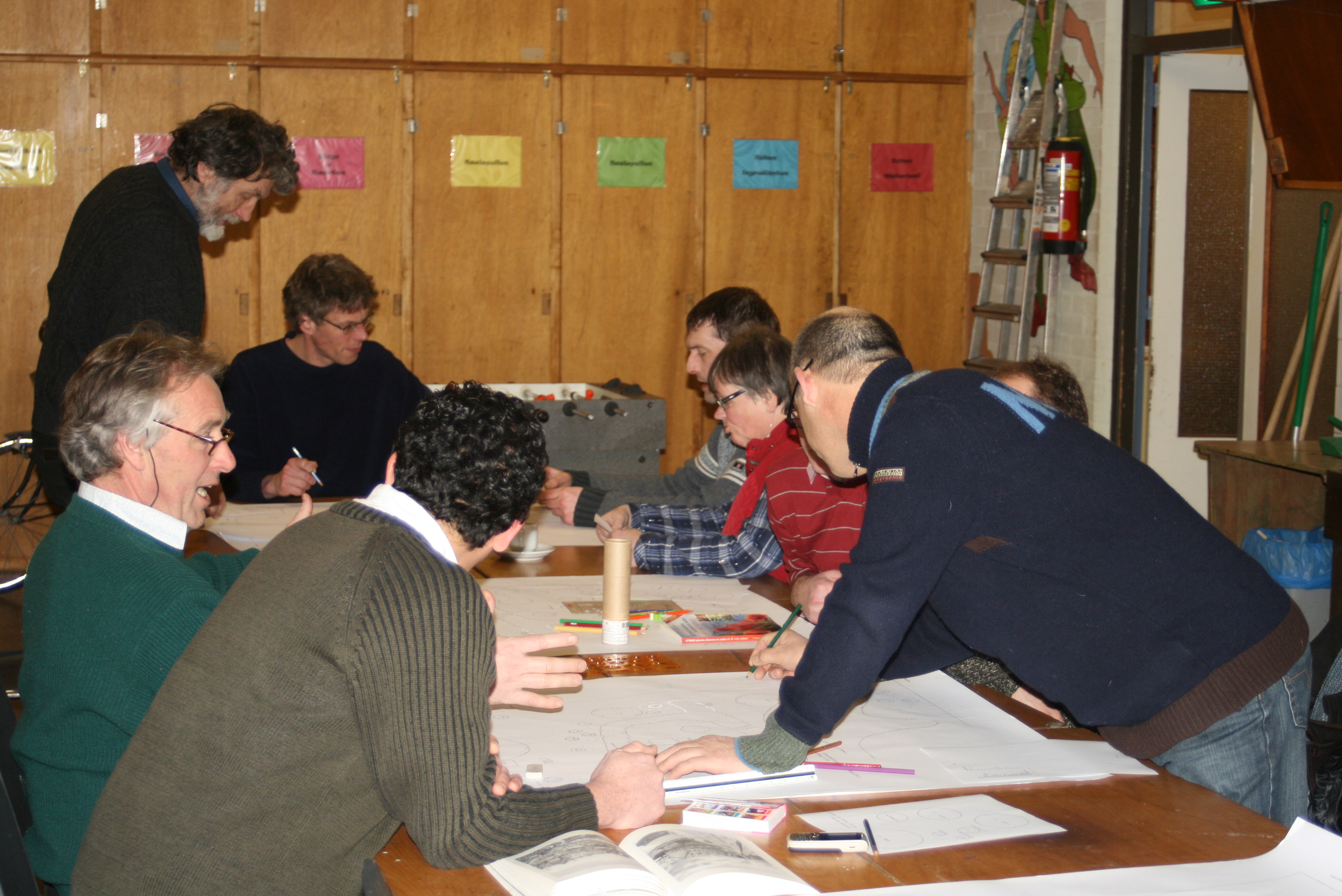
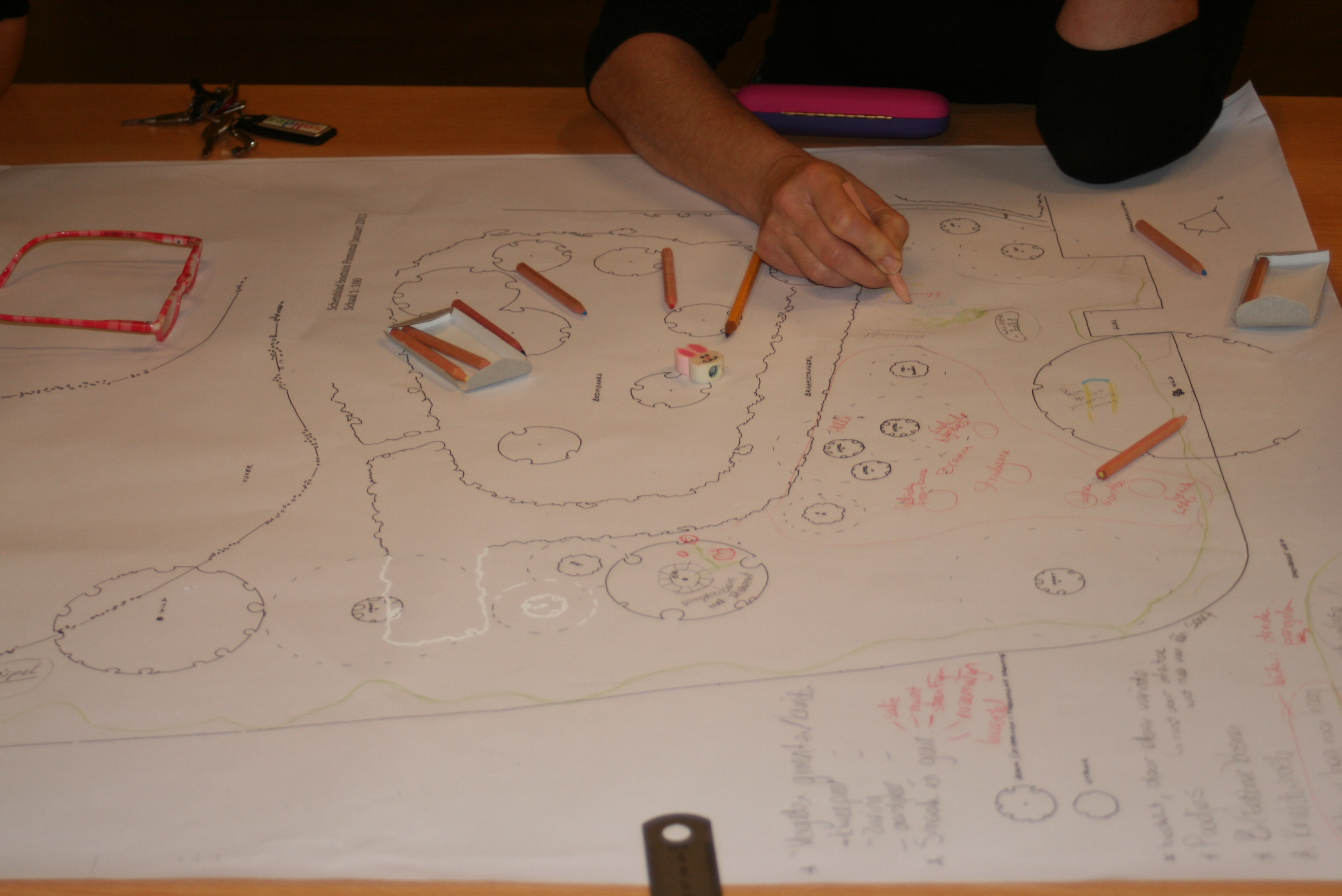
De Kempenconferentie was organized by the Dutch Rural Network (Netwerk Platteland) in cooperation with Belgium partners. The second international day workshops on several rural themes were held such as entrepreneurship, new markets, public services, governance, strategic networks and knowledge. Hereby some of my own observations. More information can be found the website of the Dutch Rural network.

New alternative food networks can bridge the gap between cities and rural hinterlands and function as an interface between producers and consumers. The challenge is to develop not only new products for existing markets or existing products for new markets, but really new products for new markets.

Private entrepreneurs can play a role as inspiring leaders in rural development, contributing to social networks, mobilizing and inspiring people, introducing new agendas and innovations and bridging the gap with institutions. Social networking and inspiring others are important competences of these entrepreneurs. Needs of entrepreneurial entrepreneurs are: public leadership and administrators who are less afraid administrative failure. There is also a need for coalitions, which means informal networks which are inspiring and productive and create capacity to act.

The workshop on public services described the new markets approach and a case on small-scale energy production in the province of North-Holland. The cases showed that the variety of stakeholders in regional co-operation is broadened, citizens, companies, businesses and governments are involved. Public/private networks in territorial development can be effective. Conditions for effective territorial development are:

  1. Innovative entrepreneurs, ‘nested’ in social capital.
  2. A pulling, objective actor which can function as an intermediate organization and facilitator. Help in building business cases is an important task.
  3. Regional storylines, which can help to connect these initiatives, mobilize new actors and create a basis for joint marketing. Ownership is important, and a relation with private interests.

‘Territorial Metabolism’ is an attempt to reconnect products and services to the region. It is about closed loops of energy, food on the territorial level. This can lead to a re-coupling to places, socially, economically and ecologically.

The workshop on strategic networks showed  that there is often a tension between short term private interests and long term. Important for strategic networks is:

  • The availability of bricks (networking), cement (involvement) and sand  ( communication). 
  • A sense of urgency, such as unemployment in a region.
  • Exchange & learning, e.g. with organisations abroad. The Rural House Plays a role in the connection of networks and up-scaling to other regions.
  • The role of new social media which create new networks. It is the instrument for civil society (social movements). Twitter makes knowledge direct and explicit and democrats it. Weblogs such as food log, create new social networks, function as a discussion arena and put new issues on the agenda . E.g. AGCHAT, agricultural chatting, is in a way a decentralized organization in the form of a community.

The plenary, concluding session at the end was a discussion on European policy. The conference showed that there is a large diversity in European, rural regions. Regions are more than economic entities. The challenge is a re-connection of activities to space and place in European regions.

FoodWorks – New York City’s innovative and ambitious food strategy

On November 22nd, the New York City Council presented a comprehensive plan that sets a bold vision for a more sustainable food system. The plan, ‘FoodWorks’, addresses sustainability and health issues at every phase of the food system – from agricultural production, processing, distribution, consumption and post-consumption. The objectives of FoodWorks range from combating hunger and obesity to preserving regional farming and local food manufacturing to decreasing waste and energy usage.

FoodWorks contains 59 policy proposals spanning five phases of the food system. The proposals include new legislation, funding initiatives and far-reaching goals that present a long-term vision for a better food system.

  • Agricultural Production – Support regional farmers, strengthen regional linkages, and increase urban food production 
  • Processing – Generate growth and employment in the food sector
  • Distribution – Improve food distribution channels into and within the city
  • Consumption – Fresh food must be available to New Yorkers regardless of where they live
  • Post-Consumption – Seize opportunities to reduce and recapture waste

The New York Council worked with experts including farmers, gardeners, chefs, partners in government and labor, as well as hunger and environmental advocates throughout the process of developing the Food Works report.  Both content-wise and process-wise New York City’s food policy FoodWorks is innovative and ambitious and can serve as an inspiration for many city councils across the world.

Students, Broilers and Sustainability

Last week about 60 Msc students followed a week on socio-cultural sustainability of organic production chains, as part of the course ‘Analysis and Management of Sustainable Organic Production Chains’. Each week of the course focused on a specific component of sustainability (consumer, socio-cultural, environmental, economic), given by a different chair group. Last  week was under supervision and teaching of our Rural Sociology group.The lectures and assignments focused on socio-cultural sustainability and discussed chain perception from a societal point of view and the context dependency of indicators for socio-cultural sustainability.

During the course, the students worked in multidisciplinary and multicultural groups of 6 students. Each group represented a stakeholder in the broiler production chain (e.g. fodder company, farmers, retailers, animal welfare organization, slaughterhouse). Of the 60 students, only 1 student had a background in sociology. Others were involved in economics, agronomy or other natural-science based disciplines. Consequently, it was challenging for many of the students to change their way of thinking and reasoning to a more sociological mindset.  Moreover, one week is extremely short to do this. This resulted in hard working students and heated debates among group members.

By the end of the week, the students were requested to  – on the basis of earlier assignments that week – come up with actions that would make the broiler production chain more socio-cultural sustainable  from their stakeholder perspective. Several groups raised suggestions  like shorter production chains, more regional production and stronger embeddedness in the region. Although these themes were not explicitly tackled during this week, I was happy to hear these suggestions, because our Rural Sociology group is engaged in such themes.  

Overall, it was a week of hard working – for the students as well as the teacher 😉 – but when I look back, it makes me happy that the students themselves came up with interesting and creative ideas in just one week!

FAQs for PUREFOOD vacancies

We have received a high number of inquiries with regard to our 12 PUREFOOD vacancies. It is good to see there is so much interest in these topics!
Most reactions were inquiries about similar issues. Therefore, we have prepared a list of FAQs for the PUREFOOD vacancies. Please have a look at this list of FAQs before sending us an e-mail!

PUREFOOD – 12 vacancies for ESRs are open

As mentioned in an earlier post on this weblog, the Rural Sociology Group has been granted the the coordination of a Marie Curie Initial Training Network  entitled ‘Urban, peri-urban and regional food dynamics: toward an integrated and territorial approach to food (PUREFOOD)’ funded by the European Commission’s Seventh Framework PEOPLE program. The objective of PUREFOOD is to train a pool of 12 early-stage researchers (ESRs) in the socio-economic and socio-spatial dynamics of the (peri-)urban and regional foodscape. The PUREFOOD network is centred around food as an integrated and territorial mode of governance and studies the emergence of the (peri-)urban foodscape as an alternative (as opposed to a globalised) geography of food, including the ways in which, and the extent to which, sustainability aspects generally considered to be intrinsic to the alternative food geography are incorporated by the more conventional food companies.

As of now all 12 PUREFOOD research vacancies have been published (or soon will be) by the host universities. For information about the ESR vacancies and application guidelines, you can download the PUREFOOD vacancies leaflet. For more information about the objectives, training and research approach and training program of PUREFOOD you can download the PUREFOOD information pack for prospective ESRs. The deadline for application is 3 January 2011.

Eligibility criteria

The enhancement of transnational mobility to improve career perspectives of early stage researchers is the main goal of the Marie Curie Initial Training funding. To achieve this objective the following eligibility criteria for prospective ESRs have been formulated:

  • You are eligible as an ESR if you are, at the time of recruitment (i) in possession of a university degree, and (ii) have a maximum of four years of full-time research experience, including any period of research training. This is measured from the date when you obtained the degree which formally entitles you to embark on a doctorate, either in the country in which the degree was obtained or in the country in which the research training is provided. Please not that ESRs cannot be PhD holders.
  • You are eligible to the position if, at the time of the selection by the host university, you did not reside or carry out your main activity (work, studies, etc) in the country of the host university for more than 12 months in the 3 years immediately prior to your recruitment.

If you have any questions about a vacancy please contact the contact person mentioned in the vacancy announcement. For general question about PUREFOOD please contact me (han.wiskerke@wur.nl).