The Amish in Pennsylvania

As part of the joint AFHVS and ASFS conference at State College Pennsylvania, we had diner at an Amish farm on the Friday evening. Those who were early enough to subscribe had one of the 45 seats in the living room of the farm house. STA71567

We were being served by the family, traditional Amish food. It reminded me of grandma’s diners; with what I would call in Dutch ‘draadjesvlees met jus’. It was delicious and very special to get a glimpse of how the Amish live.

The history of the Amish church began with a schism in Switzerland within a group of Swiss and Southern German Mennonites, in 1693. The leader of the schismatic faction was a Mennonite Elder named Jakob Ammann. Those who followed Amman became known as Amish. They mainly immigrated to Pennsylvania.  Nowadays they spread to other states as well, buying up farms for their sons. The family we stayed with had four children with 15 years in between the two oldest and the two youngest. The two youngest were still living at home, while the two oldest children had each seven children. The great number of children per family left grandma with 100 grand children, our host told us after we sang the song Amazing Grace together. Not surprisingly, they are one of the most fast growing minority in this country.

The Amish have their own way of dealing with ‘modernity’. New technology is assessed for its potential negative impact on the community by religious/community leaders. Not all technology is rejected, however most of it is. This family did not have electricity in their house, nor did they have a car. They were allowed to accept a lift or hire a taxi at the other hand.

STA71529For their dairy farm of 80 cattle they did use some electricity for milking for example with an electric generator. They also had tractors, however, here too the use of it was restricted. This could be noticed by looking at their hey wagons, which had no rubber but metal wheels, to prevent the seduction of using them on the road behind the tractor. Much of the thinking behind this is centred around labour force available and sustaining communities by not out-competing each other. At the other hand, they do use ‘modern’ instruments such as chemical pesticides, chemical fertilizers, and artificial insemination of cows.

Conference State College, Pennsylvania

At the joint AFHVS and ASFS conference at State College Pennsylvania, we started with a day of excursions. I joined the ‘local food and flavors’ tour where we visited Tim Browser’s Elk Creek Café and Aleworks and tasted his home-brewed beer and locally sourced food. The local food tasted very good and was as Tim explained, centered around Nouveau Dutchie Cuisine. With humous and black beans as part of the menu, I could not really make a Dutch connection there, but it certainly was delicious.

STA71528

The next stop was the Tait Farm Foods in the Happy Valley where the owner Kim Tait explained the manifold activities of the farm. They work as a Community Supported Agriculture (CSA) farm and have around 120 families as members. Members come to the farm on a weekly (summer) or bi-weekly (winter) schedule to pick up their seasonal share. STA71544

There are different types of shares, but a full year share for a family costs 1100 dollars. It is also possible to have a workshare, where members can work on the farm for a share of the produce to reduce costs. They have to commit 5 hours a week.

After this we visited a local vineyard the Mount Nittany Vindeyard and Winery in the Brush Valley and tasted some great wines as well as cheeses from a neighboring dairy farm.

What was striking to me especially in the visit of the CSA farm is the strong emphasis you can find here on ‘the community’. As the leaflet of the Tait Farm explains:

“In its most simplified form, the farm grows food for the community and the community supports the farm”.

Yesterday, at the first day of presentations, a session on ‘terroir’ explained differences between the US and Europe regarding their sense of territoriality. Whereas the notion of ‘terroir’ has a strong connection with proximity and social ties in the US, in Europe it has more relation with the specificity of food, the cultural heritage and the cultural history this food expresses. So whereas a ‘local’ sausage from a French region can be found in extralocal market places in Europe, the US understanding of local food as direct marketing, locally embedded in social ties, confines the produce much more to a specific place. Hence, you won’t find many geographical indications protecting specific products here (also because of other reasons).

Rural development in Iowa

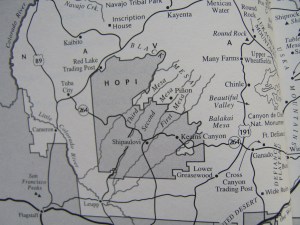
The coming two months, I will join the North Central Regional Center for Rural Development in Ames, Iowa. This center, part of the Iowa State University, is working with rural communities, native American communities and small producer groups to increase the capacity and resilience of these communities in tackling their problems. In the United States, the development of modern agriculture had a large impact and often devastating effects on rural communities. And, nowadays changing lifestyles, declining knowledge of food and less connection with farming and land have resulted in an obesity epidemic and diet-related diseases. Native American communities also suffer from diet-related diseases. One of the communities the center works with is a Hopi community in Arizona. A recently finished project worked with Hopi women to search for how they define, access and use traditional Hopi food. Using a community capitals approach, the participants assessed together their natural, cultural, social, political, financial and built capital. Through this, they identified their strong and weak or lacking capitals in search for improving health and living circumstances. See this website for an example of a Hopi farm.

Selective breeding in organic dairy farming

Tuesday June 2, Wytze Nauta will defend his PhD-thesis ‘Selective Breeding in Organic Dairy Production’. 

Family herd

A family herd

Organic dairy farming doesn’t have a distinct breeding system. Farmers are free to breed with a farm bred bull or Artificial Insemination (AI) bulls of conventional breeding programmes. Organic farming thus directly and indirectly depends on conventional breeding goals and modern selection and reproduction techniques such as multiple ovation and in vitro embryo production and transfer (ET). As naturaless and animal integrity are basic principles of organic farming, the direct and indirect use of these modern reproduction techniques is questioned, from organic farmers as well as from societal interest groups favouring organic farming. Moreover organic farming intends to maintain or even contribute to bio-diversity. It supports the use of different (traditional, regional) breeds. Finally, in organic farming animals are kept for different purposes and in a different, more extensive production environment then conventional agriculture. This further questions the dependency on conventional breeding programmes, since these programmes select breeding animals that perform best in intensive, high input production systems. Practice learns that on the whole these cows are genetically not well equiped to perform in an organic environment and this was sustained by research (see paper Genotype x Enviroment Interaction). So one can argue that organic farming has its own demands towards breeding, that may even differ with different farming strategies (see paper Different Strategies, Different Demands). Organic farming is highly diversified and organic farmers are known for their on-farm experiments, also with regard to breeding.

The question is not so much if selective breeding in organic dairy farming needs to be more in line with the intentions and principles of organic farming, all stakeholders agree on that, but to what extend and how to realize that. Then opinions diverge and different positions are taken (see Discussion paper).

Wytze Nauta explores this question throughout his PhD-thesis. He finally discusses the pro’s and con’s of three options that meet organic principles to a different extend: 1) a pragmatical one, i.e. using conventional breeding programmes, but with the exclusion of modern reproduction techniques, although an exception is made for AI; 2) a distinct organic breeding programme with distinct breeding goals and exclusion of modern breeding techniques and 3) a distinct breeding system based on natural mating.

The more exclusive, the more organic, but also the more difficult to realise. However, for an individual farmer it is more easy to decide to start breeding with a bull at the farm for natural mating. For option one and two more stakeholders need to come to an agreement. But all options imply a ‘system innovation’: radical change of practices at different levels of different actors in different positions lacking appropriate knowledge to come to a well grounded breeding system for organic farming. So, the ultimate recommendation of Wytze Nauta is not to impose a new breeding system, but to start joint learning processes involving organic farmers as well as other stakeholders based on the three options provided. This would best respect diversity organic farming.

Wytze Nauta (w.nauta@louisbolk.nl) is researcher Animal breeding at the Louis Bolk Institute.

Noorderlicht – nieuwe biologische kaasmakerij grensverleggend

Noorderlicht – zo heet de nieuwe biologische kaasmakerij van Kees en Maria van Gaalen in Noordeloos. De naam is zaterdag 16 mei onthuld door een trotse burgemeester van Giessenlanden tijdens een druk bezochte open dag.

Noorderlicht - nieuwe biologische kaasmakerij van Kees en Maria van Gaalen in Noordeloos

Noorderlicht - nieuwe biologische kaasmakerij van Kees en Maria van Gaalen in Noordeloos

Met hun nieuwe boerderij verleggen Kees en Maria de grenzen van wat in Nederland voor mogelijk wordt gehouden in het boerenkaasmaken. Bewonderingswaardig. Het nieuwe bedrijf is gebouwd volgens organische principes (daarvan getuigd o.a. de bouw van het huis), maar vooral ook vanuit eigen overtuiging over wat duurzame landbouw moet inhouden. En daar dan consequent voor durven kiezen.

Zoals het houden van Blaarkoppen. Een ras dat van oudsher voorkomt in de Rijnstreek (zie Blaarkoppen in het Groene Hart), maar dat niet mee kon komen in eisen van de moderne melkveehouderij. Maar Kees zijn voorliefde voor Blaarkoppen is niet louter nostalgisch. Blaarkoppen leveren, zo is bewezen, een betere kwaliteit kaasmelk dan op liters gerichte rassen. En Blaarkoppen gaan langer mee. Kees en Maria maken Wilde Weide Kaas, dat in 2005 werd bekroond als Streekproduct van het Jaar. Een bekroning op hun inzet om het boerenkaasmaken voor Nederland te behouden en op hoger peil te tillen.

Het ontbreekt Kees niet aan visie en lef om tegen gangbare opvattingen in te gaan. Zo heb ik hem eind jaren ’80 ook leren kennen. Samen met andere gedreven boerenkaasmakers wilde Kees het boerenkaasmaken nieuw elan geven. Door boerenkaas uit de veenweiden neer te zetten als een kwalitatief hoogwaardig, ambachtelijk product. Een product dat een eerlijk prijs verdiende en door een duurzame manier van produceren kon bijdragen aan het behoud van het karateristieke veenweidelandschap. De idee voor een veenweidekaas was geboren. Onder die werktitel werd het product in 1994 ook gelanceerd. Het trotseerde de gevestigde belangen op de boerenkaasmarkt, maar kon die ondanks alle potenties niet echt open breken. Veenweidekaas kreeg ook een ecologisch zusje: Wilde Weide Kaas.

Opslag Wilde Weide KaasKees en Maria maken nu zeker al een decennium lang Wilde Weide kaas, een Erkend Streekproduct, en zetten dat dus voort op hun nieuwe bedrijf. Het was op het oude bedrijf in Alphen aan de Rijn waar Kees, Bart Soldaat en ik begin jaren negentig samen het concept van streekeigen producten hebben uitgedacht. Dit heeft brede navolging gekregen, uitmondend in o.a. Groene Hart producten en Groene Hart Landwinkels. Streekproducten behoren nu tot een van de belangrijke pijlers van verbrede of multifunctionele landbouw. Op de oude lokatie in Alphen aan de Rijn, de prachtig gerestaureerde boerderij Landlust, hadden Kees en Maria ook als een van de eersten een Landwinkel. Ook dat is inmiddels uitgegroeid tot een landelijke keten.

Kortom: Kees en Maria lopen al jaren voorop, het zijn vernieuwers pur sang, die vast houden aan hun eigen principes en soms dwars tegen heersende opvattingen over wat kan en nodig is durven in te gaan. Ook hun nieuwe boerderij getuigd daar weer van. Proficiat! Ik hoop dat ze voor hun moed worden beloond.