Rural Uproar: Corona Proof Thesis Opportunity

So you want to do your thesis, but as corona-proof as possible. Than read the this call for a student interested in making a sociological analysis of rural uproar.

Unrest has brought tractor blockades to The Hague, Berlin, Paris and many other cities as a cocktail of grievances boil over. Yet rural uproar is not new. In his Peasant Wars of the Twentieth Century, Eric Wolf examined the histories of peasant involvement in rebellions and revolutions in the twentieth century. Eric Hobsbawm and George Rude examined the rebellion and arson attacks by a rural population at a time capitalism swept from the cities to the countryside in England.

In this thesis opportunity you will be asked to study rural uproar, identify characteristics and grievances of protests and revolts, and its economic and political causes. For this thesis, you will do a systematic literature review in combination with archival work. When more recent uproar is taken into consideration, interviews are possible.

More info: joost.jongerden@wur.nl


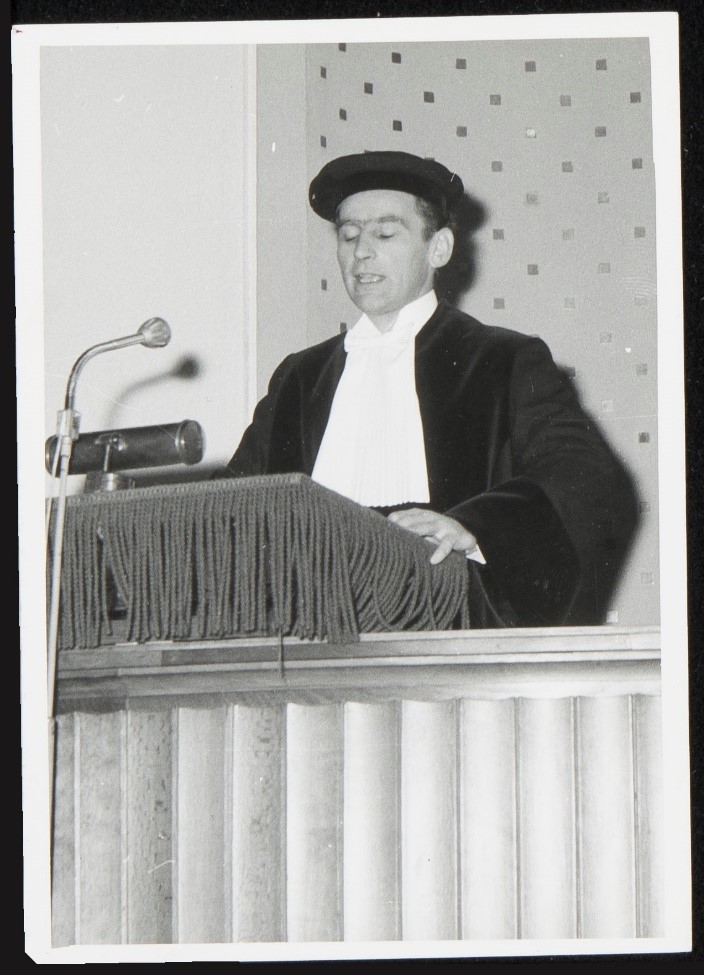
Picture: Captain Swing, mythical figure whose name appeared on series of threatening letters during the rural Swing-Riots in the UK now 190 years ago.

Onderzoek naar kansen en belemmeringen voor agrarische bedrijfsontwikkeling

Vandaag zijn we samen met Agrio een onderzoek gestart naar de factoren die van invloed zijn op de bedrijfsvoering en -ontwikkeling in de landbouw. Tevens proberen we zicht te krijgen op welke uiteenlopende bedrijfsstrategieën en bedrijfstypen er zijn en waar boeren en boerinnen belemmeringen en kansen zien voor een toekomstbestendig bedrijf. De eerste stap in dit onderzoek bestaat uit een korte enquête, die vandaag is verspreid onder ruim 15000 boeren en boerinnen. Dit deel van het onderzoek wordt uitgevoerd in samenwerking met Geelen Consultancy. De uitkomsten van de enquête zullen in het najaar worden gepubliceerd in de vakbladen van Agrio. Later dit jaar willen we, mede op basis van de uitkomsten van deze enquête, een verdiepend onderzoek doen naar de huidige diversiteit in de Nederlandse landbouw, de kansen en belemmeringen voor bedrijfsontwikkeling en perspectieven voor verduurzaming.

Outdoor psychology and coaching for adults with psychological complaints (three thesis topics)

Do you want to contribute to an ongoing Science Shop project focusing on outdoor psychology and coaching for adults with psychological complaints?

Evidence supporting the beneficial effects of nature on our health and wellbeing is accumulating. These insights are being used increasingly for the treatment of people with psychological problems, such as outdoor psychology and coaching. On the one hand, using nature as a ‘treatment room’ is suggested to be more effective than receiving treatment indoors, whereas, on the other hand, psychologists and coaches themselves report being more vital and healthy providing treatment outdoors. However, the use of nature in mainstream practices is far from accepted.

We offer three assignments:

  1. Understanding the experiences of clients who participate(d) in outdoor psychology interventions;
  2. Exploring the image of outdoor psychology among key stakeholders in the mainstream healthcare sector, and underlying motivations of outdoor psychologists;
  3. Exploring the motives and practices of outdoor coaches, perceived barriers and opportunities, and experiences of clients who participate(d) in outdoor coaching.

See the project page for more information and the first report based on an Academic Consultancy project: https://www.wur.nl/en/article/Nature-Assisted-Therapies-Nature-as-a-treatment-room-for-adults-with-psychological-complaints.htm

Interested or want to know more about the project? Contact Esther Veen (esther.veen@wur.nl)

Start Date: Fall 2020 or spring 2021

Neither Poor nor Cool: Practising Food Self-Provisioning in Allotment Gardens in the Netherlands and Czechia

A new open access article co-written by Lucie Sovová and Esther Veen compares urban gardening in Czechia and the Netherlands. The comparative case study concludes that despite diverging framings in the literature, allotment gardeners in both countries are ‘doing the same thing’.

Urban gardening is a shared interest of both authors. Esther wrote her PhD thesis about the role of Dutch community gardens in fostering social cohesion; her recent research deals with urban green infrastructure and urban food growing as prosumerism. Lucie studied Czech allotments in her MSc thesis, and she later expanded on the topic of food self-provisioning in her PhD project co-supervised by Esther at Rural Sociology. Together, Esther and Lucie supervised the MSc research of Kylie Totté, who looked at allotment gardens in Utrecht using the methodology previously designed for the Czech case study. The comparison of the two data sets facilitated a critical engagement with existing interpretations of urban gardening, which often frame this activity as an activist endeavour in the Western-European context, or as a reaction to economic need in Central and Eastern Europe. Below is the abstract of the paper, the full text is available here.

While urban gardening and food provisioning have become well-established subjects of academic inquiry, these practices are given different meanings depending on where they are performed. In this paper we scrutinize different framings used in the literature on food self-provisioning in Eastern and Western Europe. In the Western context, food self-provisioning is often mentioned alongside other alternative food networks and implicitly framed as an activist practice. In comparison, food self-provisioning in Central and Eastern Europe has until recently been portrayed as a coping strategy motivated by economic needs and underdeveloped markets. Our research uses two case studies of allotment gardening from both Western and Eastern Europe to investigate the legitimacy of the diverse framings these practices have received in the literature. Drawing on social practice theory, we examine the meanings of food self-provisioning for the allotment gardeners in Czechia and the Netherlands, as well as the material manifestations of this practice. We conclude that, despite minor differences, allotment gardeners in both countries are essentially ‘doing the same thing’. We thus argue that assuming differences based on different contexts is too simplistic, as are the binary categories of ‘activist alternative’ versus ‘economic need’. 

Thesis of stage boerderijeducatie

Effect van onderwijs op de boerderij voor leerlingen die (tijdelijk) uitvallen in het onderwijs

Er zijn te veel leerlingen die uitvallen in het onderwijs. Het aantal zogeheten ‘thuiszitters’ blijft de afgelopen schooljaren stijgen, in het schooljaar 2018-2019 naar 4790. Om deze leerlingen niet in de steek te laten zijn in het land initiatieven ontwikkeld om op een (zorg)boerderij onderwijs te krijgen. Het aantal leerlingen dat gebruik maakt van het onderwijs op zorgboerderijen neemt toe. Er zijn momenteel ongeveer 50 onderwijsboerderijen. De eerste onderwijsboeren zijn gestart in het jaar 2000. Vanaf 2014 nam het aantal onderwijsboeren substantieel toe. Het afgelopen jaar zijn 409 leerlngen opgevangen op een boerderij. Bij veel van de boerderijen zijn alle leerlingen ingeschreven bij de school waar zij tijdelijk niet meer naartoe gaan. Er worden veel successen gemeld.

Er zijn verschillen in de wijze waarop het onderwijs op de boerderij wordt ingevuld en hoe er wordt omgegaan met de verschillende type leerlingen. Deze leerlingen gaan naar de boerderij omdat het op school niet goed gaat. Veel voorkomende diagnoses en problematieken zijn een Autisme Spectrum Stoornis, ADHD, gedragsproblemen, gescheiden ouders, verlies van een dierbare, gepest worden, hechtingsproblematiek, faalangst en trauma’s. De meeste leerlingen hebben een combinatie van bovengenoemde diagnoses en problemen. De leeftijd van de kinderen die les op de boerderij krijgen varieert van 4 tot en met 20 jaar.

Uit enquêtes en interviews die het afgelopen jaar zijn gehouden blijkt dat de ervaringen positief zijn. Bij meer dan 90% van de leerlingen leidt de plaatsing op de boerderij tot een positieve ontwikkeling. Het aantal leerlingen dat na enige tijd weer naar school gaat ligt boven de 50%.

Persoonlijke begeleiding en aandacht, afwisseling tussen onderwijs en andere activiteiten, de buitenomgeving en contact met dieren komen naar voren als succesvolle onderdelen. Daardoor kunnen leerlingen zich ontspannen, positieve ervaringen opdoen en weer tot leren komen.

Thesis/stage mogelijkheid

Bij een aantal boerderijen wordt de ontwikkeling van de leerlingen en de uitstroom goed gemonitord. Deze zorgboeren willen graag weten hoe het met de leerlingen gaat nadat zij zijn gestopt bij de boerderij en weer naar school gaan. Waar zij benieuwd naar zijn is: hoe hebben de leerlingen en de ouders de boerderijperiode ervaren, wat heeft deze periode voor hen betekend, wat hebben ze geleerd, hoe gaat het nu met de leerlingen en hoe zou het hen zijn vergaan als de boerderij er niet was geweest?

De student wordt gevraagd een aantal leerlingen en hun ouders te benaderen en hen te interviewen en een vragenlijst af te nemen. Meer inzicht in de effecten van onderwijs op de boerderij voor leerlingen die in het onderwijs uitvallen is belangrijk om deze nieuwe sector verder te kunnen ontwikkelen.

Meer informatie: Jan Hassink, Wageningen Plant Research: Jan.hassink@wur.nl (0317 480576)