The EU Protein Plan: shifting to sustainable supply-chains or more of the same?

Chris Chancellor, WU Graduate

The impact that our industrialised global food supply-chain has on diverse ecosystems and communities around the world is receiving greater attention than ever before. Scholars and activists have for decades emphasised how European agricultural demand has driven deforestation and environmental destruction in species-rich biomes such as the Amazon and Cerrado regions in Latin America.  Now it is becoming clear that the consequences extend far beyond the environmental harm generated by the production stage itself. When looking at the wider chain, the implications of industrial food systems for issues such as food and nutritional security, human health, social justice, rural vitality, employment, and the concentration of market control, become apparent.

Having found its way onto the political agenda, the European Union (EU) has come up with the idea of a European Protein Plan. The EU is currently heavily reliant on imports of protein crops, primarily soybean from Latin America’s Southern Cone region. As well as being linked with major environmental and human rights concerns, the reliance on imports also makes the EU agricultural industry vulnerable to shocks in international commodity prices. Soybean is the favoured ingredient in animal feed for the EUs powerful livestock industry, and therefore a price shock would have major socio-economic consequences.

The Protein Plan essentially proposes increasing the amount of domestic protein crop production. The idea is that this would lift the burden on Latin American ecosystems whilst at the same time providing the EU with greater ‘protein independence’. This has been presented as a win-win situation, and yet the manner in which this production would take place has received little or no critical attention.

A report published by civil society organisation European Coordination Via Campesina (ECVC) highlights the dangers of simply transplanting the same corporate industrial supply-chain into Europe. Last year, an agreement called the European Soya Declaration was signed by 13 member states, highlighting the suitability of fertile and ‘underused’ lands in Central and Eastern Europe (CEE) for expansion of European soybean production. The ECVC report details the recent emergence of agribusinesses and financial investors in the CEE region. Land here is cheaper and often more fertile than in Western Europe, and offers suitable agro-climatic conditions for commodity soybean cultivation. There is therefore an opportunity for large profits to be made if land is bought up now, cultivated with soybean or other commodity protein crops, and potentially sold later when land prices have reached western European levels. As one company puts it: ‘protein crops are the new gold bars’. However, this process is not a neutral one, and entails radical reformulations of arable land ownership and control, threatening the livelihoods of the region’s small-scale producers and rural communities.

Another report from the Land and Resource Lookout reaches a similar conclusion, pointing out that ‘a control-blind approach’ to sustainability is evident. Much attention is given to the fact that this soy would be non-GM, would be deforestation-free, and would help to fix nitrogen in crop rotations. These are undoubtedly positive, yet these traits in isolation don’t automatically equal sustainable supply-chains. The manner in which this soy is produced, distributed and consumed, as well as how and who controls these processes and relevant markets, are key for building a truly sustainable and inclusive food system. It argues that sustainable food system strategies must explicitly address the issue of corporate control if effective progress is to be made.

With the European Commission set to release a report on the EU Protein Plan before the end of the year, both reports advocate for the inclusion of agroecological principles and the concept of food sovereignty in any future EU protein strategies. An agroecological transition offers a potential pathway for a truly inclusive, interconnected and mutually beneficial food system to be built, but this must receive political backing in order for it to really take hold.

The fact that the sorts of headline issues emphasised in the European Soya Declaration are receiving genuine political attention is a positive step. It provides an opportune moment to address deep-seated systemic problems in our current industrially-based food system; policy-makers must now be brave enough to seize it!

Note: are you a WU master student and interested in doing a thesis research on this issue, please contact joost.jongerden@wur.nl
Rural Futures – Inauguration Bettina Bock as Personel Professor of Inclusive Rural Development

BB Rural Futures

Thursday October 25 2018 at 16.00 Prof. dr Bettina Bock will give her inaugural address as Personel Professor of Inclusive Rural Development titled Rural Futures.

The inauguration will be broadcasted live by weblectures.wur.nl and can be viewed later as well.

Vacancy: the Rural Sociology group will recruit an Assistant Professor in Agrarian Sociology

The Rural Sociology group will recruit an Assistant Professor in Agrarian Sociology (Tenure Track). For more information see: https://www.wur.nl/en/vacancy/Assistant-Professor-in-Agrarian-Sociology-chair-group-RSO-Tenure-Track-.htm

Foodscapes of the sharing economy

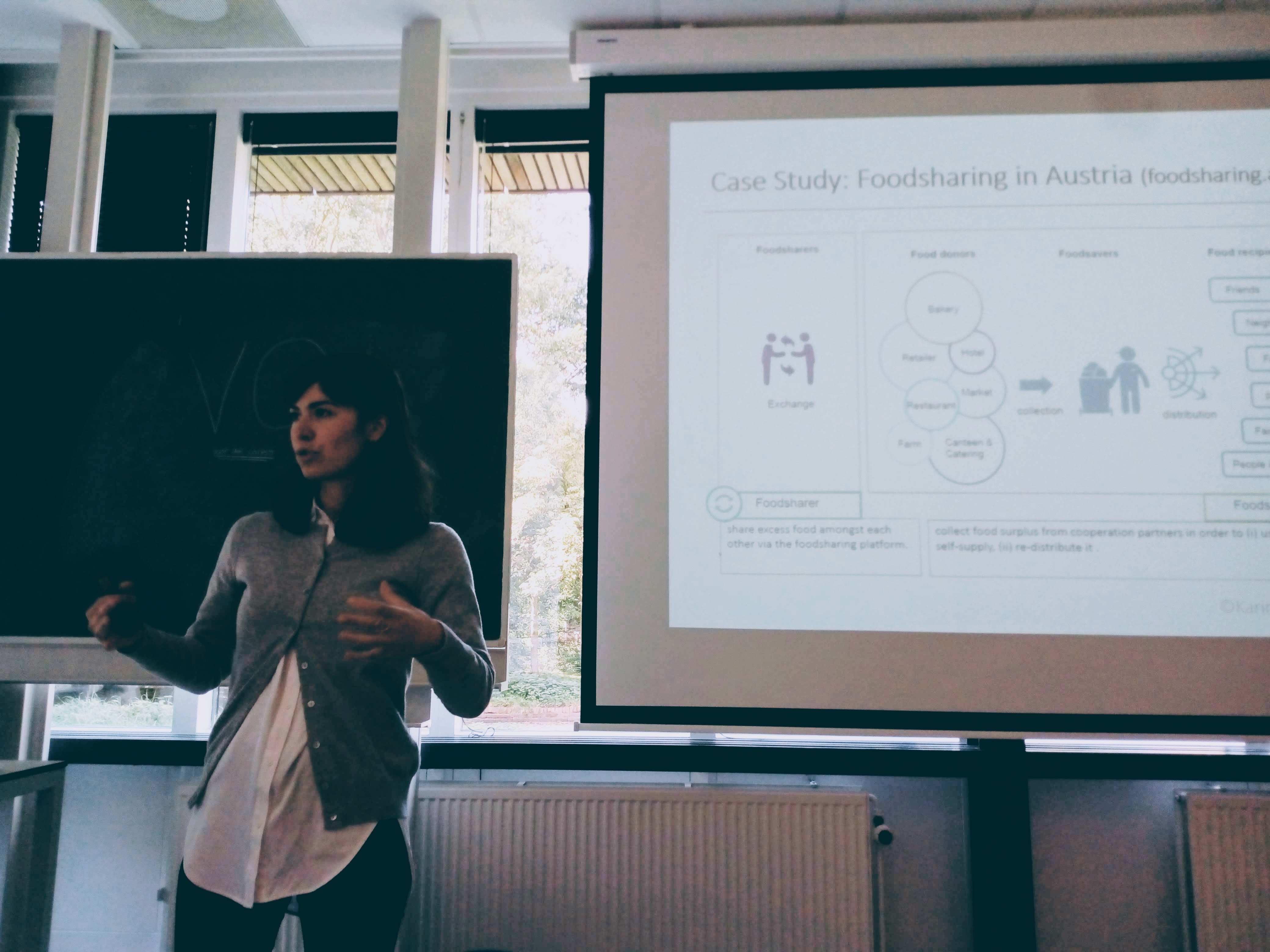
On the 25th of September, the Foodscapes cluster of the Centre for Space, Place and Society (CSPS) organised a critical food studies work shop on the food sharing economy. We invited Karin Dobernig from Vienna to talk about the research that she conducted with her colleague Karin Schanes.

Karin gave a very interesting and inspiring talk on “Collective Action Around Food Waste: Investigating the determinants and characteristics of participation in food sharing initiatives”.

After the talk there was plenty of time to discuss food sharing in more detail. We tried to link the concept of foodscape to that of food sharing, and raised and discussed various questions. For instance, to what extent is food sharing an urban phenomenon? When sharing food, who is liable and should food savers and food sharers accept responsibility? How is this organised in different countries? Also, to what extent does food sharing cross the binary opposition between consumers and producers? Who are the recipients of food sharing, and should they always be in need? There were no clear answers to these questions that can easily be reproduced here, but the discussion was insightful.

This was the first activity organised by the Foodscapes cluster. We much enjoyed the presentation and the discussions. Hoping for more inspiring meetings in the future!

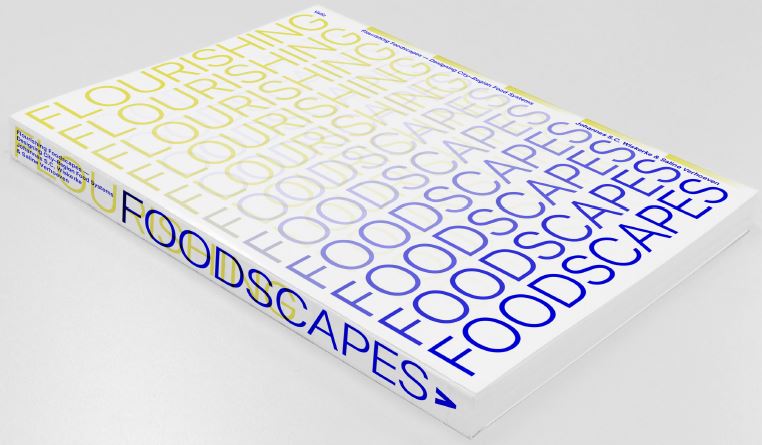
Book Launch – Flourishing Foodscapes: Designing City Region Food Systems

On Thursday 27 September 2018 Valiz and the Amsterdam Academy of Architecture will host a programme dedicated to the launch of the book entitled ‘Flourishing Foodscapes – Designing City Region Food Systems’.

About Flourishing Foodscapes

Flourishing Foodscapes is a book about the the social and spatial organization of networks and systems of food provisioning. It explores, highlights and discusses strategies and designs for creating future-proof city region food systems by addressing the social, economic, and ecological vulnerabilities and sustainabilities of current and future foodscapes, as well as how the spatial qualities of the rural and urban landscape and its use need to adapt and change. A key argument in the book is that food not only has to do with nutrition, but that it links up with and influences a multitude of domains; from health to (eating) culture and from employment to climate change. It has a major impact on the city (especially on consumption and distribution, and, to a lesser extent, on production) and on rural areas (mainly production), but also the relations between city and countryside, close by as well as far apart. Thinking about food-related problems and challenges is becoming increasingly important. These issues influence our planet and way of life, but also our everyday existence.

Flourishing Foodscapes transcends the field of bottom-up initiatives and private projects. If we really want to design more sustainable food systems, we will have to think more structurally about changing food provisioning at different levels of scale. Flourishing Foodscapes links research, case studies and spatial design and takes a step towards a more comprehensive approach to food issues, building on inspiring practices, projects and designs from all over the world.

Programme Book Launch

The book presentation will take place on Thursday 27 September 2018, from 17.00 to 19.30 at the Academy of Architecture (Waterlooplein 211-213, Amsterdam). The programme is as follows:

  • 17:00–17:05 Opening by moderator Saskia van Stein (director Bureau Europa)
  • 17:05–17:10 Welcome by Madeleine Maaskant (director Academy of Architecture)
  • 17:10–17:30 Introduction to the book by the editors and main authors Han Wiskerke (Professor of Rural Sociology, Wageningen University) and Saline Verhoeven (landscape architect and researcher)
  • 17:30–18:00 Reactions tot the book by Froukje Idema (Programme Manager Food, municipality Ede); Martin Woestenburg (rural sociologist and journalist); Arnold van der Valk (Professor emeritus of Spatial Planning and co-founder of the Food Council of the Metropolitan Region of Amsterdam)
  • 18:00–18:25 Discussion led by Saskia van Stein
  • 18:25–18:30 Presentation of the first copy to Hanneke Kijne (Head of Landscape Architecture at the Academy)
  • 18:30–19:30 Snacks and drinks

This programme is free of charge, but if you plan to attend please register via avb-webredactie@ahk.nl