Conference Call – Agriculture in an Urbanizing Society

A major demographic milestone occurred in May 2007. For the first time in the history of mankind the earth’s population became more urban than rural. This process of urbanization will continue in an accelerated pace in the forthcoming decades: the growth of the world population from 6 billion people in 2000 to 9 billion people in 2050 will mainly occur in urban areas. By 2050 the urban population will approximately be twice the size of the rural population.

However, this does not mean that urban areas are or will become of greater importance than rural areas. On the contrary, the urban and the rural have always heavily relied on each other and will do so even more in an era characterized by rapid urban population growth. Cities will continue to need resources such as food, fibre, clean water, nature, biodiversity, and recreational space, as well as the people and communities that produce and provide these urban necessities and desires. Hence, key questions for the next decades are how, where and by whom these urban necessities and desires will be produced and provided and if and how this can be done in manner that is considered to be socially, economically and ecologically sustainable and ethically sound.

In recent years the concept of multifunctional agriculture has emerged as an important reference in debates on the future of agriculture and the countryside and its relations with the wider and predominantly urban society. This is an expression of the fact that agriculture is not only valued for its contribution to food and fibre production and the economic development of the agro-industry, but needs to be assessed according to a much wider range of social, environmental, economic and ethical concerns. At farm level multifunctional agriculture is characterized by a variety of entrepreneurial strategies and activities, such as processing and direct marketing of food products, energy production, care for elderly and disabled people, and tourism. But multifunctional agriculture is also expressed at higher scales, such as the regional level (e.g. collective nature and landscape management schemes and regional branding) and the national level (e.g. policymaking and implementation).

Due to the multiplicity of activities, the multi-scalar character of multifunctionality and the geographical contextuality of expressions of multifunctional agriculture, research on multifunctional agriculture and changing urban-rural relations is highly fragmented, disciplinarily as well as geographically. Hence, this conference aims to advance the scientific state of the art in research on multifunctional agriculture and urban-rural relations by bringing together scholars of different disciplines (sociology, economics, spatial planning, land use planning, regional planning, urban planning, crop sciences, animal sciences, soil sciences, architecture, etc…) from all parts of the world.

Working group themes
The conference facilities allow for a maximum of 21 parallel working group sessions. The scientific committee has proposed 21 working group themes (see http://www.agricultureinanurbanizingsociety.com/UK/Working+group+themes/)   and is inviting prospective working group convenors to submit a short (max 500 words) call text for the theme they would like to convene. Proposals for a working group call text can be send to the chair of the scientific committee by email (han.wiskerke@wur.nl) before the 1st of September 2011. The deadline for submission of abstracts will be 1st of December 2011. Abstracts will have to be submitted to the convenors.

More information

Please check the conference website for more information.
Rural regional learning in the Comarca de Verín, Galicia, Spain

Within the European research project DERREG, we are investigating how public policy can best be arranged to stimulate capacity building within development initiatives operating at grassroots level in rural areas across the European Union.

To find out how public policy interventions can best be arranged, we and our research partners have spoken to various stakeholders in different rural regions across the European Union to find out how they intend to support and facilitate learning and innovation and- most importantly- how the support and facilitation agreed upon is actually provided to the grassroots development initiatives. To find out what is working well and what isn’t working well yet, we have spoken to a number of grassroots development initiators in the participating DERREG case study areas and ask them to evaluate the current support and facilitation received.

To be able to compare the results obtained in the different case study areas, I have travelled to Alytus County, Lithuania in October and Oberlausitz, Germany in December of 2010. In January of this year, I was able to visit our colleague Lola Dominguez Garcia of  Universidade de Vigo in the Comarca de Verín in the South-West of Galicia, Spain. In this blog, we intend to share our experiences. Continue reading

Working group at 24th ESRS congress in Chania, Greece 22-25 August 2011: Call for papers

Imre Kovách ( Institute for Political Science of the Hungarian Academy of Sciences, Budapest), Petra Derkzen and I are organising a working group on “the governance of semi-subsistent food and farming strategies in the countryside and city- a compartive perspective” at the 24th ESRS congress in Chania (Greece) from 22-25 of August 2011. We would like to invite all interested researchers to submit their papers dealing with empirical or theoretical reflections on the driving forces, structure and mechanisms of semisubsistence food and farming strategies in the countryside and-or cities, both within developed and developing countries. Abstracts may be submitted  to Imre Kovach (ikovach@mtapti.hu) AND chania2011@agr.unipi.it until the 30th of April 2011.  For a more detailed description of the workshop please read further…

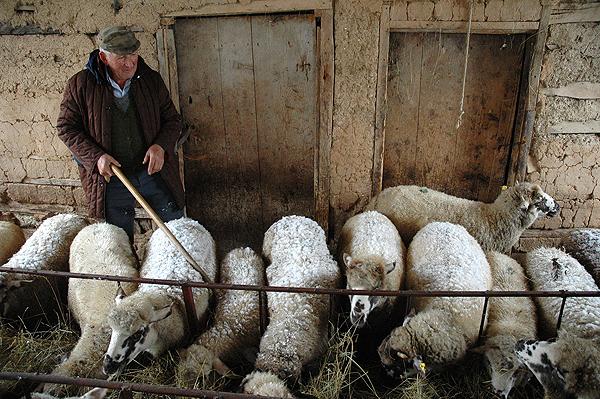
Courtesy of European Forum on Nature Conservation and Pastoralism

Continue reading

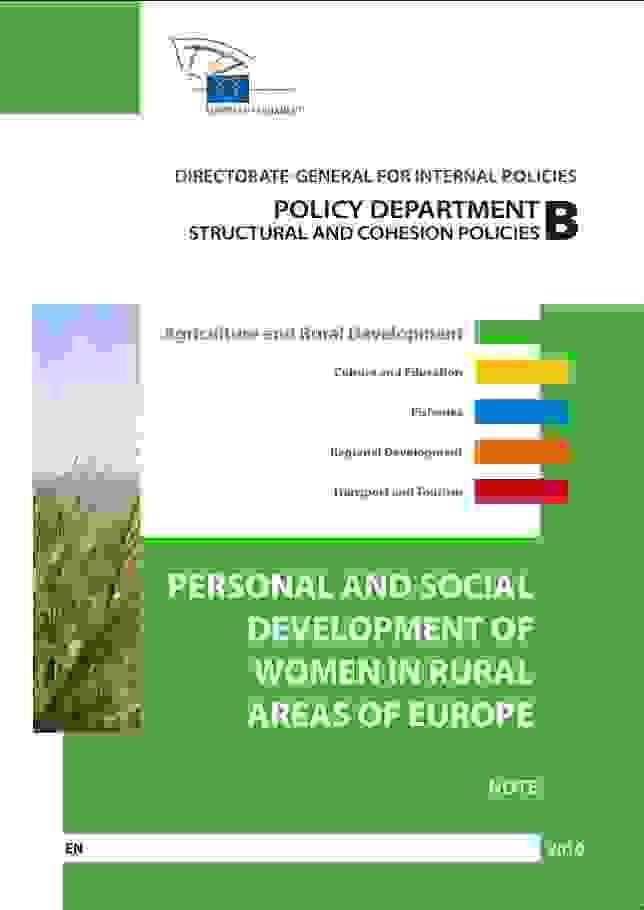
Rural women in Europe: invest in the vitality of rural areas to improve their position

The report ‘Personal and social development of women in rural areas of Europe’, prepared for the European Parliament’s Committee on Agriculture and Rural Development, provides an overview of the social situation of women in the rural areas of Europe. It looks into rural women’s work, political participation and their experience of the quality of life in rural areas. It points at the great diversity between and within Member States but also states that there is no evidence of a general rural disadvantage. Women experience specific problems only in the peripheral rural regions of Europe and in particular the Central-Eastern Member States. These areas are maladapted to women’s needs in terms of employment and services, as well as cultural norms and values. It is also in those areas that young rural women (and men) decide to leave and to search for a better life elsewhere.

Analysis of rural development policies reveals that women seldom participate in the formation of rural development plans or the decision making on the distribution of funds. There are some projects designed for women often focusing on self-employment. There are also some projects aimed at improving the supply of social services. Most projects are fragmented attempts to solve some problems for some women. A coherent plan on how to address gender equality is lacking. 

To improve the situation of rural women it is recommended to focus on the situation in the peripheral rural areas where the low quality of life and lack of work, income and services constraints women’s development and perpetuates unequal gender relations. It is important to invest in the vitality and quality of life of those areas and to improve their accessibility. Upgrading the local quality of life may convince rural women (and men) to stay. It may also help to mobilize individual and collective action for local development.

Wanted: Students for an international experience!

Every year, the Rural Sociology Group participates in a two week intensive programme on rural development in the EU. A diverse group of students from various European countries (a.o. Portugal, Poland, Germany, Hungary, Italy, Spain, Lithuania, Slovenia) work together on a case study. Through lectures and field trips scientific and practical knowledge will be aquired and then implemented in the case study analysis. See past experiences of Marlies, Petra and Wiebke
 
This year the IP is organised by the university of Padova and takes place in San Vito Di Cadore in the Italian Dolomites. The general topic is: “the role of agriculture in territorial identity and competitiveness of rural areas”. More specificly, the general question is related to how these (territorial identity and competitiveness) contribute to rural development in the Dolomites (Alps region). For more information on the content see below. 
 
Are you a student of Wageningen University and looking for an international learning experience? Then sign up for two intensive weeks from 3 to 16 April 2011! For subsciption or more information contact Els Hegger (els.hegger@wur.nl).