“Kuifje in India” (3) – International Master of Science in Rural Development (IMRD)

In ‘part 2’ I promised to tell more about ‘farming and rural life in India’. I have to break these promises. Like with so many other things in India, it is impossible to get a good idea about what’s really at stake. Remember the figures I gave you about the average spending in rural and urban India. They indicate wide spread poverty. But at the same time, India is worldwide nr. 1 producer of milk (17 percent of all worldwide cows & buffalo’s are located in India); India is nr. 2 in producing vegetables; the same score with rice; the same with fruit, etcetera. These incredible figures do impress as well. So I was thinking: where are these dairy farms, where are those orchards, where is the field with ‘sweet peppers’? Considering these things, I noticed that it is so hard to imagine what India really look likes. I flew to New Delhi and took some metro’s to get an impression of this city (I didn’t), and then flew to Bangalore to get dropped off at the campus just outside this enormous city. So what do I know? What have I seen? Some cows in the street, a bull near a Hindu temple. So nothing at all so far…..

If you look at the figures, you hardly can imagine that India is ‘one country’. India is 100 times as big as The Netherlands, and the population over 80 times. So the whole of India has (in average) almost the same population density as Holland; can you imagine…. ? It has 22 States (India is a federation) and there are 17 official languages. Languages, that are completely different, and although Hindu is the official language (and many people do speak more or less some basic English), the coherence of this nation is rather fragile (not to mention the differences in religion: Hindu, Muslim, Buddhist and Christians). So what about ‘farming and rural life‘ (the title of one of our RSO courses at the WUR); is it possible to get any idea about that?

Continue reading

“Kuifje in India” (1) – International Master of Rural Development (IMRD)

The University of Agricultural Sciences Bangalore (‘UASB’, in Hindu it is named ‘GVKV’) is ‘associate partner’ of the IMRD consortium. This International Master of Science in Rural Development (‘IMRD’) is an EU funded Erasmus Mundus Program, which originally (it started in 2004) was meant for non EU students to enter an European Master program. Since then, the program became more and more popular; also because it was opened for European students. But more changes took places and put the IMRD into the pictures: since some years, the IMRD not only has full partners (through the Atlantis program) in the US (Florida and Arkansas), but also cooperates with so-called ‘associated partners’ all over the world. These partners are in South Africa (Pretoria University), Beijing (China agricultural University) and Ecuador (Espol).

Students who enter into the IMRD program, have the opportunity to do a ‘specialized module’ in one of those ‘associated partner universities’ (the other 3 semesters has to be chosen out of Ghent, Berlin, Rennes, Nitra, Pisa or Wageningen). In this (‘spring’)semester, 3 IMRD students are in Bangalore: two of them (Basavaraj and Lauren) for their thesis (doing their data collection in India), and one (Tungaa) for the specialized module in agricultural economics.

Continue reading

Learning about the role of agriculture and natural resources in sustainable rural development

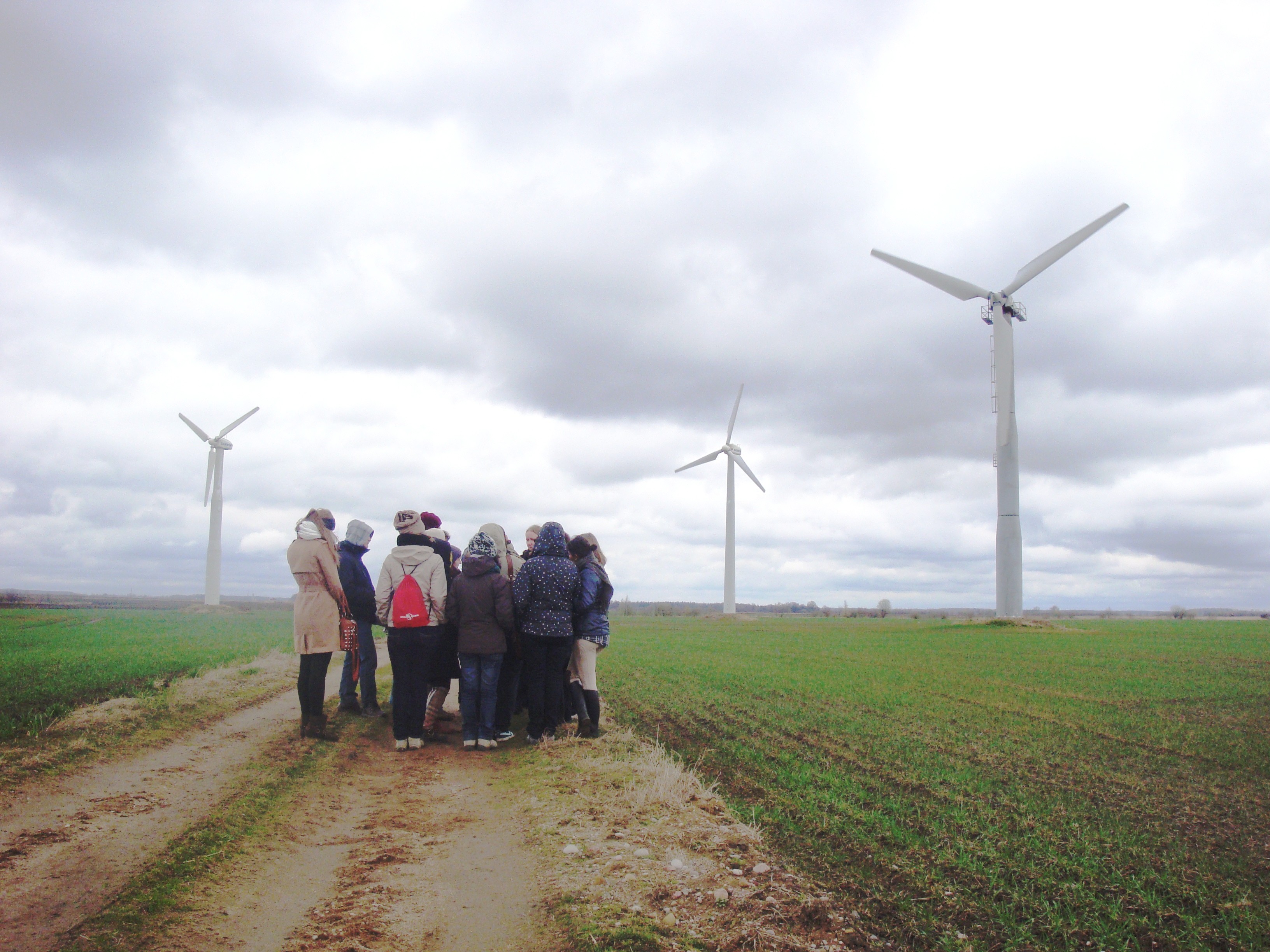
Together with four students of Wageningen University, I spend two weeks in Kaunas, Lithuania to represent Wageningen University, and the Rural Sociology Group, at this years’ ‘Intensive Programme’ on rural development. In this post I would like to reflect on this interesting experience and share some of the activities, impressions and outcomes.


Intensive programme?

An ‘Intensive Programme’ (or IP) is a short study programme bringing together different EU member states’ students and teachers from higher education institutes to study a relevant topic, in this case: rural development. EU’s main motivation to finance these programmes is to encourage multinational learning and teaching in the EU. The Rural Sociology Group has been participating in IP’s on rural development for some years now. Last years’ IP, hosted by colleagues of Padova University, focused on ‘the role of agriculture in territorial identity’ and took place in the Belluno province in the Italian Dolomites. We have also participated in IP’s with other themes. More recent, colleague Petra Derksen participated in an IP on traditional foods and micro-organisms in Romania. In a series of posts on this weblog she, and participating students, reflect on their experiences in this programme.        

The role of agriculture and natural resources in sustainable rural development

This years’ IP, on rural development, focused on ‘the role of agriculture and natural resources in sustainable rural development’. The programme was hosted by colleagues from the Aleksandras Stulginskis University in Kaunas, Lithuania. Twenty tutors and more than forty students came together for two weeks to discuss and learn about (Lithuanian) rural development. Participants represented universities from: Slovenia, Hungary, Slovakia, Italy, Belgium, Lithuania, Estonia, Latvia, Poland, Spain and the Netherlands.

Continue reading

Living the peasant way of life in Santa Cruz de la Colina

After a longer posting-pause in which I finalized my first research phase, identifying supporters of rural grassroots development initiatives in the Province of Soto, here a new update of my activities in Colombia:

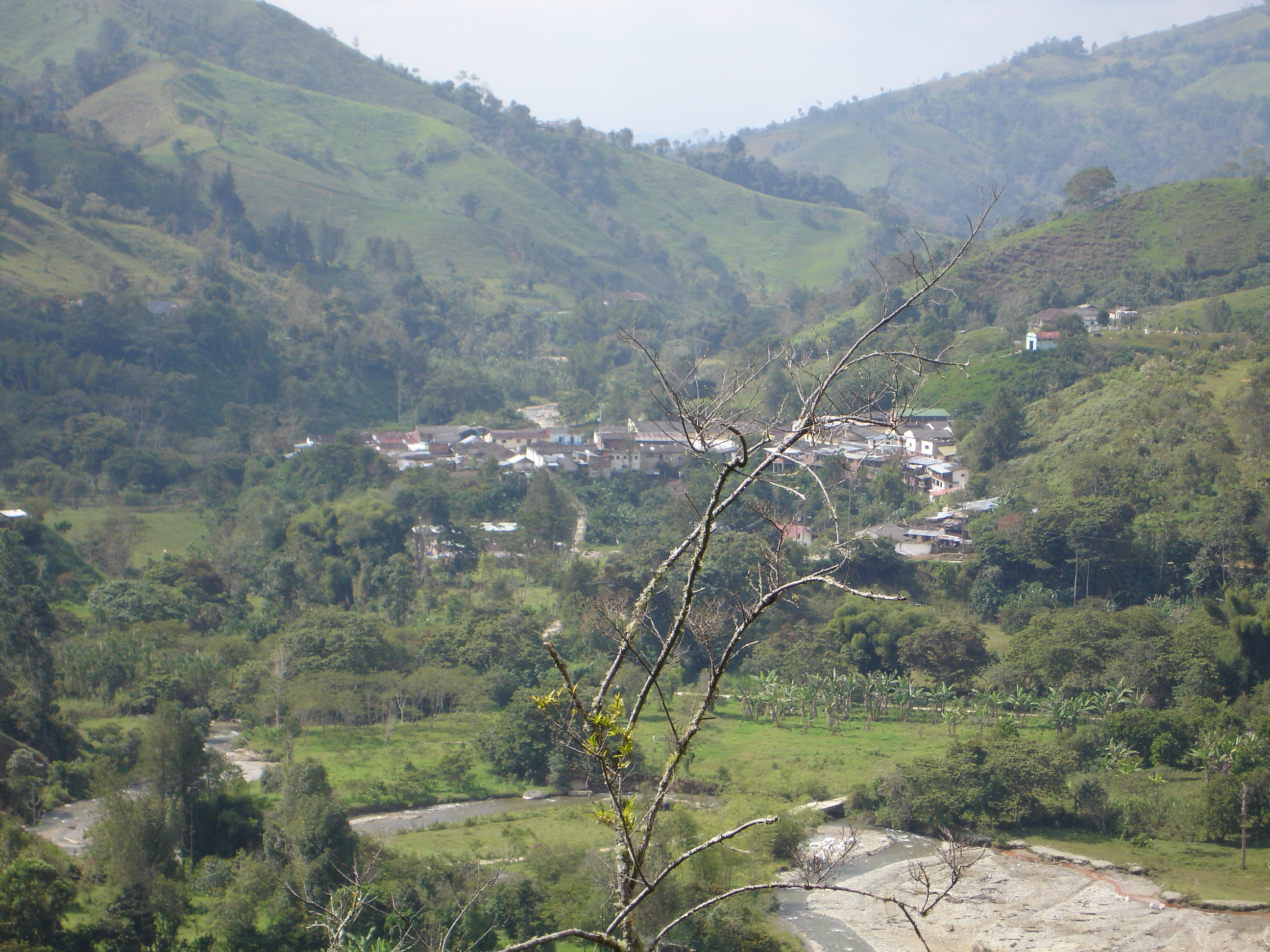
Time is flying and I am finalizing my second research phase, asking grassroots development initiatives to evaluate the support they are receiving to build joint capacities. To be able to speak with rural development initiatives, I was invited to spend a week with a peasant family in the vereda St. Ana of Santa Cruz de la Colina.

Santa Cruz de la Colina, Matanza, Colombia

Continue reading

Politics of place making in urban farming – an essay

By Anke de Vrieze

Last trimester, I had the opportunity to join the Capita Selecta course `A Global Sense of Place´, taught by Joost Jongerden and Dirk Roep. From my current working experience in the field of urban agriculture, the subject of the course – place-based approaches for sustainable development- interested me and proved valuable. In the course, different approaches to ‘place’ were discussed and related to culture, politics, economics and leadership. As we were a small group of students, we met in a weekly reading group, to discuss the literature and our written assignments.

Personally, I was most inspired by the work of Doreen Massey. Her perspective on place and space is a relational one, as she describes places as ‘temporary constellations’ or ‘bundles of space-time trajectories’. In one of her articles, she connects this relational perspective to ‘geographies of responsibility’ and shows how the ‘global’ is embedded locally as well. Taking the example of the City of London, i.e. it’s financial district, she argues against generalised understandings of the local as a product of the global, and demonstrates that indeed much of what we call ‘the global’ stems from local areas, such as the City of London. This leads her to plea for alternative globalisations, based on ‘a challenge of place’. I think, Massey’s perspective can prove meaningful for anyone studying ‘place’, whether it be in urban or rural settings.

For the final essay, ‘Growing community? Urban agriculture in the context of place-based urban development’ of the course, I discussed the ‘politics of place-making’ in a case of urban farming. By drawing on the example of an neighbourhood-based urban agriculture project, I showed how the different perspectives on place, as employed by various actors involved, creates a dynamic fields of interests regarding the ability of UA to address urban issues, and to achieve sustainable community development. Based on this short analysis, I argued for the need of a relational perspective on place, taking into account place-frames and positionality of actors, in (future) cases of neighbourhood-based urban farming.

Anke de Vrieze, anthropologist and project coordinator of FARMING THE CITY (www.farmingthecity.net), contact: ftc@citiesthemagazine.com