
The Rural Sociology Group of Wageningen University will celebrate its 75th Anniversary on May 13, 2022 with a public event entitled “Rural Sociology: past, present and future”.
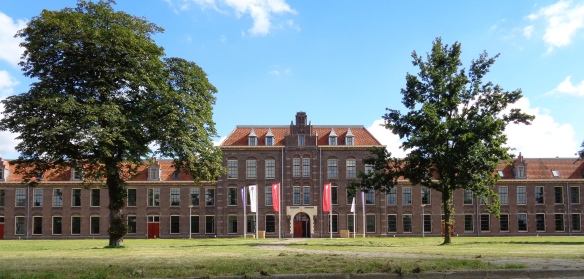
Venue: Akoesticum, Nieuwe Kazernelaan 2D42, 6711 JC Ede, The Netherlands (registration has closed).
For more information: ruralsociology2022@gmail.com
At the event we will reflect upon the history of rural sociology and discuss future challenges in a lively and interactive setting.
Program
08.30 – Registration and coffee/thee
09.00 – Opening by Arthur Mol (Rector Magnificus of Wageningen University)
09.30 – Keynote Han Wiskerke
Meaningful diversity: Past, present and future of rural sociology
10.00 – Keynote Haroon Akram-Lodhi
From peasant studies to critical agrarian studies
10.45 – Break
11.00 – Rural Talk Show – Interactive session including invited guests and audience participation. The Talk Show is chaired by Matt Reed, with Jan Douwe van der Ploeg as a permanent table guest, and changing table guests around the following three themes:
– Societal engagement or academic distance; with Jessica Duncan, Aya Kimura, Han Wiskerke
– Discussing the rural-urban dichotomy; with Henk Oostindie, Sally Shortall, Esther Veen
– A continuing debate: agency and structure; with Bettina Bock, Bram Büscher, and Mark Vicol
12.15 – Closure morning session
12.30 – Lunch
14.00 – Workshops
15.30 – Keynote Hannah Wittman
Bridging rural and urban through agroecological networks: cultivating agrarian citizenship in a climate crisis
16.30 – Imagining the next 25 years of rural sociology. Interactive session around three research agenda’s, briefly pitched by RSO staff, followed by an open floor exchange of ideas and discussion:
– Agriculture – introduction Kees Jansen
– Place – introduction Joost Jongerden
– Food – introduction Jessica Duncan
18.00 – Closure, drinks and conference diner
Keynote speakers:
Haroon Akram-Lodhi – ‘From peasant studies to critical agrarian studies‘
Haroon Akram Lodhi is Professor of Economics and International Development Studies at Trent University, Canada. His research interest is in the political economy of agrarian change, the future of smallholder peasant communities in the world food system, on the sustainability of rural social structures, relations and institutions, and gender and rights based economics. https://sites.google.com/site/aharoonakramlodhi/home
Arthur Mol – Opening
Arthur Mol was trained in environmental sciences (MSc) and environmental social sciences (PhD). Besides being Chair and Professor of Environmental Policy at Wageningen University he was also Professor of Environmental Policy at Renmin University, China, at Tsinghua University, China, and at the National University of Malaysia UKM. He was joint editor of the journal Environmental Politics, and is book series editor of New Horizons in Environmental Politics. His main fields of interest and publications are in environmental studies, globalization, social theory and the environment, informational governance, ecological modernization, China, sustainable (food) production and consumption and urban environmental governance. Currently, he is Rector Magnificus and Vice-President of the Executive Board of Wageningen University & Research and president of the Association of European Life Science Universities (ICA). https://www.wur.nl/en/Persons/Arthur-prof.dr.ir.-APJ-Arthur-Mol.htm
Hannah Wittman – ‘Bridging rural and urban through agroecological networks: cultivating agrarian citizenship in a climate crisis‘
Hannah Wittman is Professor Land and Food Systems at the University of British Columbia in Canada. Her research examines the ways that the rights to produce and consume food are contested and transformed through struggles for agrarian reform, food sovereignty, and agrarian citizenship. Her projects include community-based research on farmland access, transition to organic agriculture, and seed sovereignty in British Columbia, agroecological transition and the role of institutional procurement in the transition to food sovereignty in Ecuador and Brazil, and the role that urban agriculture and farm-to-school nutrition initiatives play in food literacy education. http://ires.ubc.ca/person/hannah-wittman/
Han Wiskerke – ‘Meaningful diversity: past, present and future of rural sociology’
Han Wiskerke is Professor of Rural Sociology and Chair of the Rural Sociology Group at Wageningen University since 2004. From January 2013 until June 2016 he was also Professor of Foodscape Studies and Design at the Academy of Architecture (Amsterdam University of the Arts). His main research themes during the past 15 years have been a) agrarian and rural development, b) city-region food systems and c) urban-rural relations. He was founding editor-in-chief of Urban Agriculture and Regional Food Systems from 2014 – 2018 and (co-)editor of books on agrarian & rural transitions, food planning, foodscape studies & design, urban agriculture, and sustainable & regenerative food systems. https://www.wur.nl/nl/personen/han-prof.dr.ir.-jsc-han-wiskerke.htm
Participants in the Rural Talk Show session and the Imagining the next 25 years of rural sociology session:
Bettina Bock is Professor for Inclusive Rural Development at the Rural Sociology Chairgroup at Wageningen University and Professor for Population Decline and Quality of Life at Groningen University. Her areas of research include inclusive rural development and social innovation, with a particular focus on remote and depopulating rural areas, governance, migration and rural gender relations. From 2013-2019 she was the editor-in-chief of Sociologia Ruralis. In addition, she is a board members of the European Society for Rural Sociology and the International Rural Sociology Association. She has been invited as guest professor at the Università di Gastronomia in Pollenza in 2020), Cornell University in the United States (2019), Kyoto University (2018) and Newcastle University (2017). https://www.wur.nl/nl/personen/bettina-prof.dr.ir.-bb-bettina-bock.htm
Bram Büscher is Professor and Chair of the Sociology of Development and Change group at Wageningen University. He holds visiting positions at the Department of Geography, Environmental Management and Energy Studies of the University of Johannesburg and the Department of Sociology and Social Anthropology of Stellenbosch University, in South Africa. His research interests revolve around the political economy of conservation and development, the politics of energy and extraction, ecotourism, new media and social theory. More info at www.brambuscher.com
Jessica Duncan is Associate Professor in the Politics of Sustainable Food Systems in the Rural Sociology Group at Wageningen University, is a researcher and educator committed to social justice. Jessica is widely recognised for her expertise on the politics of sustainable food system transition. She is a founding member of the Centre for Unusual Collaborations (CUCo) and sits on the editorial board of Sociologia Ruralis. https://www.wur.nl/nl/personen/jessica-dr.-jab-jessica-duncan.htm
Kees Jansen is an Associate Professor in the Rural Sociology Group at Wageningen University. His work connects the fields of political ecology, critical agrarian studies and international development. His current research focusses on pesticide risk governance and social movements concerned about pesticides. More info at www.keesjansen.eu
Joost Jongerden is an Associate Professor in the Rural Sociology Group at Wageningen University. His research on ‘Do-It-Yourself Development’ aims to identify the possibilities of alternative futures grounded in peoples’ daily practices and present struggles. His geographical focus is Kurdistan and Turkey. He holds a position as professor at the Asian Platform for Global Sustainability and Transcultural Studies, Kyoto University, Japan, and has been a visiting professor at Toronto University in 2018. In 2012 he was a founding member of the journal Kurdish Studies, of which he was an editor until 2020. In 2021 he founded the journal Commentaries. He is a board member of the European Union Turkey Civic Commission. https://wur.academia.edu/JoostJongerden
Aya H. Kimura – professor of sociology at the University of Hawai`i-Manoa. Her research analyzes the intersections of technoscience, gender, and sustainability. She has had research projects in Indonesia, Japan, and Hawai`i, and has written on agrobiodiversity, fermentation, food safety, nutrition science and the idea of “smart food.” Among others, she examines diverse practical experiences with citizen science on a range of food and farming issues, from seed development to toxicants to biodiversity. https://ayakimura.weebly.com/
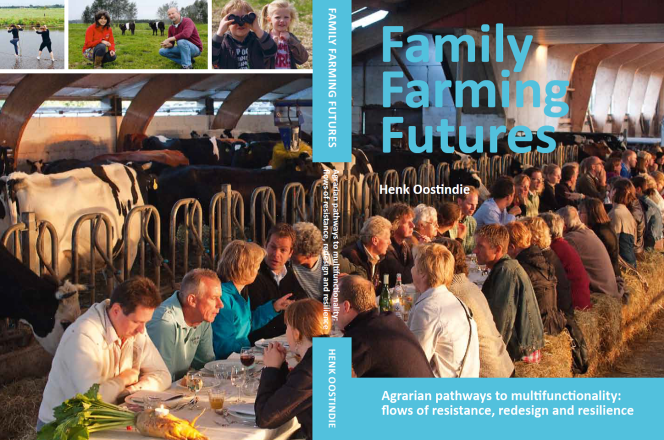
Henk Oostindie – Senior Researcher in the Rural Sociology Group at Wageningen University. He has a longstanding experience in researching the socio-economic aspects of rural development, including topics as farming styles, multifunctional agrarian pathways, food chain dynamics, multi-level rural governance and rural-urban interdepencies. A significant part of his empirically grounded research interests took place within comparative analysis and policy oriented European projects.
Jan Douwe van der Ploeg – Emeritus Professor and the former Chair of the Rural Sociology Group in Wageningen. In his position as Professor of Rural Sociology, he elaborated the inquiry into the expressions, implications and underlying mechanisms of heterogeneity in agriculture. He was also closely involved in some of the grass root initiatives that aimed at developing (practical) new alternatives to the reigning model of ongoing scale-increase and further industrialization of agriculture and rural development. http://www.jandouwevanderploeg.com/EN/
Matt Reed – Associate Professor in Food Citizenship and director of the Countryside and Community Research Institute (CCRI) at the University of Gloucestershire (UK). He is a sociologist with research interests in how and why social change takes place around food. His research rests upon the intersections of political sociology, cultural studies and rural geography. http://www.ccri.ac.uk/reed/
Sally Shortall – Duke of Northumberland Professor of Rural Economy at the Centre for Rural Economy, Newcastle University (UK). Her research interest is in rural sociology, community studies, rural development and rural proofing, agriculture, farm families. She is specifically known for her work on gender and agriculture. https://www.ncl.ac.uk/cre/about/staff/profile/sallyshortall.html#background
Esther Veen worked as an Assistant Professor at the Rural Sociology Group of Wageningen University until 2021. She taught courses on urban food, food and identity, foodscapes and alternative food networks, and studied urban food initiatives, urban food growing and the effects of green on health and wellbeing. She is currently lector (reader) Urban Food Issues at Aeres University of Applied Sciences Almere, working closely with research institute Flevo Campus. She studies how food routines change and normalise, and how the urban environment can stimulate healthier and more sustainable food patterns. She is specifically interested in the interplay between the food environment and everyday routines around shopping, cooking and eating. She also focuses on the role of urban agriculture in the urban food system.
https://www.aereshogeschool.nl/onderzoek/lectoren-en-onderzoekers/esther-veen
Mark Vicol is Assistant Professor of Agrarian Sociology in the Rural Sociology Group at Wageningen University. My research focuses on the intersections between rural livelihoods, agricultural development and agrarian change in South and Southeast Asia. I explore integrative approaches to understanding patterns of change at the intersections of micro-scale rural livelihoods and the macro-scale political-economic structures and social relations that underpin global capitalism. Specifically, I am interested in the changing relationships between land, agriculture, rural livelihoods and inequality; the livelihood implications for rural households of modern agricultural global value chains, and the politics of value chain development; and broader political economy questions about patterns of agrarian accumulation and differentiation and the future of small farmers and agriculture in the region.
https://www.wur.nl/en/Persons/Mark-dr.-MR-Mark-Vicol.htm
Venue: Akoesticum, Nieuwe Kazernelaan 2D42, 6711 JC Ede, The Netherlands.
 Rural Sociology Wageningen University