Rural women in Europe: invest in the vitality of rural areas to improve their position

The report ‘Personal and social development of women in rural areas of Europe’, prepared for the European Parliament’s Committee on Agriculture and Rural Development, provides an overview of the social situation of women in the rural areas of Europe. It looks into rural women’s work, political participation and their experience of the quality of life in rural areas. It points at the great diversity between and within Member States but also states that there is no evidence of a general rural disadvantage. Women experience specific problems only in the peripheral rural regions of Europe and in particular the Central-Eastern Member States. These areas are maladapted to women’s needs in terms of employment and services, as well as cultural norms and values. It is also in those areas that young rural women (and men) decide to leave and to search for a better life elsewhere.
Analysis of rural development policies reveals that women seldom participate in the formation of rural development plans or the decision making on the distribution of funds. There are some projects designed for women often focusing on self-employment. There are also some projects aimed at improving the supply of social services. Most projects are fragmented attempts to solve some problems for some women. A coherent plan on how to address gender equality is lacking. 

To improve the situation of rural women it is recommended to focus on the situation in the peripheral rural areas where the low quality of life and lack of work, income and services constraints women’s development and perpetuates unequal gender relations. It is important to invest in the vitality and quality of life of those areas and to improve their accessibility. Upgrading the local quality of life may convince rural women (and men) to stay. It may also help to mobilize individual and collective action for local development.
Urban farm providing care for the homeless in Rotterdam

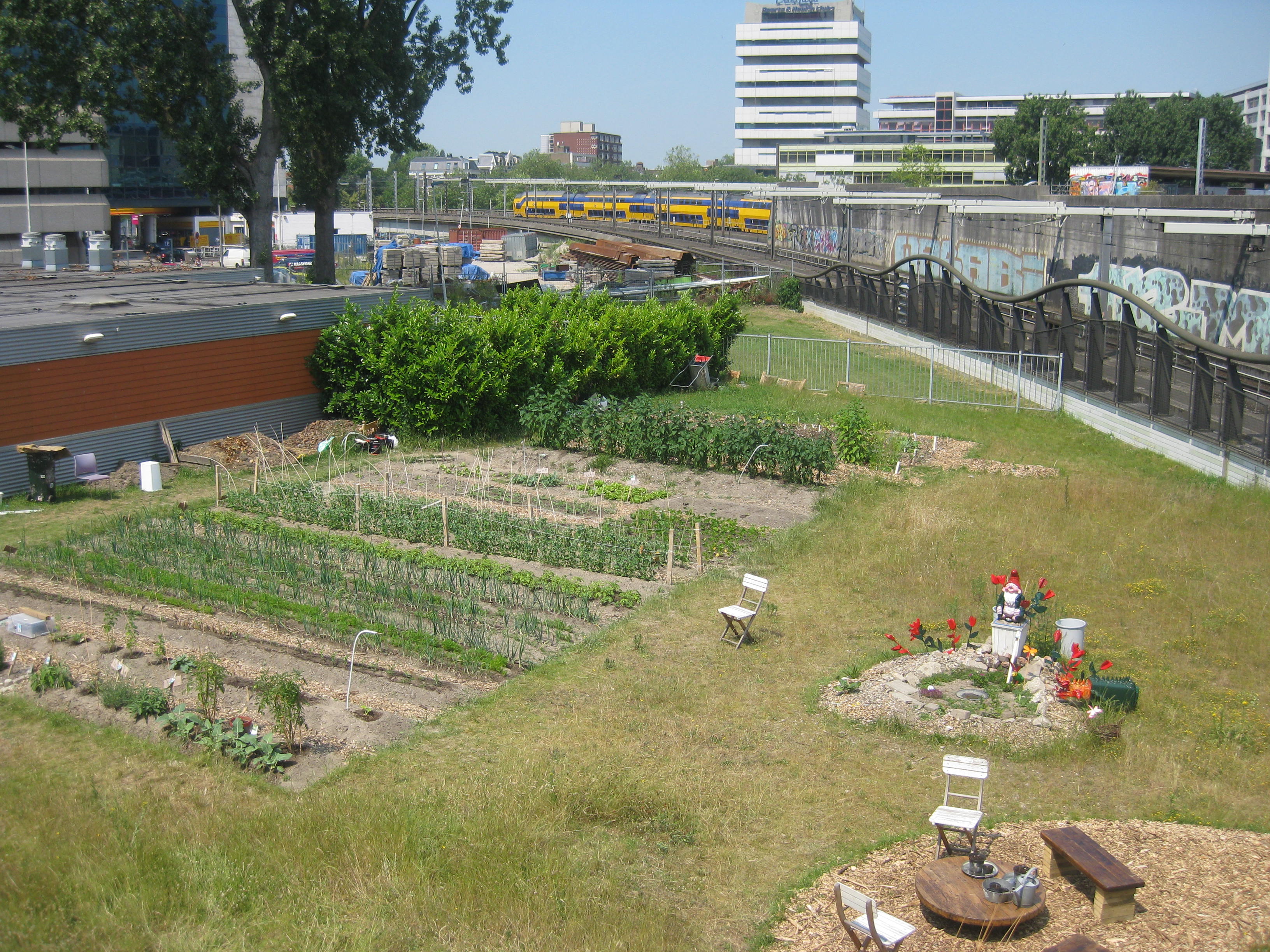
Last week I visited a vegetable and flower garden right in de centre of Rotterdam, on a triangular piece of land squeezed in between the former Shell Head Quarters, the railway going into the tunnel heading South, and the Pompenburg road, flying over the mouth of the railway tunnel towards Hofplein. This garden suddenly appeared on the scene last summer, it is visible from the Pompenburg road and many people passing by wondered what was going on down there.


We had no clue who was running the place, except that Transition Town Rotterdam is apparently involved in its design and operation, and that there is a link with the Nico Adriaans Foundation. But last week I set out to visit this remarkable garden.

It was a freezing cold winter day with snow, but I was assured that there was still some kale and Jerusalem artichoke in the garden. Soon when I got inside the provisional barracks located next to the garden I felt welcome. There was a relaxed atmosphere among the people that were staying there, most of them homeless, some of them with drug problems, I was explained by Jan Blankers, the garden coordinator. Jan works for the Nico Adriaans Foundation, an organisation in Rotterdam providing care and coaching for the homeless. The Foundation is an initiative of the Paulus Church, a church community in down town Rotterdam very dedicated to provide support to homeless people. When the original Paulus Church was removed (in order to make space for new residential development), it was decided to separate the church from the day care of homeless people both organisationally (the Nico Adriaans Foundation was established) as well as geographically (the Paulus church is located at the Mauritskade, the barracks and garden are close to the Hofplein).

Continue reading

PUREFOOD – 12 vacancies for ESRs are open

As mentioned in an earlier post on this weblog, the Rural Sociology Group has been granted the the coordination of a Marie Curie Initial Training Network  entitled ‘Urban, peri-urban and regional food dynamics: toward an integrated and territorial approach to food (PUREFOOD)’ funded by the European Commission’s Seventh Framework PEOPLE program. The objective of PUREFOOD is to train a pool of 12 early-stage researchers (ESRs) in the socio-economic and socio-spatial dynamics of the (peri-)urban and regional foodscape. The PUREFOOD network is centred around food as an integrated and territorial mode of governance and studies the emergence of the (peri-)urban foodscape as an alternative (as opposed to a globalised) geography of food, including the ways in which, and the extent to which, sustainability aspects generally considered to be intrinsic to the alternative food geography are incorporated by the more conventional food companies.

As of now all 12 PUREFOOD research vacancies have been published (or soon will be) by the host universities. For information about the ESR vacancies and application guidelines, you can download the PUREFOOD vacancies leaflet. For more information about the objectives, training and research approach and training program of PUREFOOD you can download the PUREFOOD information pack for prospective ESRs. The deadline for application is 3 January 2011.

Eligibility criteria

The enhancement of transnational mobility to improve career perspectives of early stage researchers is the main goal of the Marie Curie Initial Training funding. To achieve this objective the following eligibility criteria for prospective ESRs have been formulated:

  • You are eligible as an ESR if you are, at the time of recruitment (i) in possession of a university degree, and (ii) have a maximum of four years of full-time research experience, including any period of research training. This is measured from the date when you obtained the degree which formally entitles you to embark on a doctorate, either in the country in which the degree was obtained or in the country in which the research training is provided. Please not that ESRs cannot be PhD holders.
  • You are eligible to the position if, at the time of the selection by the host university, you did not reside or carry out your main activity (work, studies, etc) in the country of the host university for more than 12 months in the 3 years immediately prior to your recruitment.

If you have any questions about a vacancy please contact the contact person mentioned in the vacancy announcement. For general question about PUREFOOD please contact me (han.wiskerke@wur.nl).

Repeasantisation in Araponga, Brazil – a quest for space

By Leonardo Ayabe van den Berg, MSc graduate International Development Studies

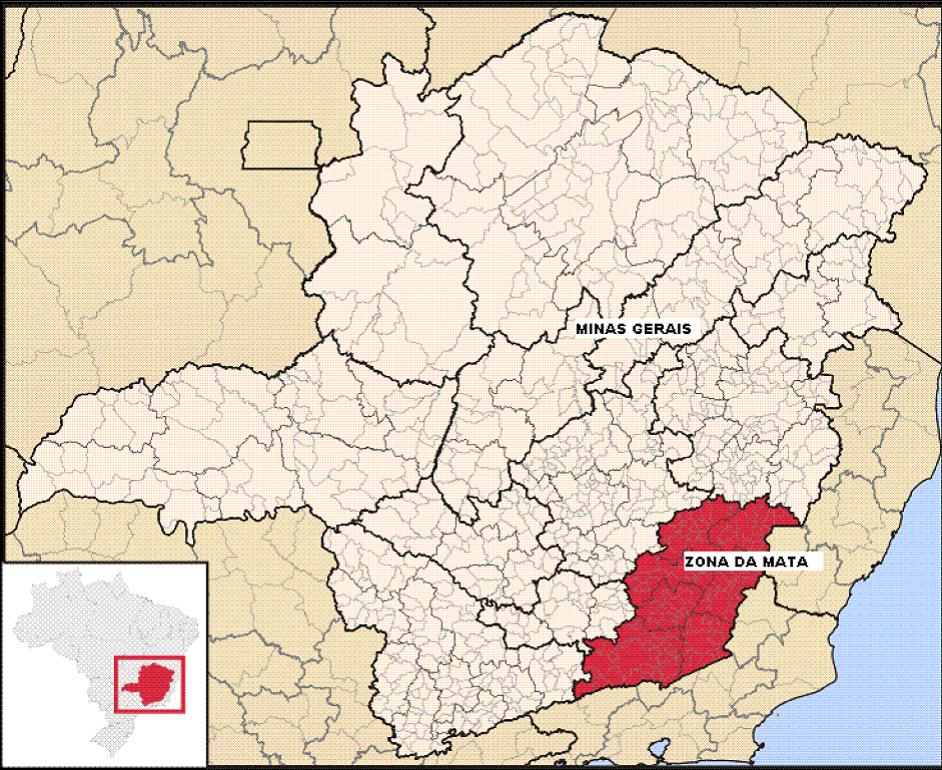
Recently I completed my MSc-thesis. The thesis research is set in the municipality of Araponga in Brazil, where (re)peasantisation occurred and continues to occur. Here I describe some of the findings of my research.  When interested you can downlaod a pdf of my thesis ‘Invisible peasant movements: A case study of (re)peasantisation in Brazil‘.

Araponga

Araponga

When I started to read about the peasantry there were two major things that occurred to me as striking. First, in policy peasants are often considered as a group of laggards: who are unable to take care of themselves and therefore need social assistance; who rely on primitive forms of technology and therefore must be modernized; or who are impeded by a stagnant, traditional mentality and must therefore be converted into small entrepreneurs. The peasant mode of farming is seldomly considered in its own right. Second, in academic theory peasants are predicted to disappear, weaken or live a life of poverty as a result of their inferior mode of production and their helplessness. Departing from the assumption that actors are driven by a specific economic-rational logic, neo-liberal approaches roughly theorise that peasants commoditize, compete with other farms as a result of which there will be regional growth. Tradition or culture can block economic rationality and the transition from peasant to entrepreneur. The peasant will then be doomed to poverty. In contrast to the neo-liberal approach, neo-Marxist approaches, most of which also assume that the peasant is driven by an economic logic and commoditize, theorise that commoditization will either lead to the destruction of the peasant enterprise or to a fate of poverty. This is the result of price fluctuations, squeeze in agriculture (caused by the trend of decreasing produce prices and increasing input prices for farmers), or newly emerging food networks (through which income from weaker, peasant, parts of the chain are squeezed in favour of the more powerful, retailers, part of the chain). These predictions and preconceptions contradict with what happened in Araponga, a rural municipality in the state of Minas Gerais in Brazil where there was a rise in the number of peasants and an increase in welfare. The objective of this thesis was to find out how this was possible: how had (re)peasantisation occurred in Araponga. Continue reading

Foundation for Tomorrow (Koken voor Morgen)

Friday the 15th of January I was at the closing event of the Foundation for Tomorrow workshop cycle which aims to educate women about the water footprint of home cooking. The women who attended the cooking workshops were awarded a special certificate to acknowledge their expertise on cooking home made meals more sustainably. More that 70 women attended the ceremony, most of them are of a Turkish background.

The Foundation for Tomorrow (Stichting voor Morgen) is the initiative of Sevim Zor, who is a ICT software engineer working in the Netherlands, but with a background in Turkey. Sevim started the Foundation in order to make available scientific information about water footprint in an easily understandable way for practical situations in daily life. One of the projects is a series of ten workshops Cook for Tomorrow (Koken voor Morgen), which were given in low income neighborhoods in The Hague aimed at people of different ethnic backgrounds. Workshop participants are stimulated to cook their (traditional) dishes with produce grown regionally (rather than in their country of origin), and also to store them properly in order to avoid wasting food. Continue reading