The Food and Farming Transition: Toward a Post Carbon Food System

More and more scientists are pointing to the fact that the end of the cheap oil era will require us to fundamentally change the prevailing current food and agricultural system; a system that has become addicted to and dependent on fossil fuels. This week I came across a report entitled “The Food and Farming Transition: Toward a Post Carbon Food System” published by the Post Carbon Institute earlier this year.  Although the report focuses on the United States, its contents applies to many other parts of the world as well. In this well accessible and readable report the authors not only point to the key vulnerabilities of a food system resting on an unstable foundation of massive fossil fuel inputs but also to the seeds of transition toward a post carbon food system:

The seeds of the new food system have already been planted. America’s farmers have been reducing their energy use for decades. They are using less fertilizer and pesticide. The number of organic farms, farmers’ markets, and CSA operations is growing rapidly. More people are thinking about where their food comes from.

These are important building blocks, but much remains to be done. Our new food system will require more farmers, smaller and more diversified farms, less processed and packaged food, and less long-distance hauling of food. Governments, communities, businesses, and families each have important parts to play in reinventing a food system that functions with limited renewable energy resources to feed our population for the long term.
Can farmers inform policy about multifunctional agriculture?

By Leonardo van den Berg (MSc. student International Development Studies, Wageningen University) & Klarien Klingen (graduate International Land and Water Management, Wageningen University).

On the 8th of October we participated in the mini-conference about multifunctional agriculture organized by the Rural Sociology Group. We would like to share some thoughts about the conference and relate them to our thesis research experiences in Brazil.

Gianluca Brunori spoke of the benefits of multifunctionality in Tuscany. Here, farms are not merely production spaces rather:

  • Educational sites where children learn about biodiversity and breeds of animals.
  • Sites where farmers are community leaders and negotiate with public institutions.
  • Sites where food quality is negotiated with consumers and subsequently created. This not only entails consumers’ feedback on wine but also farmers educating consumers on what other parts of a cow are edible.

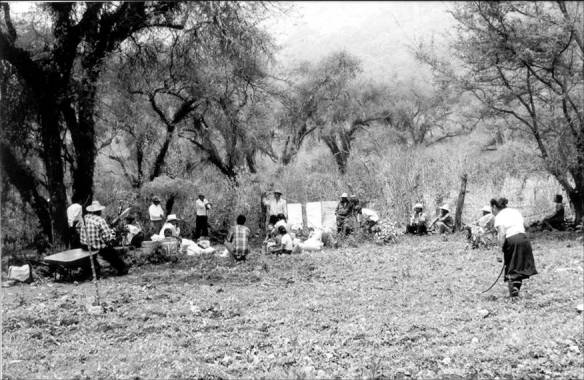
These thoughts turn past and present public concerns of educating farmers upside down and coincide with our thesis experiences in Brazil, where we studied a movement of innovative peasants. Here, farmers refused to be assigned a role as a poor class and instead re-established their role as experts over production, consumption and the environment. Their knowledge, farming systems, and achievements surprised social and natural scientists.

Roberta Sonnino and Katrina Rønningen focused on state policies. Sonnino criticised the little support UK policy grants to multifunctional agriculture. She argues that the UK equates best value with low costs. The few developments in multifunctional agriculture have occurred despite rather than thanks of state action. An exception is the Scottish case where an increase in organic and locally produced school meals gained €150.000 of regional revenues. Rønningen showed us another picture: in Norway multifunctionality has been embedded in society for a long time. She says it started with market demand and that it is now supported by policy: the government aims at having 20% of the food locally produced by the year 2020. Farming as a profession is highly appreciated by the public: farmers are seen as managers of cultural heritage and as producers of healthy food.

Two things struck us about these two cases. First, the UK case shows how difficult it is to penetrate the neo-liberal armour that defines not only political but also much of our own rationality. Policies are often perceived as an obstacle rather than as enabling factors. It was this hostile context in which Brazilian peasants operated. Through diversification, agroecology, and community forms of exchange these peasants have increased their autonomy enabling them to pursue their own values. Second, the case of Norway gives us a taste of the role public policies could play in the valorisation of farmers as (re)producers of healthy food, nature, landscape, biodiversity, and public health. That most governments are lacking this is no secret, even according to a market oriented, middle size farmer in our research area:

I could fence a water source, buy some wire and provide some poles. If it were more, how do you say; all this imprisonment of all that is commerce, if it were more humane, looked more at the human side, I think there would be more left and all of society would gain from this (interview November 2009).

In short: we would argue that that the lessons from the third world should not be underestimated. Our experience learns that some of these cases may be running well ahead of theory and policy practice.

Resistance and Autonomy in Western Mexico – local actors creating a place of their own

 By Peter R.W. Gerritsen, Department of Ecology and Natural Resources, South Coast University Centre, University of Guadalajara, Av. Independencia Nacional 151, 48900, Autlán, Jal., Mexico. Email: petergerritsen@cucsur.udg.mx

 The local effects of global processes in the Mexican countryside are well documented; describing problems related to the quality of rural producers’ life, identity and traditional practices, as well as their resource management practices. Alike initiatives all over the world,  also in western Mexico local actors joined forces to counter these problems and created ‘a place of their own’ in a globalised world, a place for their own wellbeing.

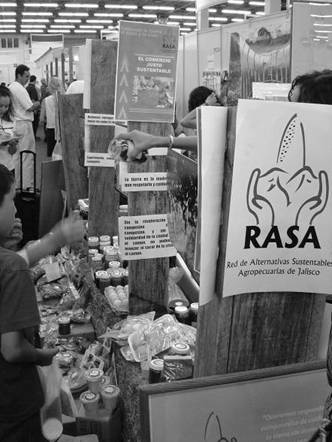
RASA - Peter Gerritsen

In the state of Jalisco, located in western Mexico, 20 groups of peasants and indigenous farmers, supported by professionals from non-governmental organizations and local universities, joined forces in 1999 and created the Red de Alternativas Sustentables Agropecuarias (RASA: the Network for Sustainable Agricultural Alternatives). As such, the RASA can be considered an umbrella organization for many local organized producer groups.

The RASA is also a social organization with characteristics of the so-called new social movements. New social movements have emerged since the late 1970s in the Mexican countryside, due to the problems created by global processes. The struggles that have led to their emergence originate from the demand to defend local structures and to remain control over the different domains of daily life. As such, these movements stress the need for endogenous development approaches. Closely related to the issue of specific life styles is the defense of the territory, being the place of local identity formation. It is also here, where innovative forms of resource management have emerged.

RASA 2 PGThe RASA´s main objective is strengthening a development model that aims to mitigate the local impacts of global processes and that permits the transition towards sustainable local development. In practice, the RASA organizes workshops on organic agriculture and fair trade, and organizes farmer-to-farmer meetings for sharing experiences (including political discussions on the countryside). These activities take place in the rural and peri-urban areas of Jalisco. The RASA also designs and implements new fair trade-channels, mainly in the metropolitan area of the Jalisco state capital Guadalajara. As such, the RASA´s actions are also directed at urban consumers. Finally, articulation with other social movements is actively sought for. Thus, the RASA seeks to create new room for maneuver by establishing strategic alliances with different societal actors.

The creation of local transition paths towards sustainable development, such as promoted by the RASA, is related to the issues of agency and power. These, in turn, are (often) related to resistance and autonomy. Both elements are also recognizable in the RASA experience.

To start with, the RASA has created its own socio-political space in the Jalisco countryside, which has permitted to resist to and counter the dominant rural development model in Mexico and in Jalisco that follows global tendencies. However, the RASA´s efforts must be understood as heterogeneous in nature; not all groups are involved in fair trade, but only those with a production surplus. Moreover, some groups focus more on basic grain production, while others cultivate horticultural crops. Furthermore, the RASA emerged outside the realm of governmental intervention in rural areas. In fact, it has been systematically neglected by formal institutions, as the RASA has been considered a threat to the established formal – historically-determined – political spaces in the rural arenas. Moreover, within the rural communities the RASA-members are perceived as outsiders. In this sense, the RASA conceptual approach has permitted strengthening their self-consciousness and self-organization, as well as improving their position in their communities. It has also led to the dimension of autonomy in the sustainable development model, as designed and implemented by the RASA.

New ideas, but where are the new policies?

On behalf of Merel Heijke: second year student Master of International Development Studies at Wageningen University.

Thursday the eight of October I took part in the mini-conference: ‘Dynamics and Robustness of Multifunctional Agriculture: Lessons from abroad’ organized by Wageningen University’s Rural Sociology Group. I participated in the conference because since I came to Wageningen to study International Development Studies (I did my bachelor in interdisciplinary social science at the University of Utrecht), I really got interested in the way life is approached by people in the countryside. The topic multifunctional agriculture however, was quite new to me. Some considerations:

This conference opened my eyes about the difficulties people can face with certain top-down rural policies. The Norwegian guest Katrina Rønningen argued that too much attention and pressure is directed towards rural actors active in multifunctional agriculture. People that do not have sufficient knowhow and capacities to adjust their business to this way of life, fail and get into a lot of stress. This might be a consequence of a second point of view that struck me that afternoon, namely: policies implemented by the (national and/or local) government may not be relevant or can even hinder the development of new ideas. From a sustainable point of view: if we, as the global society, want to sustain the luxurious life we have, we need to adapt. Export versus quality, economical versus sustainable, short-term incomes against long-term investments – the choices are hard to make when governmental policies do not really support new initiatives (even the cheap ones) or the advertisement to the big public. An interesting topic to study…

I am very curious what the future will bring us… How will our food be produced in twenty years? What does our relationship with the countryside look like? How is our land going to be used? Let’s have an other conference about this subject in five years! This international exchange of information was really interesting and asking for new thoughts to develop. I am hungry for more!

Merel Heijke

Discussiebijeenkomst multifunctionele landbouw: ervaringen uit het buitenland

Op donderdag 8 oktober 2009 organiseert de vakgroep Rurale Sociologie van Wageningen Universiteit een interessante discussiebijeenkomst over buitenlandse ervaringen van multifunctionele landbouw. Wat gebeurt er in het buitenland en wat kunnen we ervan leren?


Op de bijeenkomst geven een aantal toonaangevende internationale onderzoekers u een indruk van de ontwikkeling rond multifunctionele landbouw in Italië, het Verenigd Koninkrijk en Noorwegen. In de aansluitende forumdiscussie gaan we hierover met elkaar in debat. We verwachten ongeveer 80 tot 100 mensen uit o.a. praktijk, wetenschap, overheid en belangenbehartiging.

De bijeenkomst is interessant voor iedereen actief op het gebied van multifunctionele landbouw en meer wil weten over de betekenis van buitenlandse ervaringen voor Nederland. Als u graag over (uw) grenzen heen kijkt, dan mag u deze bijeenkomst niet missen!


Datum: Donderdag 8 oktober 2009
Tijd: 13.00 – 17.00 uur
Locatie: Landgoed Heerlijkheid Mariënwaerdt, De Hooge Schuur, ‘t Klooster 5 in Beesd


Aan deelname van deze bijeenkomst zijn geen kosten verbonden, de voertaal is Engels.


Programma

12.30 Ontvangst (koffie/thee)

13.00 Opening door dagvoorzitter

Krijn Poppe – Chief Science Officer Agroketens en Visserij, ministerie van LNV

13.05 Welkomstwoord

Frans van Verschuer – eigenaar Landgoed Heerlijkheid Mariënwaerdt, Beesd

13.15 Dynamiek en robuustheid multifunctionele landbouw – introductie onderzoeksproject en presentatie eerste resultaten

Han Wiskerke – projectcoördinator en hoogleraar Rurale Sociologie, Wageningen Universiteit

13.30 Multifunctionele landbouw in Italië – de ‘rural disctrict approach’ in Toscane

Gianluca Brunori – hoogleraar Agrarische Economie, Universiteit van Pisa, Italië

14.00 Multifunctionele landbouw in het Verenigd Koninkrijk – de rol van de staat en de publieke sector

Roberta Sonnino – universitair docent Milieubeleid, Universiteit van Cardiff, Verenigd Koninkrijk

14.30 Multifunctionele landbouw in Noorwegen – een presentatie door:

Katrina Rønningen – senior onderzoeker, Centrum voor Plattelandsonderzoek, Universiteit van Trondheim, Noorwegen (uitgenodigd)

15.00 Pauze

15.30 Dynamiek van plattelandsontwikkeling en landbouw wereldwijd – een vergelijking tussen Europa, China en Brazilië

Jan Douwe van der Ploeg – hoogleraar Transitiestudies, Wageningen Universiteit

16.00 Forumdiscussie – inspirerende lessen voor multifunctionele landbouw in Nederland

16.55 Afsluiting door dagvoorzitter

17.00 Borrel


Aanmelden

Meld u aan met het aanmeldformulier. Wij willen u er op wijzen dat er een beperkt aantal deelnameplaatsen beschikbaar zijn. Voor aanvullende informatie neem contact op met Corine Diepeveen via corine.diepeveen@wur.nl of 0317 – 484507.

De discussiemiddag wordt georganiseerd in het kader van het onlangs gestarte onderzoeksproject ‘Dynamiek en Robuustheid van Multifunctionele Landbouw’. Het onderzoek is ondersteunend aan de Taskforce Multifunctionele Landbouw en wordt gefinancierd door het ministerie van LNV.