Foodlinks News

Here you can find the first edition of Foodlinks News! In this newsletter we would like to update you on the activities of the Foodlinks project and its communities.

A key characteristic of the Foodlinks project is that it brings together different types of knowledge and experience, not only from research but also more practical and tacit knowledge from policy and civil society representatives. Foodlinks organises a collective process of sharing and integrating this knowledge around particular problems of food systems. You can read more about Foodlinks on our website and if you would like to receive the next edition of Foodlinks News you can subscribe here.

Would you like to become a member of one of our communities? Sign up for the Short Food Supply Chain, Revaluing Public Procurement or Urban Food Strategies Community of Practice!

PUREFOOD Research Vacancy ‘Comparative analysis of urban food strategies’

The vacancy for a position as Early Stage Researcher (ESR) for the project  ‘Comparative analysis of urban food strategies in European cities’ within the PUREFOOD research and training network has been re-opened. More information about PUREFOOD can be found below and on the PUREFOOD website (which is still under construction).

Job description

For this PUREFOOD project ‘Comparative analysis of urban food strategies in European cities’ we are looking for an Early Stage Researcher who is interested in the topics of urban food provisioning and the relations between food and policy domains as public health, education, environment, et cetera from a sociological, political science and/or planning perspective. The research will focus on how food policies are articulated and motivated in different European cities and what  the consequences are for their implementation. This focus is inspired by the fact that more and more city governments are taking up food as a key policy area to enhance human and environmental urban health. The challenges of policy articulation and implementation are big. The articulation of food policy has so far been reliant on individual politicians and on a political level vulnerable to electoral shifts. Institutionalization of food policy in city governments has just started and different patterns of institutionalization are emerging with particular pitfalls and successes. This study will explore the preconditions, political processes, strategy articulation and implementations of urban food strategies in different European cities in comparative perspective to enhance the understanding of the conditions for successful urban food policy implementation. Continue reading

Working group at 24th ESRS congress in Chania, Greece 22-25 August 2011: Call for papers

Imre Kovách ( Institute for Political Science of the Hungarian Academy of Sciences, Budapest), Petra Derkzen and I are organising a working group on “the governance of semi-subsistent food and farming strategies in the countryside and city- a compartive perspective” at the 24th ESRS congress in Chania (Greece) from 22-25 of August 2011. We would like to invite all interested researchers to submit their papers dealing with empirical or theoretical reflections on the driving forces, structure and mechanisms of semisubsistence food and farming strategies in the countryside and-or cities, both within developed and developing countries. Abstracts may be submitted  to Imre Kovach (ikovach@mtapti.hu) AND chania2011@agr.unipi.it until the 30th of April 2011.  For a more detailed description of the workshop please read further…

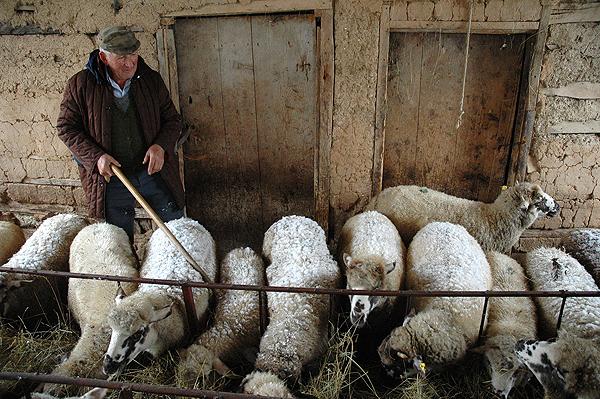
Courtesy of European Forum on Nature Conservation and Pastoralism

Continue reading

Verandering van spijs doet eten (2)

Een centraal begrip in de literatuur over ‘alternatieve voedselnetwerken’ (zoals groentepakketten of boerenmarkten) is ‘verankering’. Binnen de nieuwe vormen van verkoop vindt verankering plaats in lokale ketens, sociale netwerken en ecologisch bewustzijn. Alternatief in tegenstelling tot gangbaar waar de supermarkt gericht is op anonimiteit/inwisselbaarheid van ingredienten, communcatie via labels, standaard beschikbaarheid ongeacht seizoen en zwijgt over onzichtbare milieukosten. Waar bevindt de Nederlandse versmarkt zich eigenlijk in dit soms zwart/wit debat?

Farmers Market Des Moines US

Cleo van Rijk onderzocht de centrale versmarkten in de vier grootste Brabantse steden en kwam tot opmerkelijke ontdekkingen. Ze bevestigt de stelling van Marsden en Sonnino (2006) dat er geen scherpe scheiding is tussen ‘alternatief’ en ‘gangbaar’. Maar de versmarkt, zo blijkt, heeft een heel eigen logica met elementen van beide.

Overal in Nederland staan de versmarkten onder druk, het marktaandeel van de ambulante handel neemt elk jaar af. Het onderzoek laat zien dat de eigen logica van de versmarkt verrassend goed past bij het soort verankering waar alternatieve netwerken naar streven. Veel van deze verankering is echter nog niet als zodanig herkend en zichtbaar gemaakt.

Na de ontdekking van de moestuin wordt het tijd de traditionele versmarkt te integreren in het nieuwe denken over voedsel. Elke gemeente die bezig wil met een stedelijke voedselstrategie (en van daaruit wellicht een boerenmarkt overweegt) kan haar versmarkten niet buiten beschouwing laten.

Cleo’s onderzoek komt in Januari beschikbaar.

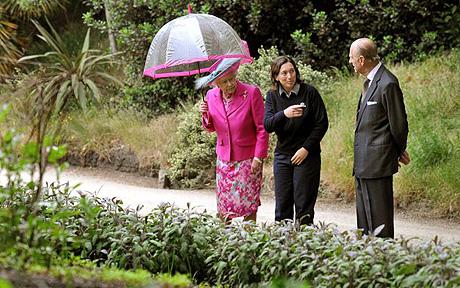
AESOP; the government in the garden

Queen Elisabeth's Vegetable Garden. Photo:John Stillwell/PA Wire

Why is the government in the garden? This was the title of the last presentation in our Working Group Urban Food Governance at the AESOP conference this weekend in Brighton. Some governments are getting into the garden, case studies presented by conference participants showed how and why. Food is ‘becoming public’ a process of taking responsibility for what has been seen until very recently as a pure free-market issue. Public planning and action occurs for various reasons; because of urban health and obesity, the Urban Heat Island effect, food security in poor neighborhoods or in response to civic actions and food movements.

Notwithstanding the promising examples, there is reason for worry too. The political climate has shifted markedly in countries such as the UK and the Netherlands and budget cuts are threatening the sustainable food agenda because this ‘additional’ issue came in last and is the first to be thrown out. A second reason is what seems to me a continuing planner’s identity crisis. The philosopher Hans Achterhuis admits in his recent book that neoliberalism became so much the norm that the process of how it slipped into virtually every policy by small pragmatic adjustments happened unseen even for many of the critics.

Planning seems the opposite of neoliberalism. At the conference, we were stimulated to start planning again, the word master plan fell and was heavily debated. Planning –by default – seems to restrict choice. And free choice is the symbol and myth of neoliberalism with which few people dare to interfere. It is an unproductive and misleading contrast. As if no planning takes place now. Urban planners who decide upon the location for a supermarket are planning, the question is, which criteria are used and which of those do conflict with other public interests? The neoliberal idea of planners restricting choices has encroached the belief that planners can counteract private business interests. They can and should I think. The case studies often showed that current successful examples developed from a particular local  ‘culture’ among those working with urban food planning incorporating public values such as equity, fairness, access and community.

The presentations and keynotes will be made available over the course of the coming week at the conference website