“Kuifje in India” (4)- International Master of Science in Rural Development (IMRD)

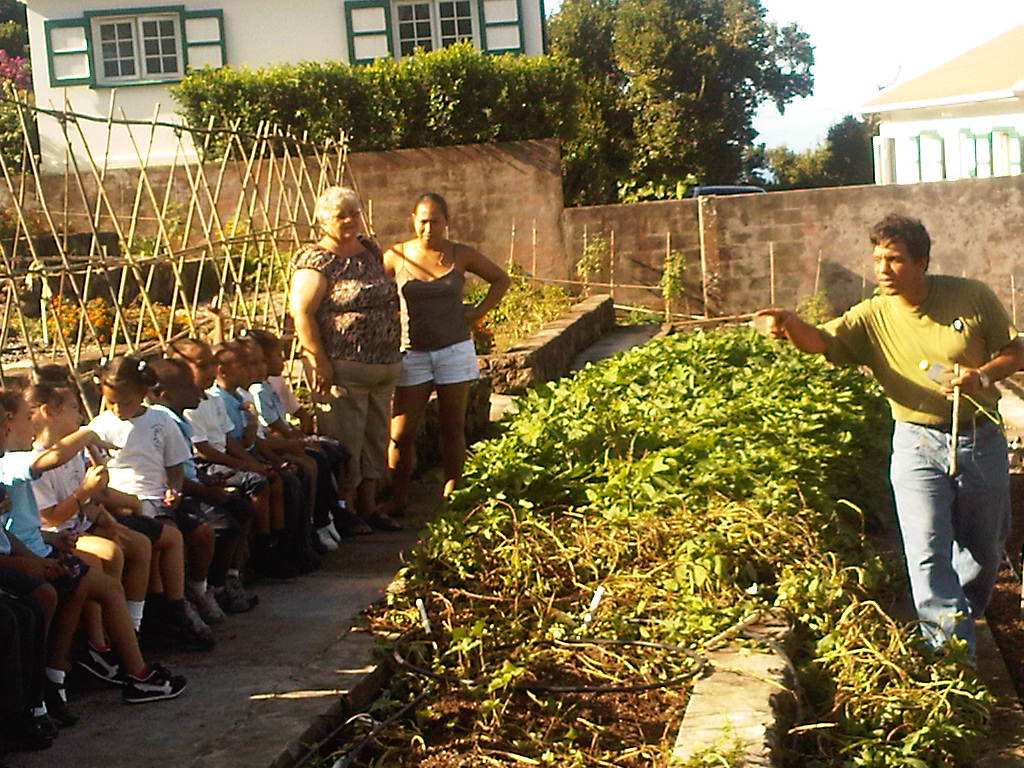
The Hindu (“India’s National Newspaper since 1878”) opened yesterday’s edition with agricultural news on the front-page. “Skyrocketing fertilizer prices floor farmers” was the title of the story about increasing costs of inputs. Small and marginal farmers, who constitute almost 80 per cent of the total of farmers in the State of Karnataka, has been hit hard by the skyrocketing prices of all fertilizers. The prices of most fertilizers doubled or even has gone up with over 250 per cent since 2010. It’s rather complicated why the costs are skyrocketing that high, but once again it makes clear how vulnerable marginal and small scale farming is for external costs. Going ‘organic’ or going for a maximum of ALEI (Agriculture on Low External Inputs) is the strategy that most of my colleagues at the UASB plea for, and they really ‘go for it’. Although a ‘top university’ in a scientific way (UASB is nr. 3 ranked of all Agricultural Universities in India), everyone I met so far isn’t just a ‘top scientist’, but also ‘a grass root worker’; very committed with the poor and the very poor, and always trying to find ways to help and to give mute people a voice or some kind of a future.

I participated many seminars and presentations, and I did speak with many professors, researches and teachers. And they all touched my heart, because their heart was always with the oppressed and the poor. I had the opportunity to meet the highest person in charge (Prof. dr. Gwonda, the Vice Chancellor) several times, and every time I spoke with him, I was impressed by his commitment with the message and mission of his institute. To help the poor and the very poor; to empower the weak and the marginalized.

Continue reading

“Kuifje in India” (3) – International Master of Science in Rural Development (IMRD)

In ‘part 2’ I promised to tell more about ‘farming and rural life in India’. I have to break these promises. Like with so many other things in India, it is impossible to get a good idea about what’s really at stake. Remember the figures I gave you about the average spending in rural and urban India. They indicate wide spread poverty. But at the same time, India is worldwide nr. 1 producer of milk (17 percent of all worldwide cows & buffalo’s are located in India); India is nr. 2 in producing vegetables; the same score with rice; the same with fruit, etcetera. These incredible figures do impress as well. So I was thinking: where are these dairy farms, where are those orchards, where is the field with ‘sweet peppers’? Considering these things, I noticed that it is so hard to imagine what India really look likes. I flew to New Delhi and took some metro’s to get an impression of this city (I didn’t), and then flew to Bangalore to get dropped off at the campus just outside this enormous city. So what do I know? What have I seen? Some cows in the street, a bull near a Hindu temple. So nothing at all so far…..

If you look at the figures, you hardly can imagine that India is ‘one country’. India is 100 times as big as The Netherlands, and the population over 80 times. So the whole of India has (in average) almost the same population density as Holland; can you imagine…. ? It has 22 States (India is a federation) and there are 17 official languages. Languages, that are completely different, and although Hindu is the official language (and many people do speak more or less some basic English), the coherence of this nation is rather fragile (not to mention the differences in religion: Hindu, Muslim, Buddhist and Christians). So what about ‘farming and rural life‘ (the title of one of our RSO courses at the WUR); is it possible to get any idea about that?

Continue reading

Thesis assignment commissioned by Foundation Social Workplace Saba (FSWS) on Food Sovereignty in Saba

The assignment is a participatory scenario development on the different possibilities to achieve a local food supply at Saba. Saba is a Caribbean island and the smallest special municipality of the Netherlands. At the moment most food is imported which makes food expensive for the inhabitants of Saba. At the same time agriculture fields aren’t being fully used. The assignment is to develop different scenarios for a local food market. Optional is a thesis assignment including an internship.
Wageningen UR Science Shop accepted the assignment of FSWS. The research will make you familiar with ‘Participatory Scenario Development’ and is a chance to achieve work experience in the field of the Science Shop and Regional Food Supply. The research will start in September.
Are you interested? Please contact project leader Margriet Goris (cocreation@live.nl or 06-28109539).

Farmer driven transformation: next grassroots-science seminar

As announced earlier, St. Boerengroep and St. Otherwise organize a serie of seminars called Grassroots science: socially driven alternatives that tackle global problems. Next one will be on Monday May, 14, starting 19.30, in the Forum building. See the announced below and register a seat here:

Farmer driven transformation in the Netherlands: sustainable practices and struggles with the state

Dutch agriculture is one of the most productive in the world. This however seems to have come at a price. Disease outbreaks have led to the killing of more than 40 million animals in the last 14 years, it is the only EU country that does not comply to EU groundwater standards, it is the largest user of antibiotics for meat production in the EU, it ranks in the top 3 of the world’s largest pesticide users and the farming population has shrunk by 36% in 15 years. Policy efforts and huge investments in research seem to have brought little change to this. Farmer-led initiatives have however emerged that promise to tackle some of these problems. Frank Verhoeven (Boerenverstand bv) and Douwe Hoogland (chair Noardlike Fryske Wâlden) will talk about two farmer-led environmental co-operatives in the Frisian Woodlands, who, in cooperation with researchers, have devised system innovation by re-integrating dairy farming with nature conservation and landscape management. To realise this struggles with state policies were inevitable.

Learning about the role of agriculture and natural resources in sustainable rural development

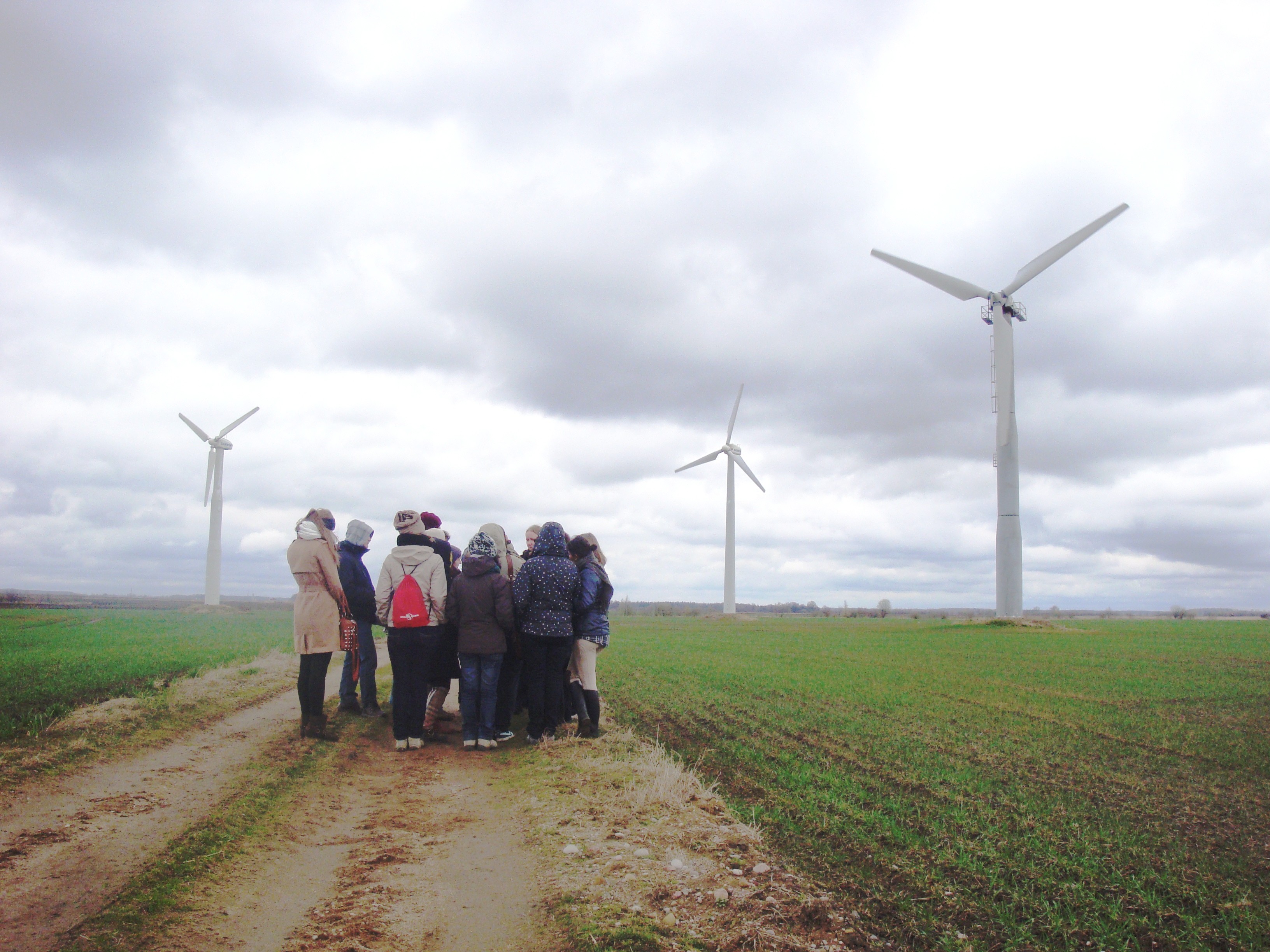
Together with four students of Wageningen University, I spend two weeks in Kaunas, Lithuania to represent Wageningen University, and the Rural Sociology Group, at this years’ ‘Intensive Programme’ on rural development. In this post I would like to reflect on this interesting experience and share some of the activities, impressions and outcomes.


Intensive programme?

An ‘Intensive Programme’ (or IP) is a short study programme bringing together different EU member states’ students and teachers from higher education institutes to study a relevant topic, in this case: rural development. EU’s main motivation to finance these programmes is to encourage multinational learning and teaching in the EU. The Rural Sociology Group has been participating in IP’s on rural development for some years now. Last years’ IP, hosted by colleagues of Padova University, focused on ‘the role of agriculture in territorial identity’ and took place in the Belluno province in the Italian Dolomites. We have also participated in IP’s with other themes. More recent, colleague Petra Derksen participated in an IP on traditional foods and micro-organisms in Romania. In a series of posts on this weblog she, and participating students, reflect on their experiences in this programme.        

The role of agriculture and natural resources in sustainable rural development

This years’ IP, on rural development, focused on ‘the role of agriculture and natural resources in sustainable rural development’. The programme was hosted by colleagues from the Aleksandras Stulginskis University in Kaunas, Lithuania. Twenty tutors and more than forty students came together for two weeks to discuss and learn about (Lithuanian) rural development. Participants represented universities from: Slovenia, Hungary, Slovakia, Italy, Belgium, Lithuania, Estonia, Latvia, Poland, Spain and the Netherlands.

Continue reading