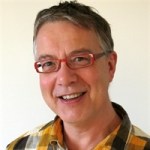
 My name is Kees Jansen. A few weeks ago, I have started in my new job at the Rural Sociology Group. I am very honoured that I can contribute to the international development profile of the group and teach in the domain of critical agrarian studies. Rural Sociology is an exciting group with a long history of remarkable work on redesigning the agro-food system and developing a social justice perspective in agrarian and food policies.
My teaching activities will mainly focus on the courses Sociology of Farming and Rural Life, Globalization and Sustainability of Food Production and Consumption, and Advanced Social Theory.
Latin America is the region where I have done most of my own field work, but shorter stays in a number of Asian and African countries have been important for grasping the significance of comparative research. By working on an organic farm in France, by living with small potato producers high in Andes and with maize-bean producers in Honduras, through interviewing export crop producers in Costa Rica and Mexico, and by visiting farmer co-operatives in the Philippines, I have experienced the multiple pressures on different types of farmers in this globalizing world. In the Rural Sociology Group I will continue my research activities on agrarian political ecology (the greening of the agrarian question; nature-society issues), pesticide risk governance, and theoretical issues in agrarian studies.
The latest examples of my work have just been published in Global Environmental Politics: Business Conflict and Risk Regulations: Understanding the Influence of the Pesticide Industry (sorry, not yet open access) and in the Journal of Agrarian Change with Jaye de la Cruz: Panama disease and contract farming in the Philippines: Towards a political ecology of risk – open access).
The interesting aspect of doing sociology in Wageningen is the unique opportunity to collaborate with natural scientists on analysing social-technical configurations. Besides my own more specific research topics, I am always interested in exploring new, creative and challenging ideas of prospective thesis students and PhD candidates within the broader domain where international development studies and agrarian studies intersect. Examples are labour conditions of a flexible (often migrant) labour force, the social conditions for agroecology, social responses to risks of agricultural technologies, counter-expertise and social movements, people’s adaptation to climate change, agribusiness strategies, the future of corporate social responsibility, hunger and food security, sociology and politics of knowledge (including interdisciplinarity), autonomy/dependence in agrarian change, and comparative analysis of food sovereignty actions in the Global South. You can read more about me and my work on my website: www.keesjansen.eu.
Do not hesitate to contact me at kees.jansen@wur.nl to talk about your ideas.

 Recently students of the Master programme Organic Agriculture (MOA) of Wageningen University launched the first edition of the MOAgazine entitled ‘Organic Times’. The magazine (Organic times online) is written and edited by MOA students and provides some insights into the programme, study and student activities and a variety of issues linked to MOA, including book reviews and organic recipes. As chair of the MOA study programme committee I have enjoyed reading the Organic Times and am proud of the time and energy the students invested in developing this magazine. It reflects the enthusiasm and commitment of this great and dedicated group of international students as well as the interdisciplinary character of the MOA programme.
 Rural Sociology Wageningen University