Thesis Opportunities: Social Economies of food, agriculture, and nature in Gelderland.

Social economy is an umbrella term used to describe a variety of third sector, cooperative, voluntary, non-profit, and social enterprise initiatives that put social and environmental well-being before profit.  They operate in different sectors of the economy, and provide a number of important goods and services – that range from food to social services and care. The social economy is also an important part of the solidarity economy, a term used to describe diverse economic practices that seek to strengthen local economies and communities and create alternatives as a form of resistance to the social, economic, and environmental injustices associated with capitalism, colonialism, racism, and neoliberalism. The cities of Ede, Arnhem, and Nijmegen are home to a growing number of social economy initiatives, especially in the areas of agriculture, food, and nature (e.g. ecosystems services, green infrastructure). Here they play a vital, yet often unrecognized role. With these three thesis topics –  on (WP1) mapping, (WP2) diverse economies analysis, and (WP3) assessment –  we hope to change that.

Start date: January or February 2019

Qualifications:           

  • You are able to conduct qualitative research in Dutch.
  • You are able to engage diverse stakeholders in participatory and collaborative research
  • You can use basic excel and mapping tools (WP1)
  • You have an interest in diverse economies and social innovation (WP2).
  • You have some experience in assessment and evaluation (WP3)
  • You are registered for one of the following MSc programmes: MID, MCS, MLP, MFT, or MOA
  • You have completed at least 2 RSO courses (or relevant social science courses)

Questions? Please get in touch!

Supervisors: Oona Morrow (RSO) oona.morrow@wur.nl and Jan Hassink (PRI) jan.hassink@wur.nl

  1. Mapping social economy in food-health valley

What/ Where is the social economy in food-health valley?

This MSc thesis will seek to inventory and categorize social enterprises in the greater Ede, Arnhem, and Nijmegen region. Through online research and field research you will construct a database and map of social economy initiatives in the agriculture, food and nature domains providing social services. You will work closely with a MSc student specializing in diverse economies to develop a typology for categorizing these initiatives in terms of their organizational model, funding, sector and services,  etc. The data you collect is important for measuring the size and scope of the social economy. And ultimately for making the social economy visible to itself, the general public and policymakers. You will organize several stakeholder events in each city to reflect on the reflect on your data, and also what is missing. You will use your research practice to strengthen existing social economy networks in the region by bringing stakeholders together. Your MSc thesis will thus also reflect on the role of mapping as a method for making networks visible.

  1. Diverse economies of social economy in food-health valley

What are the diverse economies of the social economy?

This MSc thesis will work closely with the Mapping the social economy thesis to adapt the diverse economies framework (Gibson-Graham 2008) to create a typology of social economy initiatives and practices. You will draw upon  the database and map created by MsC 1 to select case studies from several different sectors (e.g. food, agriculture, nature care, etc.) and analyse them for their diverse economic practices and business and funding models. You will examine the social and institutional relationships and policies that shape these practices – e.g. health policy, access to land from the city. And identify emerging social innovations and best practices to share within this network social economy initiatives.

  1. Co-designing Impact and Assessment tools for social economy initiatives in food-health valley

What are the impacts of the social economy, and how can we measure them?

Social economy initiatives have important goals. But how do they know they are achieving them? What metrics and indicators are meaningful? And what types of evaluation tools are actually useful and usable ? And how can they best communicate their impact (to funders, policy makers, and participants)? You will answer these questions, in collaboration with social economy initiatives working in different sectors of the region. Together you will co-design impact and assessment tools that are tailored to the unique needs of social economy initiatives yet also replicable and can be implemented by the initiatives. You will organize communities of practice around evaluation that are rooted in the concrete needs and practices of different sectors.

Further Reading:

Amin, A. (Ed.). (2013). The social economy: International perspectives on economic solidarity. Zed Books.

Gibson-Graham, J. K. (2008). Diverse economies: performative practices for other worlds’. Progress in Human Geography, 32(5), 613-632.

Gibson-Graham, J. K., Cameron, J., & Healy, S. (2013). Take back the economy: An ethical guide for transforming our communities. University of Minnesota Press.

Loh, P., & Agyeman, J. (2018). Urban food sharing and the emerging Boston food solidarity economy. Geoforum.

Miller, E. (2010). Solidarity Economy. In Eds. E. Kawano, T. Masterson, and J. Teller-Ellsberg. Solidarity Economy I: Building Alternatives for People and Planet. Amherst, MA: Center for Popular Economics. 2010
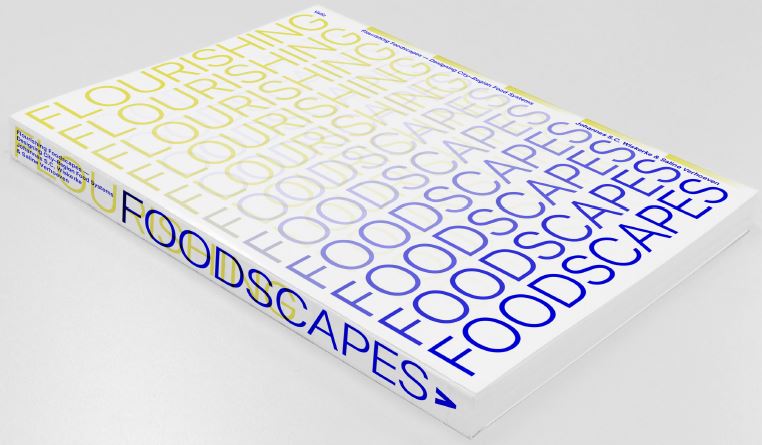
 

Book Launch – Flourishing Foodscapes: Designing City Region Food Systems

On Thursday 27 September 2018 Valiz and the Amsterdam Academy of Architecture will host a programme dedicated to the launch of the book entitled ‘Flourishing Foodscapes – Designing City Region Food Systems’.

About Flourishing Foodscapes

Flourishing Foodscapes is a book about the the social and spatial organization of networks and systems of food provisioning. It explores, highlights and discusses strategies and designs for creating future-proof city region food systems by addressing the social, economic, and ecological vulnerabilities and sustainabilities of current and future foodscapes, as well as how the spatial qualities of the rural and urban landscape and its use need to adapt and change. A key argument in the book is that food not only has to do with nutrition, but that it links up with and influences a multitude of domains; from health to (eating) culture and from employment to climate change. It has a major impact on the city (especially on consumption and distribution, and, to a lesser extent, on production) and on rural areas (mainly production), but also the relations between city and countryside, close by as well as far apart. Thinking about food-related problems and challenges is becoming increasingly important. These issues influence our planet and way of life, but also our everyday existence.

Flourishing Foodscapes transcends the field of bottom-up initiatives and private projects. If we really want to design more sustainable food systems, we will have to think more structurally about changing food provisioning at different levels of scale. Flourishing Foodscapes links research, case studies and spatial design and takes a step towards a more comprehensive approach to food issues, building on inspiring practices, projects and designs from all over the world.

Programme Book Launch

The book presentation will take place on Thursday 27 September 2018, from 17.00 to 19.30 at the Academy of Architecture (Waterlooplein 211-213, Amsterdam). The programme is as follows:

  • 17:00–17:05 Opening by moderator Saskia van Stein (director Bureau Europa)
  • 17:05–17:10 Welcome by Madeleine Maaskant (director Academy of Architecture)
  • 17:10–17:30 Introduction to the book by the editors and main authors Han Wiskerke (Professor of Rural Sociology, Wageningen University) and Saline Verhoeven (landscape architect and researcher)
  • 17:30–18:00 Reactions tot the book by Froukje Idema (Programme Manager Food, municipality Ede); Martin Woestenburg (rural sociologist and journalist); Arnold van der Valk (Professor emeritus of Spatial Planning and co-founder of the Food Council of the Metropolitan Region of Amsterdam)
  • 18:00–18:25 Discussion led by Saskia van Stein
  • 18:25–18:30 Presentation of the first copy to Hanneke Kijne (Head of Landscape Architecture at the Academy)
  • 18:30–19:30 Snacks and drinks

This programme is free of charge, but if you plan to attend please register via avb-webredactie@ahk.nl


Organic Times – first edition of the MOAgazine


Recently students of the Master programme Organic Agriculture (MOA) of Wageningen University launched the first edition of the MOAgazine entitled ‘Organic Times’. The magazine (Organic times online) is written and edited by MOA students and provides some insights into the programme, study and student activities and a variety of issues linked to MOA, including book reviews and organic recipes. As chair of the MOA study programme committee I have enjoyed reading the Organic Times and am proud of the time and energy the students invested in developing this magazine. It reflects the enthusiasm and commitment of this great and dedicated group of international students as well as the interdisciplinary character of the MOA programme.

Welcome Kees Jansen – Scholar in Critical Agrarian Studies

My name is Kees Jansen. A few weeks ago, I have started in my new job at the Rural Sociology Group. I am very honoured that I can contribute to the international development profile of the group and teach in the domain of critical agrarian studies. Rural Sociology is an exciting group with a long history of remarkable work on redesigning the agro-food system and developing a social justice perspective in agrarian and food policies.

My teaching activities will mainly focus on the courses Sociology of Farming and Rural Life, Globalization and Sustainability of Food Production and Consumption, and Advanced Social Theory.

Latin America is the region where I have done most of my own field work, but shorter stays in a number of Asian and African countries have been important for grasping the significance of comparative research. By working on an organic farm in France, by living with small potato producers high in Andes and with maize-bean producers in Honduras, through interviewing export crop producers in Costa Rica and Mexico, and by visiting farmer co-operatives in the Philippines, I have experienced the multiple pressures on different types of farmers in this globalizing world. In the Rural Sociology Group I will continue my research activities on agrarian political ecology (the greening of the agrarian question; nature-society issues), pesticide risk governance, and theoretical issues in agrarian studies.

The latest examples of my work have just been published in Global Environmental Politics: Business Conflict and Risk Regulations: Understanding the Influence of the Pesticide Industry  (sorry, not yet open access) and in the Journal of Agrarian Change with Jaye de la Cruz: Panama disease and contract farming in the Philippines: Towards a political ecology of risk – open access).

The interesting aspect of doing sociology in Wageningen is the unique opportunity to collaborate with natural scientists on analysing social-technical configurations. Besides my own more specific research topics, I am always interested in exploring new, creative and challenging ideas of prospective thesis students and PhD candidates within the broader domain where international development studies and agrarian studies intersect. Examples are labour conditions of a flexible (often migrant) labour force, the social conditions for agroecology, social responses to risks of agricultural technologies, counter-expertise and social movements, people’s adaptation to climate change, agribusiness strategies, the future of corporate social responsibility, hunger and food security, sociology and politics of knowledge (including interdisciplinarity), autonomy/dependence in agrarian change, and comparative analysis of food sovereignty actions in the Global South. You can read more about me and my work on my website: www.keesjansen.eu.

Do not hesitate to contact me at kees.jansen@wur.nl to talk about your ideas.

Reminder – Vacancy Assistant Professor in Food Sociology (tenure track)

At the Rural Sociology Group we have a job opening for an Assistant Professor (tenure track position) in Food Sociology. As assistant professor you will undertake independent research and participate in international research projects focusing on the dynamics of food provisioning practices and processes and on the relations between food provisioning and sustainable rural and urban development. You will also teach and coordinate Bachelor and Master courses for the Bachelor and Master program International Development Studies (specialization Sociology of Development), the Master program Food Technology (specialization Gastronomy), and the Master program Organic Agriculture and supervise Master thesis research for these programs. Other aspects of the job include project acquisition, training and supervision of PhD students and participation in various research and/or education committees. About 45% of your time will be spent on education, 45% on research and the remaining 10% on a variety of activities within and outside the university.

For more information about the position (and the Rural Sociology Group) go to the vacancy page of Wageningen University or contact Prof.dr. Han Wiskerke (han.wiskerke@wur.nl). Candidates can apply for this position online. The deadline for application is Thursday 14 September 2017.