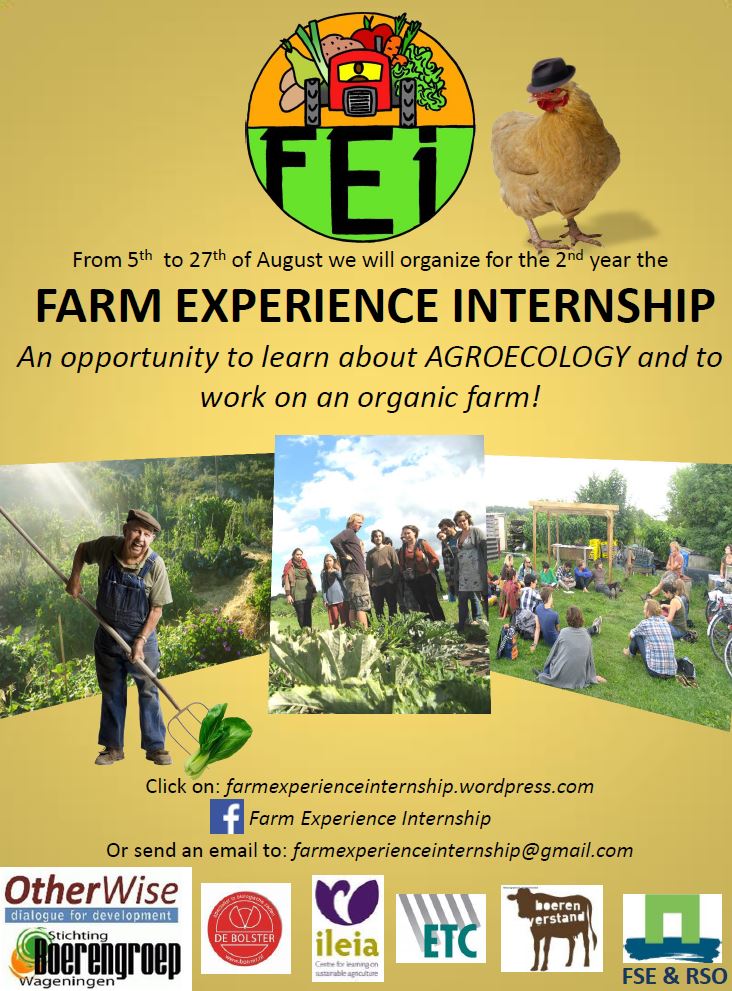
Farming Experience Internship 2014

Based on last year’s success a Farming Experience Internship is organized again for 2014, August 5-27. See the Facebook Farm Experience Internship for more information or contact farmexperienceinternship@gmail.com.

The Rural Sociology Group and Farming Systems Ecology Group of Wageningen University support the FEI. Wageningen University Students can obtain 3 ects they, in addtion to the FEI, hand in personal evaluation and reflection report.


Research Dispatches: Karibu mzungu!

This post is the first of three reports  by RSO student Florian Neubauer about the MSc research he is conducting in Kenya. Florian has kindly agreed to blog about his research and to provide us with a review of :

  1.  First reflections on researching in Kenya and his host institution, Maasai Mara University.
  2.  Living among the Maasai with a focus on their culture and way of living.
  3.  Results of the thesis. 
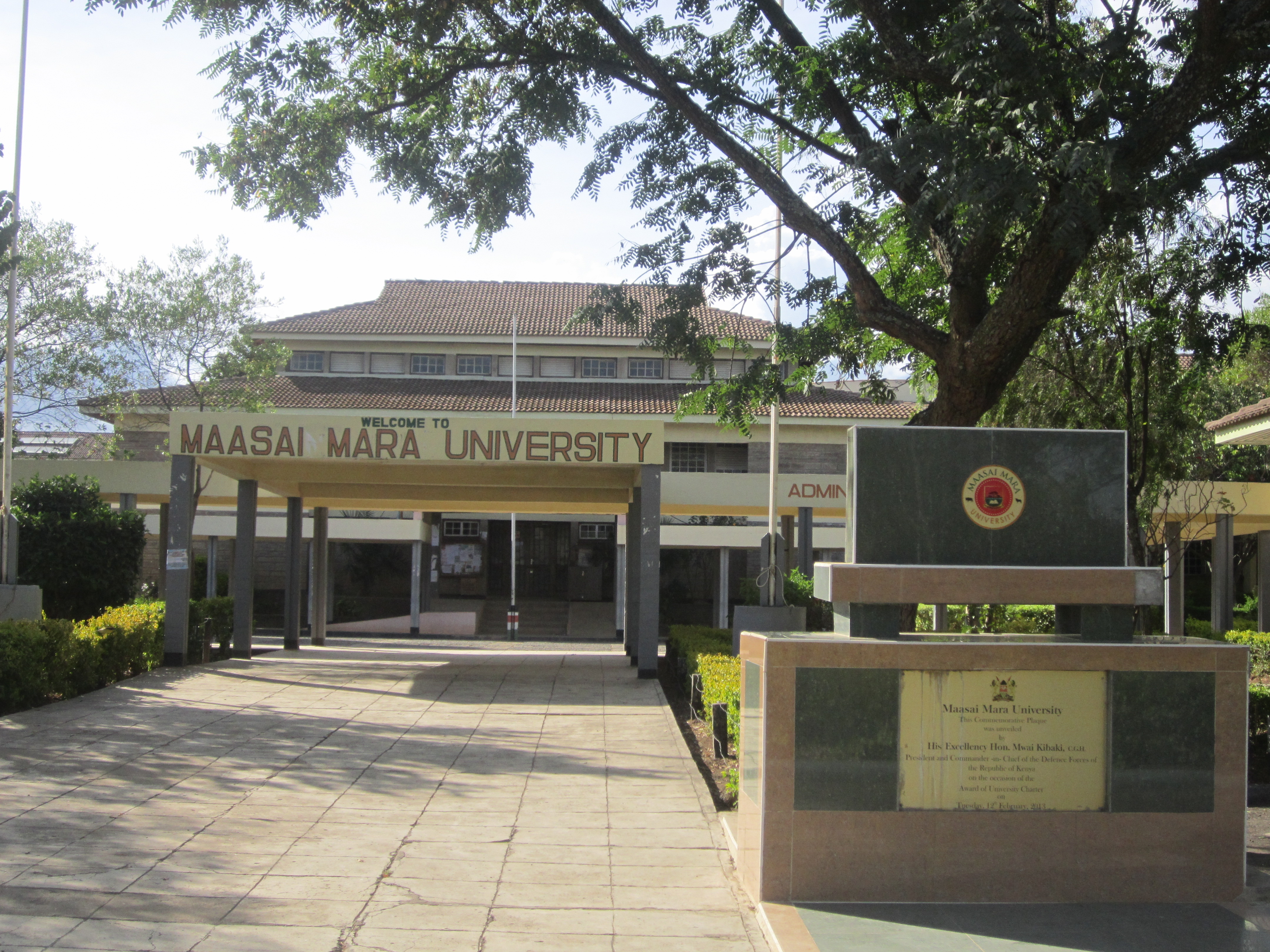
Main entrance of Maasai Mara University with the student library in the background.

Main entrance of Maasai Mara University with the student library in the background.

Part 1: Introduction and Maasai Mara University (MMU)

`Karibu´ and ´karibu mzungu` – `Welcome´ or `welcome white person´ – are probably two of the most frequent sentences, I have heard here, since I arrived in Kenya around three weeks ago. Here in the south of the country, I am conducting the field work for my master thesis with RSO group on Understanding changes in land tenure and livelihoods among the pastoral Maasai in southern Kenya.

Over the past decades, pastoral Maasai have been increasingly exposed to various pressures to their pastoral livelihoods such as demographic development, the spread of national and games parks or an increased privatization and commercialization of land. One of the biggest pressures and also the focus of my research are changes in land tenure, or more specifically, transformation processes from formerly communally owned land towards increasingly individualized and privatized land (ownerships) – a development thatroughly began during the 1970s and 1980s and continues since then. I am interested in investigating how this transformation in land tenure is shaping and impacting Maasai pastoral livelihoods and Maasai households on a local level, with a specific focus on implications and impacts on local food (in)security. I will explore the current situation at the local level, as well as retrospectively the past decision-making processes of households, in order to understand when, how and why a household decided for instance (not) to change, diversify or maintain a certain livelihood strategy.      Continue reading

Student-assistenten gezocht voor de Dag van de Stadslandbouw

Op donderdag 15 mei vind in De Fabrique in Utrecht de Dag van de Stadslandbouw plaats, dit jaar in samenwerking georganiseerd met het PUREFOOD netwerk dat op 14 en 15 mei haar eindcongres houdt. Voor de Dag van de Stadslandbouw zijn de organisatoren nog op zoek naar een paar studenten die hand- en spandiensten kunnen verrichten op 15 mei (o.a. bij de ontvangst van de deelnemers en bij de start van de workshop sessies). Heb je belangstelling om te helpen, meld je dan aan bij Marco Lipsius van B2B Productions (marco.lipsius (at) b2bproductions.nl).

From production-oriented farming towards multifunctional entrepreneurship – PhD-thesis Pieter Seuneke

Multifunctional agriculture


On the 9th of May, I (Pieter Seuneke) will defend my PhD-thesis entitled:

From production-oriented farming towards multifunctional entrepreneurship: exploring the underlying learning process

Context

My thesis focusses on the many European and Dutch farming families which, urged by the environmental, social and economic crisis in agriculture, have diversified their conventional production-oriented farming activities by developing new non-farming businesses on their existing farms. Currently, there are many farmers who are involved in agro-tourism, nature and landscape management, processing and selling of farm products and, more recently in The Netherlands, professional (child)care and on-farm education. The development of such new business activities by these farmers represents a shift away from conventional production-oriented farming towards a more ‘multifunctional’ farming model in which the role of agriculture goes beyond mass food production.

Focus

Based on four different studies, all drawing on the empirical work done in the context of the Dutch research project ‘Dynamics and Robustness of Multifunctional Agriculture’ (carried out by the Rural Sociology Group from 2009 to 2011), I unravel the learning process which is considered as underlying the switch towards multifunctionality and multifunctional entrepreneurship. In other words: the process by which farmers (men, women and their families) re-invent themselves as ‘multifunctional entrepreneurs’, gain the necessary knowledge, skills and networks ‘to do multifunctionality’ as well as finding their way on the multifunctional pathway. Apart from its contribution to theory – by bringing this complex learning process to light – my work ultimately supports practitioners (teachers, trainers, advisers) in fostering this, for today’s and tomorrow’s agriculture and rural areas, valuable form of agricultural entrepreneurship.

Supervision

During my PhD, I have been supervised by Prof. Han Wiskerke (professor of Rural Sociology at Wageningen University) and Dr Thomas Lans (ass. prof. Education and Competence Studies, Wageningen University).

The defence

My defence will take place on Friday the 9th of May, at 13.30, in the Aula of Wageningen University. The event is open to those who are interested and can also be followed/seen back on WURtv.

Contact

For more information: pieter.seuneke@wur.nl

Benefits and constraints for certification of agro-ecological farmers – MSc-thesis possibility

I am Maria Alice Mendonça, a PhD-student from the Univerity of Rio Grande do Sul (Brazil). I’m interested in the markteting and certification of agroecological food products. I’m staying at the Rural Sociology Group to study the certification of origin and organic food products in the Netherlands.

Certification can play an important role in the transition towards more sustainable food and agriculture. Yet, at the same time, rigid standards may constrain farmer innovation. To many small scale farmers certification is moreover a large financial burden. I want to investigate two or three different major certification schemes in the Netherlands. Interviews will be conducted with agroecological farmers to find the various benefits and constraints faced for different certification schemes.

I’m now looking for a MSc-is student with an interest in the topic that can assist from May 2014 onwards. Seen the interviews, preference is given to a Dutch speaking MSc student studying for example Organic Agriculture, Rural Development and Innovation, International Development Studies or Management, Economics and Consumer Studies.

If you are interested contact me: maria.alice.fcm@gmail.com or Dirk Roep: dirk.roep@wur.nl