Multifunctional Agriculture miniconference

On Thursday 8 October 2009 we are organizing a miniconference about multifunctional agriculture (recently also announced in Dutch). This event is part of a two year research project entitled ‘Dynamics and Robustness of Multifunctional Agriculture’ and is funded by the Ministry of Agriculture, Nature & Food Quality. Aim of this conference is to examine what we can learn from experiences in other countries to enhance the development of multifunctional agriculture in the Netherlands. Four speakers will talk about (aspects of) multifunctional agriculture in different countries: Italy, United Kingdom, Norway, Brazil and China.

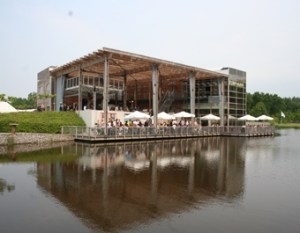
Mariënwaerdt (source: http://www.marienwaerdt.nl/)

Mariënwaerdt (source: http://www.marienwaerdt.nl/)

The miniconference will be held at Rural Estate Mariënwaerdt and participation is free of charge. All presentations as well as the discussion will be in English. If you are interested to participate, please apply by sending an e-mail to corine.diepeveen@wur.nl. You can also use this e-mail address for any queries about the miniconference.


Dynamics and Robustness of Multifunctional Agriculture – Lessons from Abroad

 Thursday 8 October 2009

 Rural Estate Mariënwaerdt, De Hooge Schuur, ‘t Klooster 5 in Beesd

12.30 – 13.00

Welcome and coffee/tea

13.00 – 13.05 Conference opening by the chairman Krijn Poppe – Chief Science Officer Agro-chains and fisheries, Ministry of Agriculture, Nature & Food Quality
13.05 – 13.15 The multifunctional conference setting – a short introduction to Rural Estate Mariënwaerdt     Frans van Verschuer – Owner of Rural Estate Mariënwaerdt
13.15 – 13.30 Dynamics and robustness of multifunctional agriculture – introducing the project and presentation of the first results Han Wiskerke – project coordinator and Professor of Rural Sociology, Wageningen University
13.30 – 14.00 Multifunctional agriculture in Italy – the rural district approach in Tuscany Gianluca Brunori – Professor of Agricultural Economics, Pisa University, Italy
14.00 – 14.30 Multifunctional agriculture in the UK – the role of the state and the public sector Roberta Sonnino – Lecturer in Environmental Policy & Planning, Cardiff University, United Kingdom
14.30 – 15.00 Multifunctional agriculture in Norway – the relation between multifunctional agriculture and sustainable rural community development Katrina Rønningen – Senior Researcher at the Centre for Rural Research, Trondheim, Norway
15.00 – 15.30

Coffee/tea break

15.30 – 16.00 Agrarian and rural development dynamics across the globe – comparing Europe, China and Brazil Jan Douwe van der Ploeg – Professor of Transition Studies, Wageningen University
16.00 – 16.55 Debate: inspiring lessons for multifunctional agriculture in the Netherlands
16.55 – 17.00 Conference closing by the chairman
17.00

Drinks

Sustainable food planning conference

AESOP logoOn 9 and 10 October 2009 the first Sustainable Food Planning Conference will be held. This conference is an initiative of the AESOP (Association of European Schools of Planning), the ISOMUL (International Studygroup On Multiple Use of Land) and the Rural Sociology Group of Wageningen University.

The sustainable food planning conference is organized to examine the role of food in urban and regional planning. Although political, societal and academic interests in food and the city are rapidly increasing, food largely remains a stranger to the field of urban and regional planning, spatial planning policies and planning studies. Recently the American Planning Association launched its Policy Guide on Community and Regional Food Planning. Inspired by this policy guide, this conference seeks to explore ways in which food can and should be incorporated in planning practices, policies and research and develop strategies for enhancing sustainable food planning in Europe. The character of the conference is primarily agenda-setting by establishing a network of planning practitioners, policymakers and agrifood and planning scholars in Europe and beyond.

.

Restaurant and meeting centre De Kemphaan (source: http://www.restaurantdekemphaan.nl/content/ons_bedrijf)

Restaurant and meeting centre De Kemphaan (source: http://www.restaurantdekemphaan.nl/content/ons_bedrijf)

The conference will take place at De Kemphaan in the city of Almere in the Netherlands. If you are interested to participate in this conference, please apply by e-mail to corine.diepeveen@wur.nl. Costs for participation are € 100,- (incl. drinks, lunches and diner). The number of participants is limited to 50 persons. For more information have a look at the conference programme below:


Day 1 – Generating ideas, exchanging experiences and comparing perspectives

09.00 – 09.30

Welcome and coffee/tea

09.30 – 09.45 Food and planning: an introduction to the conference Prof. Kevin Morgan (Professor of Governance & Development, Cardiff University, UK)
09.45 – 10.00 Including food and agriculture in urban planning: the Almere approach Mr. Henk Mulder (Almere municipality – director urban development and planning) 
10.00 – 10.30 An integrated and territorial perspective on food studies, policy and planning Prof. Han Wiskerke (Chair of Rural Sociology – Wageningen University, NL)
10.30 – 11.00

Coffee/tea break

11.00 – 12.00

Session 1: Agri-food policy issues

11.00 – 11.30 Food and agriculture in Europe’s peri-urban regions Mrs. Dwarshuis (President of Peri-Urban Regions Platform Europe – PURPLE)
11.30 – 12.00 Feeding the city: practices, challenges and lessons from developing countries Mr. Henk de Zeeuw (director RUAF foundation)
12.00 – 13.00

Session 2: Urban food planning practices

12.00 – 12.20 The practice of food planning in New York City Dr. Nevin Cohen (Associate Professor in Urban Studies at the New School for Liberal Arts, New York
12.20 – 12.40 The practice of food planning in New York State Mr. Bob Lewis (Senior Planner New York State)
12.40 – 13.00 Amsterdam’s food strategy (“Proeftuin Amsterdam) Mr. Bart Pijnenburg(Programme manager Proeftuin Amsterdam)
13.00 – 14.00

Lunch break

14.00 – 15.30

Session 3: Theoretical perspectives and academic issues

14.00 – 14.30 Reconnecting consumers and producers:  dynamics, diversity and potentials of alternative food networks Prof. Gianluca Brunori (Professor of Agriculture Economics – Pisa University, Italy)
14.30 – 15.00 Urban Food and Public Spaces: Planning for Security and Sustainability Dr. Roberta Sonnino (Lecturer in Environmental Planning – Cardiff University, UK)
15.00 – 15.30 Food and the city: the links between food, public health and sustainable urban development Dr. Martin Caraher (Reader in Food & Health Policies, City University London, UK)
15.30 – 16.00

Coffee/tea break

16.00 – 18.00 Excursion to City Farm Almere Tineke van den Berg (urban farmer)
19.30 – 22.30

Drinks & Diner

Day 2 – Towards an agenda for sustainable food planning

09.00 – 09.30

Welcome and coffee/tea

09.30 – 10.00 Including food in planning studies and planning practices: experiences from the USA Prof. Jerry Kaufman (Professor Emeritus of Urban and Regional Planning – University of Wisconsin-Madison, USA)
10.00 – 10.45 Issues, topics, themes for a sustainable food planning agenda (plenary inventory) Moderated by Prof. Arnold van der Valk (Professor of Land Use Planning – Wageningen University, The Netherlands)
10.45 – 11.15

Coffee/tea break

11.15 – 12.45 Developing the building blocks for a sustainable food planning agenda (parallel working sessions)
12.45 – 14.00

Lunch break

14.00 – 14.45 Plenary presentation of and discussion about results of parallel working sessions Moderated by Prof. Terry Marsden (Professor of Environmental Policy – Cardiff University, UK)
14.45 – 15.00 Sustainable food planning in Europe: concluding reflection and look ahead Prof. Kevin Morgan (Professor of Governance & Development, Cardiff University, UK)
15.00

Coffee & tea / end of conference

Herinnering Discussiebijeenkomst Buitenlandse Ervaringen Multifunctionele Landbouw

Op donderdag 8 oktober 2009 organiseert de vakgroep Rurale Sociologie van Wageningen Universiteit een interessante discussiebijeenkomst over buitenlandse ervaringen van multifunctionele landbouw. Wat gebeurt er in het buitenland en wat kunnen we ervan leren?

Op de bijeenkomst geven een aantal toonaangevende internationale onderzoekers u een indruk van de ontwikkeling rond multifunctionele landbouw in Italië, het Verenigd Koninkrijk en Noorwegen. In de aansluitende forumdiscussie gaan we hierover met elkaar in debat. We verwachten ongeveer 80 tot 100 mensen uit o.a. praktijk, wetenschap, overheid en belangenbehartiging.

De bijeenkomst is interessant voor iedereen actief op het gebied van multifunctionele landbouw en meer wil weten over de betekenis van buitenlandse ervaringen voor Nederland. Als u graag over (uw) grenzen heen kijkt, dan mag u deze bijeenkomst niet missen!


Datum: Donderdag 8 oktober 2009
Tijd: 13.00 – 17.00 uur
Locatie: Landgoed Heerlijkheid Mariënwaerdt, De Hooge Schuur, ‘t Klooster 5 in Beesd


Aan deelname van deze bijeenkomst zijn geen kosten verbonden, de voertaal is Engels.


Programma

12.30 Ontvangst (koffie/thee)

13.00 Opening door dagvoorzitter

Krijn Poppe – Chief Science Officer Agroketens en Visserij, ministerie van LNV

13.05 Welkomstwoord

Frans van Verschuer – eigenaar Landgoed Heerlijkheid Mariënwaerdt, Beesd

13.15 Dynamiek en robuustheid multifunctionele landbouw – introductie onderzoeksproject en presentatie eerste resultaten

Han Wiskerke – projectcoördinator en hoogleraar Rurale Sociologie, Wageningen Universiteit

13.30 Multifunctionele landbouw in Italië – de ‘rural disctrict approach’ in Toscane

Gianluca Brunori – hoogleraar Agrarische Economie, Universiteit van Pisa, Italië

14.00 Multifunctionele landbouw in het Verenigd Koninkrijk – de rol van de staat en de publieke sector

Roberta Sonnino – universitair docent Milieubeleid, Universiteit van Cardiff, Verenigd Koninkrijk

14.30 Multifunctionele landbouw in Noorwegen – een presentatie door:

Katrina Rønningen – senior onderzoeker, Centrum voor Plattelandsonderzoek, Universiteit van Trondheim, Noorwegen (uitgenodigd)

15.00 Pauze

15.30 Dynamiek van plattelandsontwikkeling en landbouw wereldwijd – een vergelijking tussen Europa, China en Brazilië

Jan Douwe van der Ploeg – hoogleraar Transitiestudies, Wageningen Universiteit

16.00 Forumdiscussie – inspirerende lessen voor multifunctionele landbouw in Nederland

16.55 Afsluiting door dagvoorzitter

17.00 Borrel


Aanmelden

Meld u aan met het aanmeldformulier. Wij willen u er op wijzen dat er een beperkt aantal deelnameplaatsen beschikbaar zijn. Voor aanvullende informatie neem contact op met Corine Diepeveen via corine.diepeveen@wur.nl of 0317 – 484507.

De discussiemiddag wordt georganiseerd in het kader van het onlangs gestarte onderzoeksproject ‘Dynamiek en Robuustheid van Multifunctionele Landbouw’. Het onderzoek is ondersteunend aan de Taskforce Multifunctionele Landbouw en wordt gefinancierd door het ministerie van LNV.

Jan Schakel in China – part one

A group of IMRD-students from different European countries is visiting China this month, doing a case study for their International Master in Rural Development. The first part took place in Nanjing in the Jiangsu Province (200 miles west of Shanghai), where the Nanjing Agriculture University hosted the students for two weeks. Besides lectures by professors from the NAU (who actually knew Wageningen University very well, because most of them did their MSc and/or PhD at the WU!), fieldwork was done in two villages in the rural area south of Nanjing. Together with 25 Chinese undergraduate students from all over China (doing a summer school at the NAU), different households were visited and many farmers (mostly female: so called ‘left-behind-woman’, who’s husbands are migrant workers in the big cities) were interviewed. All information gathered by both European and Chinese students was presented at the university and put together in a final report (soon available on the IMRD-website).

Official group photo

More or less the same program is organized by the Chinese Agriculture University in Beijing (ranked nr. 1’s Agriculture University of China), who is responsible for the second half of the IMRD case study. The COHD (College of Humanities and Development) is hosting us, and also the COHD is a leading centre of excellence on rural development within and outside China. Among others, the COHD is monitoring, analysing and evaluating the new ‘Pro-Farmers-Policies’, as well as the New Countryside Construction Programme (2006). These new policies, programs and measures should tackle the ‘dualism’ between the rural and the urban; a very serious problem threatening China stability as a whole and the future of China’s rural areas more particularly. Part of the New Countryside Construction Program is the Village Development Program (VDP, also from 2006), which will also monitored, steered and evaluated by the COHD.

The IMRD students is given the opportunity to have a closer look at the VDP in an area 2 hours north of Beijing. Fieldwork will be done in 5 days through the use of the PRA-methodology (Participatory Rapid Appraisal) in the Bamudi village in the Yanqing county. With a group of 5 Chinese master students and their professors, farmers, village leaders and others in Bamudi-village will be interviewed and observed by means of several participatory methods.

So far this Case study is really impressive – in all kinds of ways. But: not only me, but also the IMRD-students are getting tired. It’s summertime in China, and in Nanjing (with over 8 million people) and Beijing (almost over 18 million inhabitants) it is 3xH: Hot (over 35 Degrees Celsius), Hazy and Humid, and it’s crowded everywhere. So tomorrow we will leave the city and go to the mountains, where it’s a little bit cooler (although you don’t feel the difference anymore between 38 and 34 degrees). The bad news however is that the mosquito’s are waiting for us, and that there is no internet, no air-conditioning, no shower, no shop, no restaurant nor anything in Bamudi; so it’s going to be a week really ‘doing fielwork’ , and the forthcoming days no more news on our weblog!

By the way: also in Beijing I noticed that Wageningen is rather well-known. Everybody still speaks about professor ‘Jan Douwe’ (they call me ‘prof. Jan’), who visited BAU over a month ago, and who must has done a really great and impressive job, because everyone asks me about him. However, not everyone is really pleased with him; I met a member of the COHD who is (among others) translating Jan Douwe van der Ploeg’s most recently book ‘The New Peasantries’ into Chinese, and it seems to be a ‘hell of a job’. But when it is finished -and that will be within a short period- this book will also be available to at least 1.300.000.000 Chinese people, so well done Jan Douwe!

Jan Schakel, Beijing 2009-08-01

Selective breeding in organic dairy production II – PhD-thesis completed

Earlier I wrote a post on the PhD-thesis ‘Selective breeding in organic dairy production’ by Wytze Nauta. The complete PhD-thesis can be downloaded at the site of the Louis Bolk Institute