What surprised a Polish researcher about Dutch care farms

By Ilona Matysiak, visiting guest of the Maria Grzegorzewska University in Warsaw, Poland

The idea is quite simple: to combine agricultural production with health and social services provided to people with different types of disabilities. However, it’s really hard to imagine or understand a care farm if you have never seen such a thing. One of the most important goals of my four-week research stay at the University of Wageningen was to unburden my imagination and see them for real. Continue reading

Gender & Diversity in Sustainable Development


PhD Course Gender and Diversity

Wageningen University’s School of Social Sciences  (WASS) will be offering a PhD course in May and June 2017 called Gender and Diversity in Sustainable Development.  Bettina Bock and Jessica Duncan, both from RSO, will lecture in this course.

Date Mon 22 May 2017 until Fri 16 June 2017
Time 09:30
Venue Leeuwenborch, building number 201
Hollandseweg 1
201
6706 KN
Wageningen
0317-483639

Inequality lies at the center of current debates about sustainable development, from which a number of policy issues, including Sustainable Development Goals, emanate. Yet, how social (in)equality contributes to creating sustainable development often remains invisible in research. This course enables participants to recognize linkages between gender and diversity and sustainable development in a contemporary globalising world.

The topics covered in this course are:

  • Introduction: key concepts in gender studies
  • Trends form a historical perspective
  • Economics: macro and micro perspectives
  • Work and care
  • Population and migration
  • Food security and governance
  • Environment and natural resource management
  • Global politics


This course will be a seminar. We will take a highly interactive learner-centered approach that combines short lectures with group-based learning activity and discussion. A series of instructors with gender and diversity expertise from WUR and other universities will discuss the relevance of the themes discussed in our class to their own domains.

More information is available here: http://www.wur.nl/en/Education-Programmes/PhD-Programme/Graduate-Schools/Wageningen-School-of-Social-Sciences/Courses/Show-1/Gender-Diversity-in-Sustainable-Development.htm

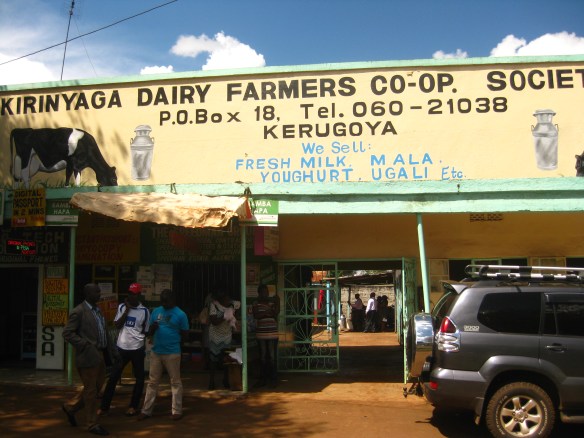
Agricultural cooperatives and the social economy in Kenya – IMRD thesis by Jordan Treakle

treakle-dairy-cooperative-in-kenyaLast autumn Jordan Treakle successfully defended his Master of Science thesis ‘Agricultural cooperatives and the social economy in Kenya’s changing governance landscape’ in Wageningen’s Rural Sociology Group to complete his International Master in Rural Development. Below a synopsis of the thesis. Continue reading

Pre-announcement Vacancy Associate or Full Professor in Agrarian Sociology

On the 5th of January 2017 we will open a vacancy for an associate or full professor in agrarian sociology. We are looking for someone with demonstrated excellence in research and education in the domain of agrarian and rural sociology. The associate/full professor will undertake independent research and participate in (and coordinate) international research projects, focusing on topics such as agricultural and rural development, rural-urban transformation processes, transitions towards regenerative agriculture, and the role of (multifunctional) agriculture in rural eco-economies. The associate/full professor will also teach courses for the Bachelor and Master programs International Development Studies and the Master program Organic Agriculture, and supervise Bachelor and Master thesis students for these programs. Other aspects of the job include project acquisition, training and supervision of PhD students and participation in various research and/or education committees. At least 40% of the time will be spent on research, a maximum of 40% on education and approximately 20% on other aspects.

Candidates applying for this position are expected to have the following qualifications:

  • A PhD degree in (agrarian or rural) sociology, human geography or related social science discipline;
  • An inspiring vision on agrarian sociology and the future challenges and priorities for agrarian studies;
  • An excellent track record in research in agrarian/rural sociology, proven by publications in key international journals and by the successful acquisition of research grants;
  • A relevant international academic network, combined with good connections with grassroots networks and policymakers (at different levels);
  • Ample empirical research experience, preferably in different geographical settings;
  • Proven experience in supervision of PhD candidates;
  • Excellent didactic qualities and the capacity to motivate and inspire students;
  • Teaching competences that comply with the Learning and Teaching in Higher Education Program (LTHEP, in Dutch referred to as BKO, a system adopted by all Dutch universities) or willingness to follow the LTHEP;
  • Excellent writing skills;
  • Fluency in English and, if appropriate, willingness to learn Dutch.

If you are interested in this position, keep an eye on the vacancies webpage of Wageningen University or create your job alert, so you will be notified when the vacancy opens. Applications can be submitted between 5 January and 8 February 2017. From 9 January 2017 onwards you can contact me (email: han.wiskerke@wur.nl) for more information about the position.

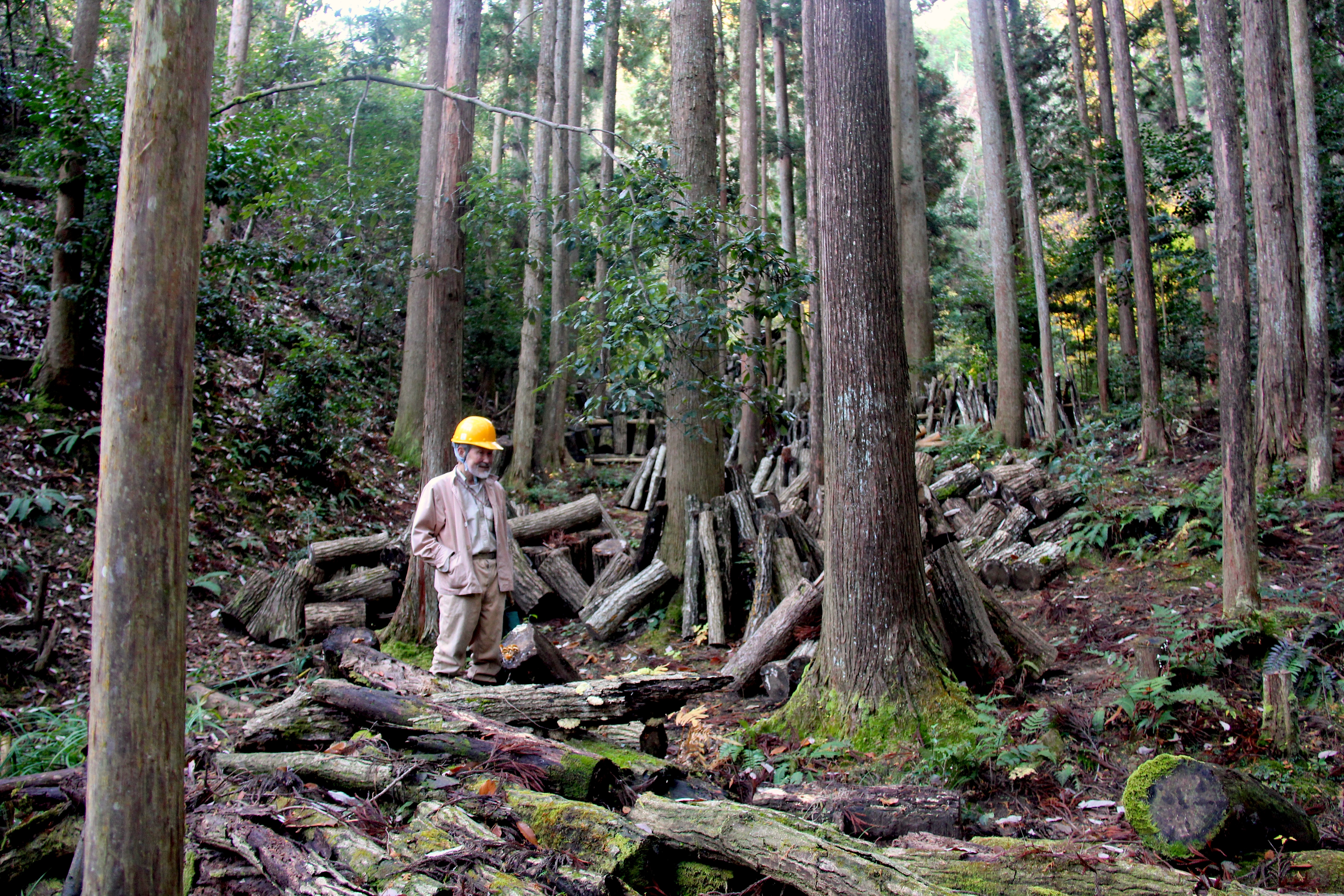
Satoyama Stories: A Glimpse on the Movement for Regeneration of Matsutake Forests in Kyoto

The Rural Sociology Group and Kyoto University maintain a close collaboration. Flora Sonkin, a MSc student at RSO, participates in a summer school and participated in field work near Kyoto this month. In this posts she shares her experiences.

img_8557

I arrived in Kyoto, Japan a few days ago as a visitor for the FEAST project at RIHN (Research Institute for Humanity and Nature), and to join the Kyoto University Graduate Seminar on Sustainability Studies.

Being in Japan in autumn has a special effect on one’s senses. Feeling awakened by the warm yellow and red colors that paint the mountainous landscape, and by the fresh smell of fallen leaves and pine trees. On the first day of my visit, Mai Kobayashi (my host at the RIHN) took me to a Satoyama nearby RIHN, were a community-led forest management project is trying to regenerate a red pine forest – and hopefully matsutake mushrooms along with it. Continue reading