Rural Sociology Wageningen University

Rural Sociology Wageningen University

Thesis Opportunities: Diverse economies of food, agriculture, and nature in Galicia, Spain

In the field of diverse economies, researchers have paid particular attention to diverse forms of economic organisation and exchange that make up our food system, disrupting dominant development narratives that privilege capital, markets, wages, private property and mainstream financing (Gibson-Graham, 2006). Examples in the literature are multifunctional agriculture (Renting et al., 2009), communal land use (Soto, 2014; Caballero, 2015), ecosystem service provisioning (Bolund and Hunhammar, 1999; Braat and De Groot, 2012), and sharing food or skills to reduce waste, or foster greater food security (Davies et al., 2017). These manifestations of diverse economies are often captured and explained through the theoretical lens of the social economy, an umbrella term used to describe a variety of third sector, cooperative, voluntary, non-profit, and social enterprise initiatives that put social and environmental well-being before profit.

Problem definition / hypothesis 

In Galicia, a ‘green’ region in the northwest corner of Spain, industrialisation and urbanisation mainly takes part in the coastal area. The mountainous interior consists of forests and pastures for beef and dairy cattle, creating a strong divide between the urban and the rural, and their development pathways. Primary production, with relatively low added value, remains important to Galicia’s economic production. The daily fabric of life, in rural but also in industrial-urban environments, is anchored in what can be termed the social economy. Whilst formal collaborative and/or cooperative approaches to market access or income generation are often lacking, the question pops up – whether and how these everyday practices (can) build upon existing social economy dynamics. This research seeks to understand, how communities in these places negotiate social, economic, and environmental concerns by practicing diverse economies in urban and rural areas, and how these practices can contribute to realizing social economies

Communal forestry and mountain farming

Empirical studies in Galicia on the diverse economies of food, agriculture, and nature (i.e. the local resource base, e.g. ecosystems services, green infrastructure, or more theoretically: ecological capital) will contribute to the (yet often) unrecognised role of the social economy in bringing about economic development in relation to provisioning of ecosystem services and/or green infrastructure.

Depending on the preferences of individual students for empirical research subjects, and a possibly simultaneous implementation of MSc thesis projects,  research subjects can consist of communal (agro) forestry (in urban and/or rural contexts), mountain farming (in more remote rural areas), or a combination of these.

Research topics include but are not limited to:

  • Mapping diverse economies of food, agriculture, and nature: initiatives and projects (focus: forestry and farm activities), community and/or household configurations, collaboration (different aggregation levels), payments and income strategies (private and public goods), availability of regional policy support schemes, support structures for similar initiatives elsewhere
  • Developing strategies to enhance local business opportunities (forestry and farming activities, food and other ecosystem service provisioning in relation to e.g. gastronomy and tourism), identify and describe heterogeneity in best practices, report bottlenecks in relation to place-based development (taking into account spatial relationships)

Planning of an MSc thesis research project

The overall goal of these MSc thesis projects are to a) advance our understanding of the diverse and social economies in rural, peri-urban and urban areas, and b) identify and promote policies, governance models and practices that foster this type of social innovation, with the aim to also enhance more mainstream economic production: contribute to creating value added, market access, and additional farm income for primary producers.

An assignment will be drawn up together with the student: an initial research plan in advance to leaving to Galicia for the field research, and a more definitive plan at arrival, in collaboration with local stakeholders.

Research requires a stay of 3 months or longer at the University of Vigo / in Galicia.

Start date: Spring or Summer 2019

Qualifications:

  • You have training in qualitative methods and are able to conduct qualitative research in Spanish or Galician (Thesis is written in English)
  • You have an interest in engaging diverse stakeholders in participatory and collaborative research
  • You have one or more of the following skills and/or interests: able to use basic excel and mapping tools; interest in diverse economies and social innovation and/or spatial relationships; experience with assessment and evaluation
  • You are registered for one of the following MSc programmes: MID, MCS, MLP, MFT, or MOA
  • You have completed at least 2 RSO courses (or other relevant social science courses)
  • Questions? Please get in touch!

Supervisors: RSO Oona Morrow oona.morrow@wur.nl & GEN Paul Swagemakers paul.swagemakers@uvigo.es (University of Vigo, Galicia, Spain)

Works cited & further reading:

Bolund, P., Hunhammar, S., 1999. Ecosystem services in urban areas. Ecological Economics 29, 293–301

Braat, L.C., De Groot, R., 2012. The ecosystem services agenda: bridging the worlds of natural science and economics, conservation and development, and public and private policy. Ecosystem Services, 1, 4–15.

Caballero, G.,2015. Community-based forest management institutions in the Galician communal forests: a new institutional approach. Forest Policy and Economics 50, 347–356

Davies, A.R., Edwards, F., Marovelli, B., Morrow, O., Rut, M., Weymes, M., 2017. Making visible: Interrogating the performance of food sharing across 100 urban areas. Geoforum 86, 136-149

Gibson-Graham, J.K., 2006. A Postcapitalist Politics. University of Minnesota Press, Minneapolis

Gibson-Graham, J. K., 2008. Diverse economies: performative practices for other worlds’. Progress in Human Geography, 32(5), 613-632

Jongerden, J.P., 2018. Living Structures : Methodological Considerations on People and Place. In: Methodological Approaches in Kurdish Studies. Baser, B., Toivanen, M., Zorlu, B., Duman, Y. (Eds.), Lexington Books (Rowman & Littlefield Publisher), Lanham, 21 – 33

Morrow, O., Dombroski, K., 2015. Enacting a Postcapitalist Politics through the Sites and Practices of Life’s Work. In: Precarious Worlds: Contested Geographies of Social Reproduction. Meehan, K., Stauss, K. (Eds.), University of Georgia Press, Georgia

Öztürk, M., Topaloğlu, B., Hilton, A., Jongerden, J., 2017. Rural‒Urban Mobilities in

Turkey: Socio-spatial Perspectives on Migration and Return Movements, Journal of Balkan and Near Eastern Studies 20(5), 513 – 530

Renting, H., Rossing, W.A.H., Groot, J.C.J., van der Ploeg, J.D., Laurent, C., Perraud, D., Stobbelaar, D.J., van Ittersum, M.K., 2009. Exploring multifunctional agriculture: a review of conceptual approaches and prospects for an integrative transitional framework. Journal of Environmental Management 90, 112–123

Soto, D., 2014. Community, institutions and environment in conflicts over commons in Galicia, northwest Spain (18th–20th centuries). International Journal on Strikes  and Social Conflicts 5, 58–76

Swagemakers, P., Domínguez García, M.D., Milone, P., Ventura, F., Wiskerke, J.S.C., in press. Exploring cooperative place-based approaches to restorative agriculture. Journal of Rural Studies. Online first, doi.org/10.1016/j.jrurstud.2018.12.003

Swagemakers, P., Dominguez Garcia, M.D., Wiskerke, J.S.C., 2018.  Socially-innovative development and value creation: how a composting project in Galicia (Spain) ‘hit the rocks’. Sustainability 10(6), 2040

Swagemakers, P., Dominguez Garcia, M.D., Onofa Torres, A., Oostindie, H., Groot, J.C.J., 2017. A values-based approach to exploring synergies between livestock farming and landscape conservation in Galicia (Spain). Sustainability 9(11), 1987

Wiskerke, J.S.C., Verhoeven, S., 2018. Flourishing foodscapes: designing city-region food systems. Valiz, Amsterdam

Wiskerke, J.S.C., 2009. On places lost and places regained: reflections on the alternative food geography and sustainable regional development. International Planning Studies 14(4), 369-387


The EU Protein Plan: shifting to sustainable supply-chains or more of the same?

Chris Chancellor, WU Graduate

The impact that our industrialised global food supply-chain has on diverse ecosystems and communities around the world is receiving greater attention than ever before. Scholars and activists have for decades emphasised how European agricultural demand has driven deforestation and environmental destruction in species-rich biomes such as the Amazon and Cerrado regions in Latin America.  Now it is becoming clear that the consequences extend far beyond the environmental harm generated by the production stage itself. When looking at the wider chain, the implications of industrial food systems for issues such as food and nutritional security, human health, social justice, rural vitality, employment, and the concentration of market control, become apparent.

Having found its way onto the political agenda, the European Union (EU) has come up with the idea of a European Protein Plan. The EU is currently heavily reliant on imports of protein crops, primarily soybean from Latin America’s Southern Cone region. As well as being linked with major environmental and human rights concerns, the reliance on imports also makes the EU agricultural industry vulnerable to shocks in international commodity prices. Soybean is the favoured ingredient in animal feed for the EUs powerful livestock industry, and therefore a price shock would have major socio-economic consequences.

The Protein Plan essentially proposes increasing the amount of domestic protein crop production. The idea is that this would lift the burden on Latin American ecosystems whilst at the same time providing the EU with greater ‘protein independence’. This has been presented as a win-win situation, and yet the manner in which this production would take place has received little or no critical attention.

A report published by civil society organisation European Coordination Via Campesina (ECVC) highlights the dangers of simply transplanting the same corporate industrial supply-chain into Europe. Last year, an agreement called the European Soya Declaration was signed by 13 member states, highlighting the suitability of fertile and ‘underused’ lands in Central and Eastern Europe (CEE) for expansion of European soybean production. The ECVC report details the recent emergence of agribusinesses and financial investors in the CEE region. Land here is cheaper and often more fertile than in Western Europe, and offers suitable agro-climatic conditions for commodity soybean cultivation. There is therefore an opportunity for large profits to be made if land is bought up now, cultivated with soybean or other commodity protein crops, and potentially sold later when land prices have reached western European levels. As one company puts it: ‘protein crops are the new gold bars’. However, this process is not a neutral one, and entails radical reformulations of arable land ownership and control, threatening the livelihoods of the region’s small-scale producers and rural communities.

Another report from the Land and Resource Lookout reaches a similar conclusion, pointing out that ‘a control-blind approach’ to sustainability is evident. Much attention is given to the fact that this soy would be non-GM, would be deforestation-free, and would help to fix nitrogen in crop rotations. These are undoubtedly positive, yet these traits in isolation don’t automatically equal sustainable supply-chains. The manner in which this soy is produced, distributed and consumed, as well as how and who controls these processes and relevant markets, are key for building a truly sustainable and inclusive food system. It argues that sustainable food system strategies must explicitly address the issue of corporate control if effective progress is to be made.

With the European Commission set to release a report on the EU Protein Plan before the end of the year, both reports advocate for the inclusion of agroecological principles and the concept of food sovereignty in any future EU protein strategies. An agroecological transition offers a potential pathway for a truly inclusive, interconnected and mutually beneficial food system to be built, but this must receive political backing in order for it to really take hold.

The fact that the sorts of headline issues emphasised in the European Soya Declaration are receiving genuine political attention is a positive step. It provides an opportune moment to address deep-seated systemic problems in our current industrially-based food system; policy-makers must now be brave enough to seize it!

Note: are you a WU master student and interested in doing a thesis research on this issue, please contact joost.jongerden@wur.nl

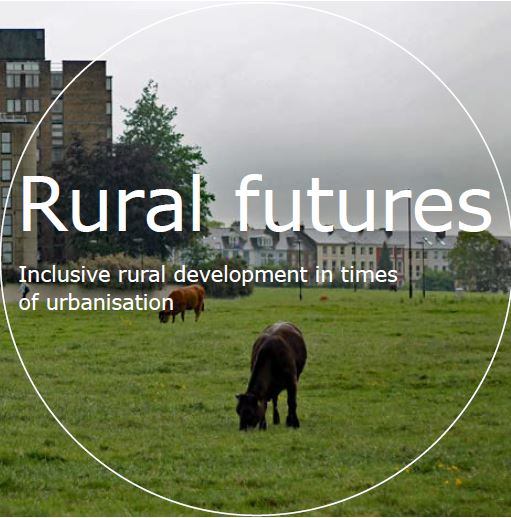
Rural Futures – Inauguration Bettina Bock as Personel Professor of Inclusive Rural Development

BB Rural Futures

Thursday October 25 2018 at 16.00 Prof. dr Bettina Bock will give her inaugural address as Personel Professor of Inclusive Rural Development titled Rural Futures.

The inauguration will be broadcasted live by weblectures.wur.nl and can be viewed later as well.

Organic Times – first edition of the MOAgazine


Recently students of the Master programme Organic Agriculture (MOA) of Wageningen University launched the first edition of the MOAgazine entitled ‘Organic Times’. The magazine (Organic times online) is written and edited by MOA students and provides some insights into the programme, study and student activities and a variety of issues linked to MOA, including book reviews and organic recipes. As chair of the MOA study programme committee I have enjoyed reading the Organic Times and am proud of the time and energy the students invested in developing this magazine. It reflects the enthusiasm and commitment of this great and dedicated group of international students as well as the interdisciplinary character of the MOA programme.

Planning for Equitable Urban and Regional Food Systems

There is a new Special Issue of the journal “Built Environment” on the topic of Planning for Equitable Urban and Regional Food Systems.

The Special Issues starts from the question: How does and can planning and design enhance the freedom and wellbeing of marginalized actors in the food system – low-income residents, people of colour, small-holder farmers, and refugees – the very people the alternative food movements purport to serve?

In the Special Issue authors from across the Global North and South explore the role of planning and design in communities’ food systems, while explicitly considering the imbalances in equity, justice, and power.

The collection includes a paper by former Rural Sociology MSc student Maria Vasile and Jessica Duncan.

‘We want to be part of the broader project’ Family Farmers and Local Food Governance in Porto Alegre, Brazil

Brazil has been praised for the development of its agricultural sector, its policies against hunger, and its support for family farming. Yet, the future of small-scale family farmers remains uncertain. In this paper, we question whether food system localization facilitates the integration of small-scale family farmers into food governance processes in Porto Alegre, Brazil. To answer this, we present the City Region Food System (CRFS) as a conceptual approach to explore the relationship between food systems localization and enhanced participation of small-scale family farmers in food governance. After introducing the case study of local food in Porto Alegre, we highlight key structural inequalities that limit family farmers’ participation in local food practices and influence their involvement in food governance. We then examine linkages between local food policy efforts and family farmers’ praxis, attempting to discern mismatches and related implications for the development of an inclusive CRFS. We argue that systematization of local food practices within the city region represents a double-edged sword as it may
translate into a decrease in farmers’ autonomy and ownership of local initiatives and burden them with regulations not fit for purpose. In conclusion, we suggest that a CRFS approach to planning can help to address structural inequalities and power asymmetries in local food governance only if informed by local dynamics and based on context-sensitive mechanisms for participatory governance incorporating a variety of small-scale family farmers (and other stakeholders).