Thesis: meal sharing in everyday life

Lian Angelino, MSc student Health and Society, wrote her MSc thesis with the Rural Sociology group. In the thesis Lian discusses the sharing economy, in particular meal sharing. She studied a particular meal sharing platform, Thuisafgehaald, looking at the practices of the so-called foodies – people picking up meals cooked by their neighbours. The title of the thesis is ‘Meal sharing in people’s everyday life: An analysis of meal sharing participation from a Social practice theory perspective’.

This is a short abstract of the thesis: The sharing economy has become an increasingly popular phenomenon across society and academia. Engagement in the sharing activities has been previously studied but lacks a focus on the practical aspects of sharing activities in specific segments of the sharing economy. The aim of this study was to explore the practical aspects of meal sharing. Specifically, this research was set out to study the role of meal sharing in people’s everyday life. This was done by both exploring the practical aspects of meal sharing and motivations for participation in meal sharing. Social practice theory, which centres around the reality of everyday life, and how people shape and give meaning to that reality, has been used as theoretical lens to guide data collection and analysis. This study concerned an explorative case-study using semi-structured interviews with users of the platform, a review of social media and participant observations. Overall, it can be concluded that meal sharing plays an instrumental role in people’s everyday life: meal sharing serves a practical solution as one method for food provisioning, amongst other options, to provide an evening meal in a convenient and enjoyable way where ideological motivations do not play a prominent role.

For more information, download the thesis here: Meal sharing in everyday life-Lian Angelino.

Sustainable Food Futures (NEW BOOK)

FoodGovernance's avatarFood Governance

bok coverVoltaire once said that “no problem can withstand the assault of sustained thinking”.
In this book, we put that statement to the test. The problems plaguing food systems are well researched and well known. But how can we support transformation towards sustainable and just food systems?

One thing is clear,  the objective of future food systems can no longer be to simply maximise productivity

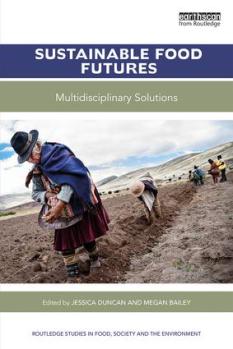
We are very pleased to announce that our new book, Sustainable Food Futures: Multidisciplinary Solutionshas just been published. The book includes proposals for solutions to move us toward more sustainable food futures.  The solutions, which are based on concrete cases, are organised around 4 themes:

  1. Recognizing place
  2. Enhancing participation
  3. Challenging markets
  4. Designing sustainable food futures

The solutions proposed in this book can be read as an atlas of possibilities.

There are multiple roads we can, and must, travel to bring us towards our…

View original post 410 more words

Understanding Sustainable Food System Transitions: Practice, Assessment and Governance

FoodGovernance's avatarFood Governance

SoRo Sustainable Food Transitions

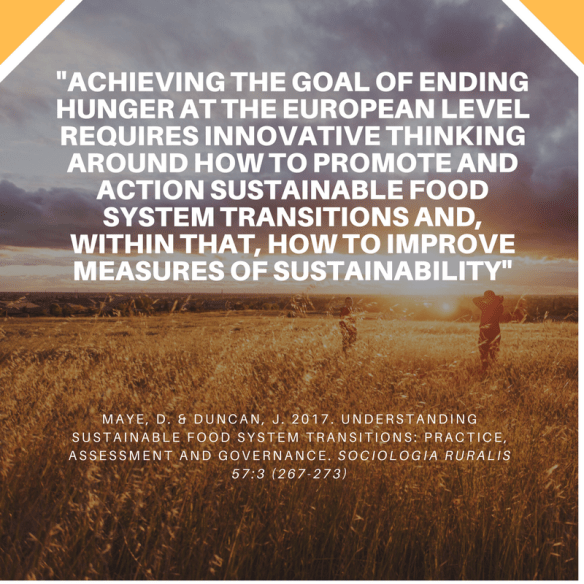
I am very pleased to share that a new special issue of Sociologia Ruralis edited by Damian Maye and me is now online: Understanding Sustainable Food System Transitions: Practice, Assessment and Governance.

The Special Issue provides theoretical insights and advancements into sustainability transitions through empirically grounded and informed investigations of food system practices. The papers confirm, following Hinrichs (2014, p. 143), that ‘numerous opportunities exist to forge more productive links between work on food systems change and the broad and growing sustainability transitions field’.

The Special Issue brings together 8 articles grouped together around two themes:

  1.  Examining relations between AFN practices and transition;
  2. Opening up measures and assessment practices for sustainability transitions.

Taken as a whole, the Special Issue advances discussions and thinking on alternative food practices and sustainability, opening up the debate not only on how to identify and analyse ‘alternative food practices’ in Europe, and beyond…

View original post 209 more words

Vacancy Assistant Professor in Food Sociology – Join us!

The Rural Sociology Group is looking for an Assistant Professor in Food Sociology. More information regarding this tenure track position is published at the WUR Vacancies website: Assistant Professor in Food Sociology. The vacancy is open for application. We most warmly welcome your application.

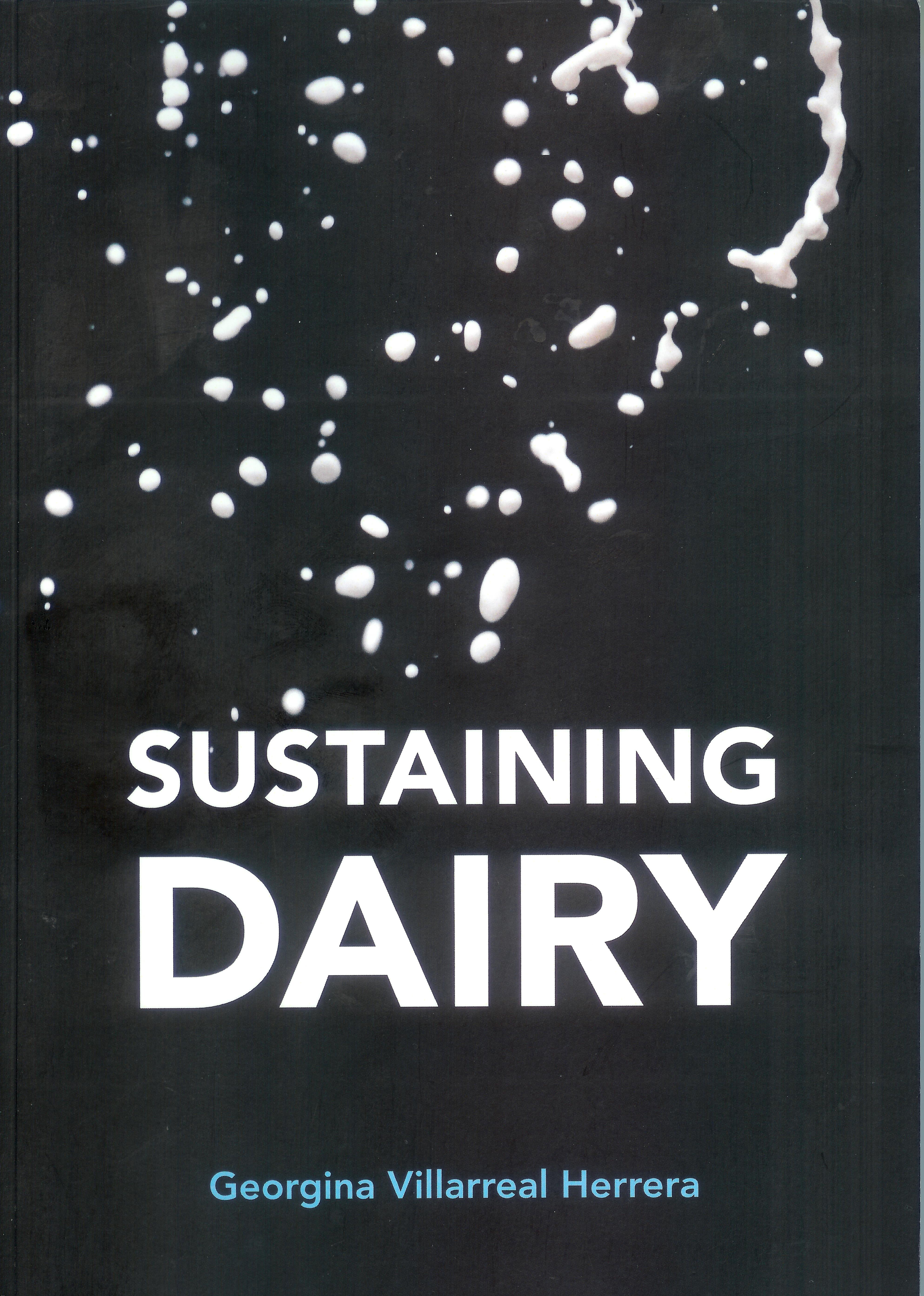
Sustaining Dairy – PhD thesis by Georgina Villarreal Herrera

On Monday 26 June 2017 at 13.30 hrs Georgina Villarreal Herrera will defend her PhD thesis entitled ‘Sustaining Dairy’ in the Auditorium of Wageningen University. The ceremony will be live streamed by WURTV but can be viewed later as well.

The full thesis will be available online after the defence ceremony.


Summary of the PhD thesis

Dairy in Europe has undergone many changes in the last few years—the abolition of milk production quotas being a fundamental one. This study explores these changes in relation to the sustained social and environmental viability of the sector and how dairy processors’ sustainability programs are a part of that.

This study traces the evolution of the dairy sectors in the Netherlands, Ireland and the United Kingdom since the post-war era, outlining the dominant logic that has guided their development. The analysis shows that the post-war logic based on the increase of scale and intensification of dairying has continued to shape the development of the sector through today. While the visible impacts of intensive dairy have led to adaptations to the dominant rules and practices, these changes have not been fundamental in nature. The analysis of dairy processors and their sustainability programs revealed that these programs can be an additional tool for compliance to legal standards and the alleviation of pressing societal concerns. However, processors address social and environmentally relevant dairy-related challenges when an effective link to profit can be established. These programs have been unable to ensure that the dairy sector operates within established environmental limits and societal expectations, while providing a stable livelihood for farmers.