Assessing the Sustainability of Local and Global Food Chains – GLAMUR Special Issue

GLAMUR main messages

The EU-funded research project GLAMUR has been completed earlier this year. More info on the project, its sustainability performance-based approach and the findings can be accessed at the website. Next to all reports a synopsis of the project, its approach, the main findings and recommendations has been published, a leaflet with the main messages and finally a Special Issue of Sustainability: Sustainability Performance of Conventional and Alternative Food Chains was recently published containing eight open access articles following an editorial by Gianluca Brunori and Francesca Galli.

The Symbiotic Food System of Dar es Salaam – new publication

Just published in a Special Issue of Agriculture: ‘The Symbiotic Food System: An ‘Alternative’ Agri-Food System Already Working at Scale

Wegerif - WomanMaizeTradersUnderTree

Woman Maize Traders in Dar es Salaam, source Marc Wegerif

In this new article Marc Wegerif and Paul Hebinck show how small-scale and interdependent actors produce food and get it to urban eaters at a city feeding scale without large vertically- or horizontally-integrated corporate structures. The research from Dar es Salaam, a city of over 4.5 million people, reveals a ‘symbiotic food system‘ that is an existing alternative to the globally dominant agri-business model. Importantly, it can and does deliver at scale and in a way that better responds to the needs of people in poverty; both food eaters and food producers. Neither is the symbiotic food system static, it is growing in response to the needs of the city, but it does not grow through the popular notion of ‘scaling-up’, rather it grows through a much more equitable process of replication. The article gives particular attention to the functioning of market places and how new actors enter into the food system. These reveal that more important to the system than competition are various forms of collaboration based around symbiosis as a core ordering principle. Moreover, the paper shows that the symbiotic food system connects in many, often unexpected, ways the urban and rural spaces in Tanzania. There is much to learn from such a system which develops without significant support from the state or other agencies.

Also published in this Special Issue: Theorizing Agri-Food Economies by Jan Douwe van der Ploeg, discussing how agri-food economies evolve over time. A central thesis of the paper is that different theoretical representations not only reflect the differences in agro-economies and their developmental tendencies, but are also important drivers that actively shape the trajectories that they describe.

Interdisciplinary Postdoc position – “Food system transformability to ecologically intensive production and sustainable value chains”

FoodGovernance's avatarFood Governance

We are hiring a Postdoc for a neat project in Chile and Uruguay. Deadline for applications is September 19th

Based in Wageningen with frequent travel.

More information here:

Function
The development of sustainable food systems depends on
  • resilience and adaptability of socio-ecological systems to respond to short term variation in drivers, and
  •  system transformability to reach new equilibria under drivers that change over longer periods of time.

The different food system components, their interactions and feedbacks, and the different time scales on which they operate give rise to complex systems in which interventions may have diverse and unexpected outcomes. Systemic learning and co-innovation have been advocated as key elements for analysis and decision making in complex (food) systems.
The Postdoc will develop and implement a systemic learning approach on ecologically intensive production and value chains.

The main research question will be “How can stakeholders stimulate transformation towards…

View original post 110 more words

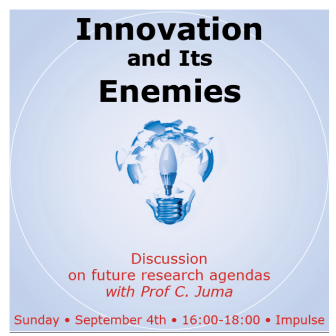
Innovation and Its Enemies: Discussion on future research agendas

Untitled

The Opening of the Academic Year is fast approaching. Register now for an opportunity to discuss the future of innovation research with this year’s Keynote Speaker, Professor Calestous Juma (Harvard University) and  Cees Leeuwis,Professor of Knowledge, Technology and Innovation (Wageningen University).

Date: Sunday September 4 2014
Time: 16:00-18:00
Location: Impulse (building number 115)

Agenda

16:00 Welcome and Introduction by Dr Sylvia Karlsson-Vinkhuyzen
16: 10 Presentation by Prof Calestous Juma
16:30 Reflections by Prof Cees Leeuwis
16:40 Discussion moderator  Dr Jessica Duncan
17:10 Closing remarks by Dr Sylvia Karlsson-Vinkhuyzen
17:15 -18:00 Drinks, snacks and meet and greet


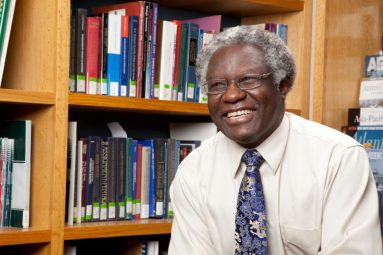
calestous_juma-size-custom-crop-1086x724

Professor Calestous Juma- Keynote Speaker for Opening of the Academic Year 2016-2017

International conference on the Value of Life, June 2017

This is a first announcement for the June 2017 international conference organised by the Centre for Space, Place and Society (CSPS) at Wageningen University in The Netherlands. The full call for papers and organised sessions will be available in September 2016.

The Value of Life: Measurement, Stakes, Implications

International Conference

Wageningen, The Netherlands

28-30 June 2017

Continue reading