Participants needed for online survey about sustainable urban and peri-urban food provision!

SUPURBFOOD logo

SUPURBFOOD is an international research project carried out by a consortium of ten research and ten SME (small and medium-sized enterprises) partners, in which novel solutions to urban and peri-urban food provision have been examined in three thematic areas. These thematic areas are: (i) nutrient, water and waste cycles, (ii) short food supply chains, and (iii) multi-functional land use. While positive developments are found in all of these, additional steps are needed to make full use of the potential of these innovations. Hence, the project team formulated a set of recommendations and would like to ask relevant stakeholders (e.g. policymakers, entrepreneurs, civil society organisations) for their opinion about their effectiveness. For that purpose an online survey has been launched, which takes 10-15 minutes to complete. If you considers yourself to be a relevant stakeholder, you are kindly requested to complete the online questionnaire, which is available in seven languages: English, Dutch, German, Italian, Latvian, French and Galician.
Interesting forum discussion: Urban and Peri-urban agriculture and short food chains: Lessons from the South

The SUPURBFOOD project (www.supurbfood.eu) is looking to identify experiences from the global South and North with recycling of nutrients, waste and water in urban and peri-urban agriculture, short chain delivery of food in urban and peri-urban areas, and multifunctional agriculture in urban and peri-urban areas in order to enrich South-North exchange and collaboration. We are specifically interested in innovative experiences – with a special focus on the type of business models that were applied, the role of Small and Medium Enterprises (SMEs) and their sustainability.

This specific discussion will run on the Forum from 4-30 March 2013. Continue reading

Presenting my Colombian case study area

During the last two weeks, I was in Bogotá to talk to experts from the IER at the Javeriana University as well as the Ministry of Environment and Sustainable Development to find out about public support for joint capacity building in rural Colombia. Now, I am back in the department of Santander to start my field work.

In order to be able to do an in-depth study of a) how support for joint capacity building in rural areas is organized and b) how this support is evaluated by its beneficiaries, I narrowed my case study area down to one municipality: Floridablanca.

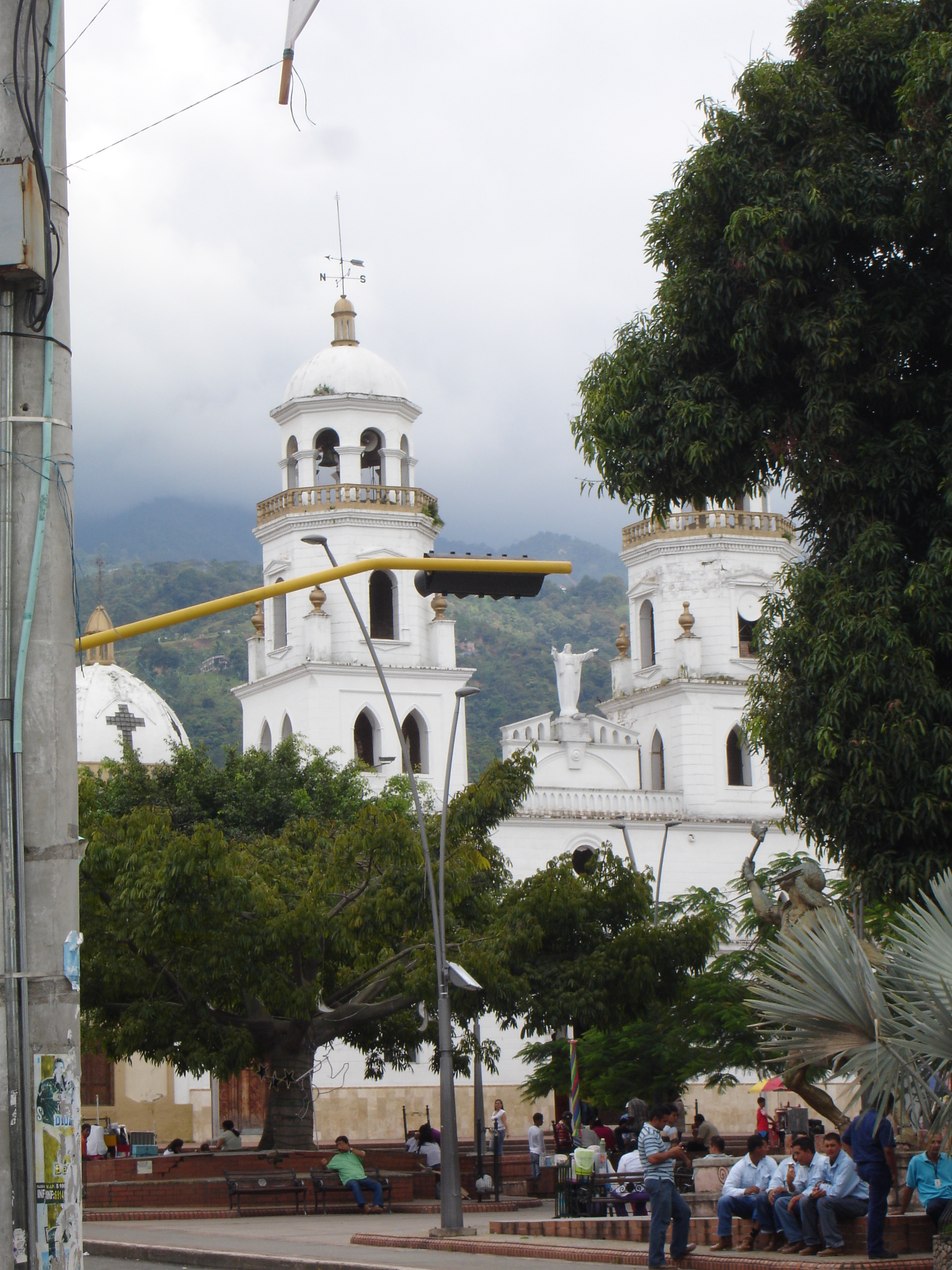
Main square in Floridablanca

Continue reading

“I bike, so I am” (or was it…”I am, so I bike”?) – Jan Schakel in Rennes – Part 3

Tomorrow I will leave Rennes and go the  countryside (to Villarceaux) to assist a field practical on sustainable indicators in the rural area. But I already miss the city. As I wrote before, Rennes is an special city: it has character, class and culture. And after three weeks you’re getting to feel at home: I know my way around, do my daily shopping’s, shake hands, have a kiss here and there (‘des bisous’, more ‘cheek to cheek’…), etc. After three weeks you also get a rhythm:  I buy a Dutch newspaper at the station, have  a coffee on the terrace and a late dinner at the bistro (see picture).

Rennes is a very beautiful city, also due the fact that they have a major that is very well respected and who is major for over 30 (!) years already. So compared to other cities, Rennes has a very sustainable and constant policy, and you can feel and see the results of that everywhere.  I will show you two –also for me – very interesting examples. First : Rennes urban strategy (and at the same time: rural). Rennes, with almost 200.000 inhabitants within the city, is a very ‘compact’  city. Also due to ecological and rural motives, the city of Rennes decided over 30 years ago to  concentrate housing within its walls, and by that, saving the qualities of the surrounding countryside. So the policy was to intensify the density of its buildings, but according to very high architectural standards. So indeed, you don’t see any suburbs, industrial zones or slumps within the city: it all has quality and a very special atmosphere.

Continue reading

PUREFOOD research and training network

The Rural Sociology Group has been granted the coordination of a Marie Curie Initial Training Network  entitled ‘Urban, peri-urban and regional food dynamics: toward an integrated and territorial approach to food (PUREFOOD)’ funded by the European Commission’s Seventh Framework PEOPLE program. The PUREFOOD research and training programme aims to reduce the enormous knowledge and skills deficit that is negatively affecting the capacity to design and deliver appropriate political and developmental solutions in the crucial supra-disciplinary fields of food security, public food procurement, public health and sustainable urban and regional development. Hence, the objective of PUREFOOD is to train a pool of 12 early-stage researchers (ESRs) in the socio-economic and socio-spatial dynamics of the (peri-)urban and regional foodscape. The research and training program will therefore provide knowledge and innovation for the Commission’s aim to deal with economic, social and environmental policies in “mutually reinforcing ways” which reflects the core of the Lisbon and Gothenburg agenda’s call for integrated solutions towards economic prosperity, social cohesion and environmental sustainability. The PUREFOOD network is centred around food as an integrated and territorial mode of governance and studies the emergence of the (peri-)urban foodscape as an alternative (as opposed to a globalised) geography of food, including the ways in which, and the extent to which, sustainability aspects generally considered to be intrinsic to the alternative food geography are incorporated by the more conventional food companies.

The PUREFOOD Initial Training Network consists of 7  university partners who will each host one or more ESRs:

  1. Wageningen University Rural Sociology Group (The Netherlands)
  2. Cardiff University School of City and Regional Planning (United Kingdom)
  3. Pisa University Department of Agronomy and Agro-ecosystem Management (Italy)
  4. Latvia University Faculty of Social Sciences (Latvia)
  5. City University London Centre for Food Policy (United Kingdom)
  6. Federal University of Rio Grande do Sul Postgraduate Program in Rural Development (Brazil)
  7. Makerere University School of Public Health Department of Community Health and Behavioural Sciences (Uganda)

In addition to these universities as full consortium partners, the PUREFOOD network consists of 8 associated partners, a combination of private firms, public authorities and civil society organisations:

  1. Peri-Urban Regions Platform Europe (PURPLE)
  2. Sustainable Agriculture Initiative (SAI) Platform
  3. Sodexo UK
  4. Willem&Drees
  5. Slow Food Study Center
  6. Stroom Den Haag
  7. Sustain – the alliance for better food and farming
  8. Tukums municipality

The associated partners will contribute to the PUREFOOD training program by contributing to courses, participating in Communities of Practice and by hosting ESRs for a secondment. The active involvement of these associated partners is also of great importance for safeguarding the practical applicability of scientific research in the commercial, public as well as civic realm and for the dissemination of results.

The seven universities have opened (or soon will open) vacancies for 12 early-stage research positions. The launch of the vacancies has been announced on this weblog. As of now the PUREFOOD vacancy brochure with information about ESR projects, eligibility criteria, contact persons for additional information and addresses for submitting applications is available. For potential prospective ESRs an information pack has been compiled with information about the PUREFOOD research and training programme, the individual ESR projects, the timeline of the project and short descriptions of the full and associated consortium partners.