Urban Agriculture in Romania

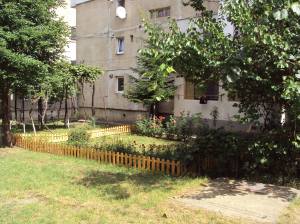
11879645_1022934331074106_583476184_o-2This MSc thesis by Anamaria Alupoaie (MSc Organic Agriculture) investigated the reasons for failure of urban gardens, and the impacts of gardens on resident’s ‘sense of place’, in Dorohoi city in Romania.

Urban Agriculture plays a different role in the food system then agriculture in rural areas. In some cases, it represents a source of income or builds  sociological relations between citizens, through participation in the garden. In other cases, urban agriculture may originate from rural agricultural habits and traditions. With these inherited habits, urban farmers improve the existing environment through their practices, and with these practices they inspire others to take action in maintaining their own ‘green corners’ in the public space.

11882459_1022933601074179_396130938_oThe study was undertaken in Dorohoi region, a city situated on the north side of Romania, a small city with  31,093 inhabitants. In the last 20 years, the city experienced a period of decline due to the closure of big factories that offered jobs for more than half of the inhabitants. Since then the unemployment rate grew, and reached 80-85 %, in 2009. And it is estimated that now over 50% of the population lives below the country’s poverty line, as a result of the loss of the big industry. The availability of resources and income has triggered city dwellers to rely to a greater extent on local food production. Among the existing gardens, new ones started to flourish around the apartment buildings, in urban public spaces, and residents grew their edible greens. As such, in the area proposed for investigation, Dorohoi, urban agriculture continued through the communities of rural people that had moved into the urban center. They developed gardens in the green spaces of the city as a traditional habit inherited from their rural life. But this period of prosperity didn’t last, and about a decade ago, the city gardens were destroyed, with no significant grounds left. Continue reading
Business models in urban agriculture – MSc thesis by Shuang Liu

Urban Agriculture (Shuang Liu)

By Shuang Liu (MSc student in Organic Agriculture)

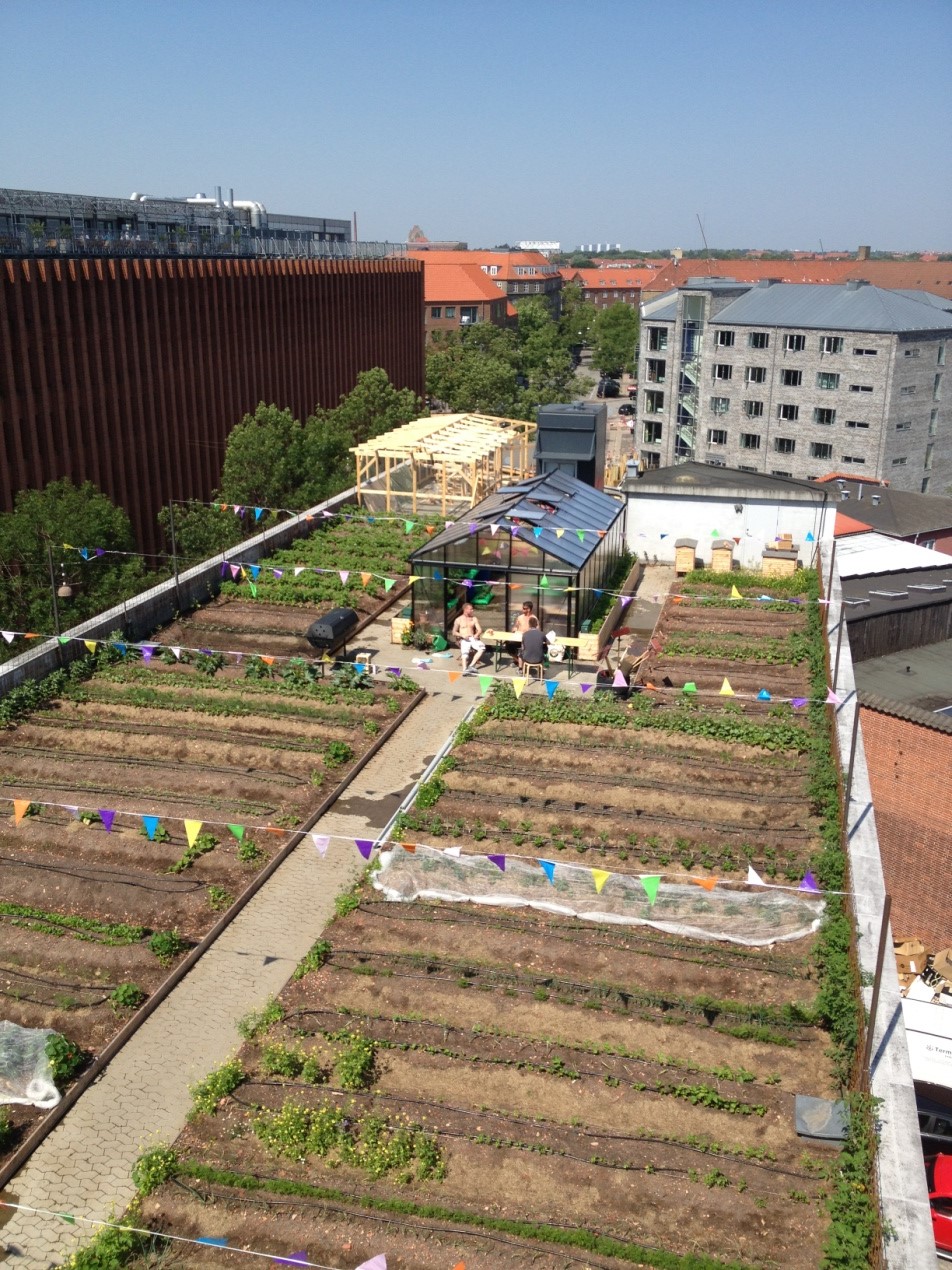
Urban agriculture is thriving across the world along with rapid urbanization. It is usually valued as a public-good generating activity for its social and ecological benefits. Recently, however, there is a growing trend of urban farmers becoming commercial and they seem to be extremely diversified in practice. Yet, little is known about the business approaches developed by entrepreneurial urban farmers.

In this research, I took urban agriculture as a revenue generating and job creation activity by focusing on more market-oriented projects. I tried to describe individual urban agriculture business operations under the framework of the business model. An online questionnaire was distributed worldwide followed with statistical analysis. The questionnaire was designed using nine business building blocks from Business Model Canvas. Based on the reported business characteristics, a cluster analysis was performed in order to find patterns underlying the diversity of their businesses. In total 46 respondents from 18 countries across 6 continents completed the questionnaire and as sucht contributed to the results of my thesis.

Great diversity in their business operations was found among the 46 projects. Various projects produce a wide range of products and conduct activities for diverse functions. They also manage different relationship with their customers and clients. Distinctions were also found between continents and projects with different purposes. All this heterogeneity brings challenges to describe and understand urban agriculture business. Thus an exploratory cluster analysis was adopted in order to simplify the diversity.

Drawing on the business characteristics, cluster analysis has generated five types of business model: Diversification, Primary Food Production, Value Differentiation, Service Provision and Innovative Operation. For more information about the diversity encountered and for the characteristics of the five business models, please have a look at my MSc thesis

This study provides a rough picture of how initiatives across the world are operating their projects. Classification of business models could be a precursor for future studies on topics such as the relationship between business model and performances, innovation of urban agriculture business models, and economic performance of urban agriculture etc.

For more information you can also contact me: lsabab@163.com

Community gardens in urban areas – critical reflection on social cohesion & alternative food provisioning – PhD thesis by Esther Veen

Esther Veen - Community gardens in urban areasJune 15, 2015 at 1.30 pm Esther Veen will publicly defend her PhD-thesis ‘Community gardens in urban areas: A critical reflection on the extent to which they strengthen social cohesion and provide alternative food‘ in the Auditorium of Wageningen University. The defence ceremony will be streamed live by WURTV but can be viewed later as well. A hard copy of the thesis can be ordered by sending an email to esther.veen@wur.nl or a pdf can be downloaded from Wageningen Library (see link above).

This thesis shows that the different organisational set-ups of community gardens reflect gardeners’ different motivations for being involved in these gardens. The gardens studied in this thesis can be defined as either place-based or interest-based; gardens in the first category are focused on the social benefits of gardening, whereas gardens in the second category are focused on gardening and vegetables. Nevertheless, social effects occur in both types of gardens; in all of the gardens studied, participants meet and get to know others and value these contacts. Based on this finding, I conclude that community gardens do indeed enhance social cohesion.

Continue reading

Localizing Urban Food Strategies – Farming cities and performing rurality: call for abstracts for the 7th AESOP Sustainable Food Planning Conference

The 7th Aesop Sustainable Food Planning (SFP) Conference entitled “Localizing Urban Food Strategies: Farming cities and performing rurality” will take place in Torino (Italiy) from 7 to 9 October 2015.

Localizing urban food strategies refers to embedding sustainable food planning issues in place and in time within each specific local context. Moreover, by targeting planners, agronomists, designers, geographers, administrators, activists etc. engaged in the urban food debate, Farming cities and performing rurality aims at representing a platform for the development of fruitful perspectives for sustainable food planning policies and practices.

On the one hand, Farming cities refers to the development of innovative roles for agricultural production in and around the city, approaching in a structural manner the way agricultural issues are dealt (or should be dealt) with in contemporary urban policies. On the other hand, Performing rurality considers urban food strategies as a tool to define a cooperating relationship between the urban and the rural, reversing in terms of equality the traditional ideological subordination of the countryside to the city.

The activities of the Conference will be articulated around the following tracks: (i) Spatial planning and urban design, (ii) Governance and private entrepreneurship, (iii) Relevant experiences and practices, (iv) Training and jobs, (v) Flows and networks. There will be a specific activity for PhD students and young scholars.

Abstracts for one of the aforementioned tracks can be submitted until the 31st of May via the submission form on the conference website.

Call for abstracts Agriculture in an Urbanizing Society Conference

The programme committee of the Agriculture in an Urbanizing Society Conference, which will take place in Rome (Italy) from 14-17 September 2015, has opened the call for abstracts. Abstracts can be submitted through the conference system EasyChair until 31 March 2015 for one of the following 23 working groups (click on the working group for description and convenors or download pdf (500 KB)):

  1. WG1 – Connecting local and global food systems and reducing footprint in food provisioning and use
  2. WG2 – Short food supply chains (regional products; farmers’ markets; collective farmers’ marketing initiatives; alternative food networks; CSA)
  3. WG3 – Economic impact at the farm level
  4. WG4 – New business models for multiple value creation
  5. WG5 – Entrepreneurial skills and competences, knowledge and innovation systems and new learning arrangements
  6. WG6 – Transition approaches
  7. WG7 – Regional branding and local agrifood systems: strategies, governance, and impacts
  8. WG8 – Food systems and spatial planning. Towards a reconnection?
  9. WG9 – Land-use transformations
  10. WG10 – Urban agriculture I. Urban agriculture and Urban Food Strategies: Processes, Planning, Policies and Potential to Reconnect Society and Food
  11. WG11 – Urban agriculture II. Grass-root initiatives and community gardens
  12. WG12 – Urban agriculture III: Effects of UA. Urban agriculture: a potential tool for local and global food security, economic, social and environmental resilience, and community health and wellness
  13. WG13 – Care Farming/Social Farming in more resilient societies
  14. WG14 – Rural tourism (agri-tourism) and changing urban demands
  15. WG15 – Local arrangements for agricultural ecosystem services: connecting urban populations to their peri-urban landscapes through the ecosystem services of agriculture
  16. WG16 – Gender aspects of multifunctional agriculture
  17. WG17 – Civic agriculture for an urbanizing society: production models, consumption practices and forms of governance
  18. WG18 – Society Oriented Farming – working on the balance between market and societal demands
  19. WG19 – Food Security: Meanings, Practices and Policies
  20. WG20 – Revolutionary solutions for local food systems
  21. WG21 – Urban forestry, Green infrastructure
  22. WG22 – Food System Transitions: Cities and the Strategic Management of Food Practices
  23. WG23 – Conceptualising and Assessing City Region Food Systems

After a positive evaluation of the abstract the author will be asked to upload a paper of max 10 pages which will be published online on the website of the conference. There will also be the possibility to submit a short paper of max 2 pages enabling the authors to still publish their results in peer reviewed journals after the conference. Short papers will be published in a book of proceedings. The procedures for the papers will be published on the conference website soon.