Unknown's avatar

About Han Wiskerke

Chair and Professor of Rural Sociology at Wageningen University (The Netherlands) Research domains: rural development, multifunctional agriculture, city-region food systems

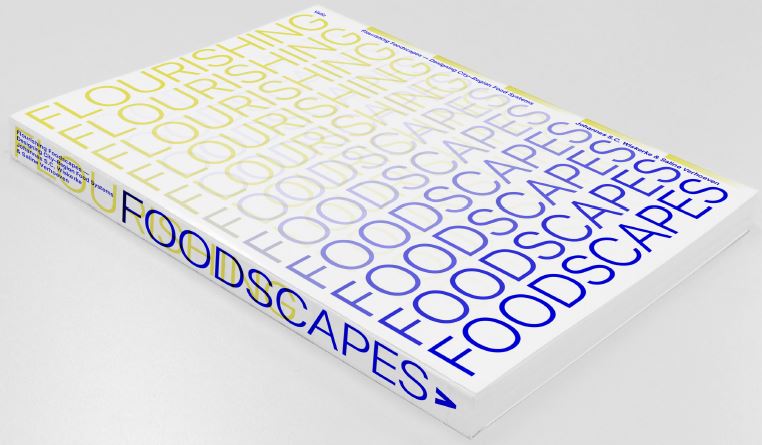
Book Launch – Flourishing Foodscapes: Designing City Region Food Systems

On Thursday 27 September 2018 Valiz and the Amsterdam Academy of Architecture will host a programme dedicated to the launch of the book entitled ‘Flourishing Foodscapes – Designing City Region Food Systems’.

About Flourishing Foodscapes

Flourishing Foodscapes is a book about the the social and spatial organization of networks and systems of food provisioning. It explores, highlights and discusses strategies and designs for creating future-proof city region food systems by addressing the social, economic, and ecological vulnerabilities and sustainabilities of current and future foodscapes, as well as how the spatial qualities of the rural and urban landscape and its use need to adapt and change. A key argument in the book is that food not only has to do with nutrition, but that it links up with and influences a multitude of domains; from health to (eating) culture and from employment to climate change. It has a major impact on the city (especially on consumption and distribution, and, to a lesser extent, on production) and on rural areas (mainly production), but also the relations between city and countryside, close by as well as far apart. Thinking about food-related problems and challenges is becoming increasingly important. These issues influence our planet and way of life, but also our everyday existence.

Flourishing Foodscapes transcends the field of bottom-up initiatives and private projects. If we really want to design more sustainable food systems, we will have to think more structurally about changing food provisioning at different levels of scale. Flourishing Foodscapes links research, case studies and spatial design and takes a step towards a more comprehensive approach to food issues, building on inspiring practices, projects and designs from all over the world.

Programme Book Launch

The book presentation will take place on Thursday 27 September 2018, from 17.00 to 19.30 at the Academy of Architecture (Waterlooplein 211-213, Amsterdam). The programme is as follows:

  • 17:00–17:05 Opening by moderator Saskia van Stein (director Bureau Europa)
  • 17:05–17:10 Welcome by Madeleine Maaskant (director Academy of Architecture)
  • 17:10–17:30 Introduction to the book by the editors and main authors Han Wiskerke (Professor of Rural Sociology, Wageningen University) and Saline Verhoeven (landscape architect and researcher)
  • 17:30–18:00 Reactions tot the book by Froukje Idema (Programme Manager Food, municipality Ede); Martin Woestenburg (rural sociologist and journalist); Arnold van der Valk (Professor emeritus of Spatial Planning and co-founder of the Food Council of the Metropolitan Region of Amsterdam)
  • 18:00–18:25 Discussion led by Saskia van Stein
  • 18:25–18:30 Presentation of the first copy to Hanneke Kijne (Head of Landscape Architecture at the Academy)
  • 18:30–19:30 Snacks and drinks

This programme is free of charge, but if you plan to attend please register via avb-webredactie@ahk.nl


Organic Times – first edition of the MOAgazine


Recently students of the Master programme Organic Agriculture (MOA) of Wageningen University launched the first edition of the MOAgazine entitled ‘Organic Times’. The magazine (Organic times online) is written and edited by MOA students and provides some insights into the programme, study and student activities and a variety of issues linked to MOA, including book reviews and organic recipes. As chair of the MOA study programme committee I have enjoyed reading the Organic Times and am proud of the time and energy the students invested in developing this magazine. It reflects the enthusiasm and commitment of this great and dedicated group of international students as well as the interdisciplinary character of the MOA programme.

Reminder – Vacancy Assistant Professor in Food Sociology (tenure track)

At the Rural Sociology Group we have a job opening for an Assistant Professor (tenure track position) in Food Sociology. As assistant professor you will undertake independent research and participate in international research projects focusing on the dynamics of food provisioning practices and processes and on the relations between food provisioning and sustainable rural and urban development. You will also teach and coordinate Bachelor and Master courses for the Bachelor and Master program International Development Studies (specialization Sociology of Development), the Master program Food Technology (specialization Gastronomy), and the Master program Organic Agriculture and supervise Master thesis research for these programs. Other aspects of the job include project acquisition, training and supervision of PhD students and participation in various research and/or education committees. About 45% of your time will be spent on education, 45% on research and the remaining 10% on a variety of activities within and outside the university.

For more information about the position (and the Rural Sociology Group) go to the vacancy page of Wageningen University or contact Prof.dr. Han Wiskerke (han.wiskerke@wur.nl). Candidates can apply for this position onlineThe deadline for application is Thursday 14 September 2017.

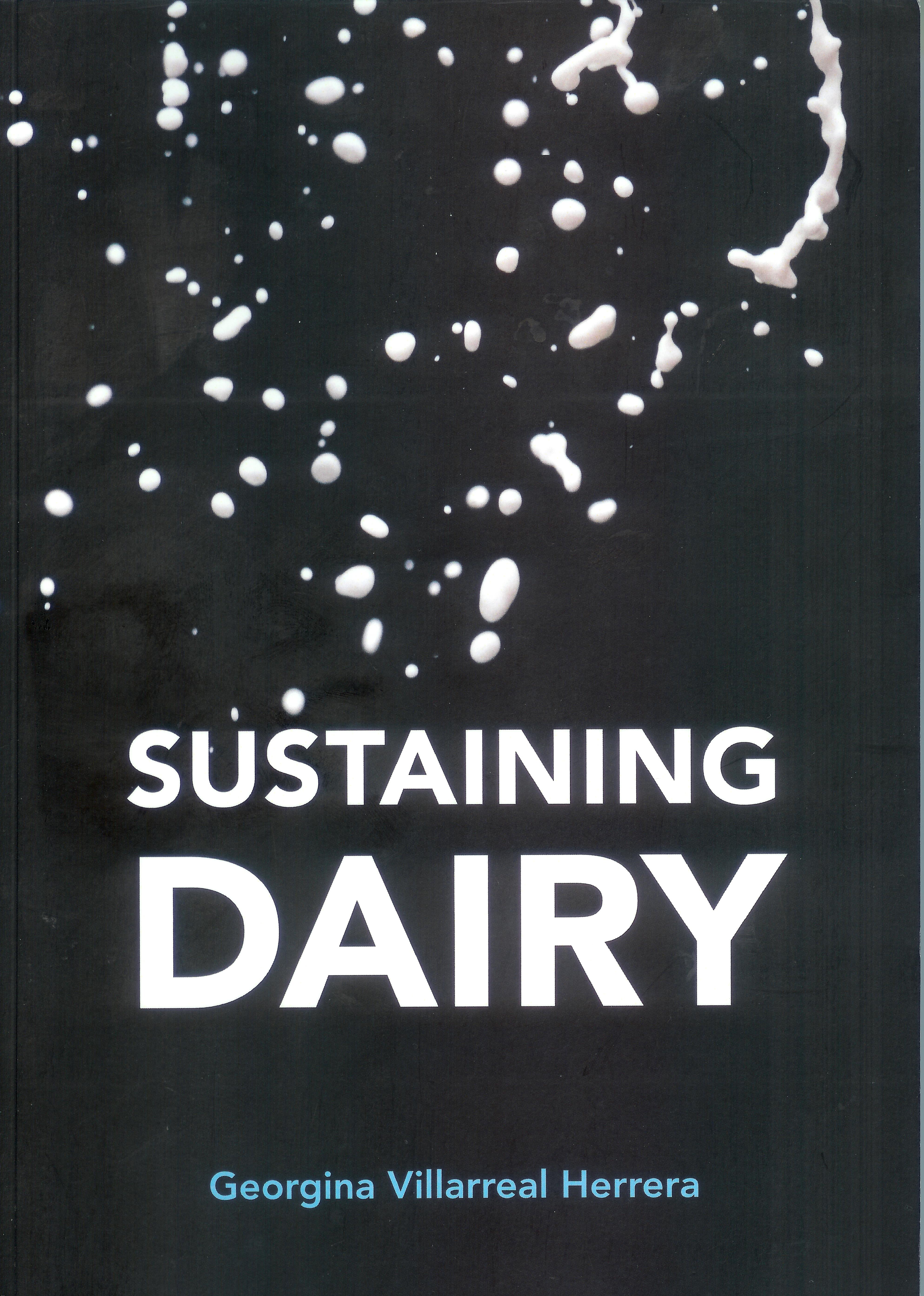
Sustaining Dairy – PhD thesis by Georgina Villarreal Herrera

On Monday 26 June 2017 at 13.30 hrs Georgina Villarreal Herrera will defend her PhD thesis entitled ‘Sustaining Dairy’ in the Auditorium of Wageningen University. The ceremony will be live streamed by WURTV but can be viewed later as well.

The full thesis will be available online after the defence ceremony.


Summary of the PhD thesis

Dairy in Europe has undergone many changes in the last few years—the abolition of milk production quotas being a fundamental one. This study explores these changes in relation to the sustained social and environmental viability of the sector and how dairy processors’ sustainability programs are a part of that.

This study traces the evolution of the dairy sectors in the Netherlands, Ireland and the United Kingdom since the post-war era, outlining the dominant logic that has guided their development. The analysis shows that the post-war logic based on the increase of scale and intensification of dairying has continued to shape the development of the sector through today. While the visible impacts of intensive dairy have led to adaptations to the dominant rules and practices, these changes have not been fundamental in nature. The analysis of dairy processors and their sustainability programs revealed that these programs can be an additional tool for compliance to legal standards and the alleviation of pressing societal concerns. However, processors address social and environmentally relevant dairy-related challenges when an effective link to profit can be established. These programs have been unable to ensure that the dairy sector operates within established environmental limits and societal expectations, while providing a stable livelihood for farmers.

Feeding Dar es Salaam: a symbiotic food system perspective

On Thursday 22 June 2017 at 11.00 hrs Marc Wegerif will defend his PhD thesis entitled ‘Feeding Dar es Salaam: a Symbiotic Food System Perspective’ in the Auditorium of Wageningen University. The ceremony will be live streamed by WURTV but can be viewed later as well.

The full thesis will be available online after the defence ceremony.

Marc is currently Land Rights Policy Lead for Oxfam and based in Johannesburg, South Africa. Before that he was in Dar es Salaam (Tanzania) as Food and Land Rights Advisor for Oxfam with a focus on Horn, East and Central Africa. During that time he also undertook the fieldwork for his PhD thesis.

His thesis is based on qualitative research that explored the food system which feeds most of the over 4.6 million residents of the fast-growing city of Dar es Salaam in Tanzania. Marc followed key foods (maize, rice, potatoes, green vegetables, eggs and milk) from the urban eaters to the retailers, processors and primary producers.

What has been found is a “symbiotic food system” made up of multitudes of small-scale and interdependent actors that together produce the food and get it to urban eaters at a city feeding scale. They do this without any vertically – or horizontally – integrated corporate structures.

The symbiotic food system that feeds Dar es Salaam is not perfect, but it is working and worthy of further research and interventions to create a more enabling environment for such foods systems to flourish in Tanzania and elsewhere.