
 Finally, it is there! The brochure of our group, Rural Sociology. The brochure contains all necessary education information offered by our group. You will get inspired by the enthusiastic interviews held with students and former students! Have a look at the digital version here. Or ask for a hard copy by sending a message to els.hegger@wur.nl.
Category Archives: Education
Thesis possibility with Dutch Sustainable Development Organisations


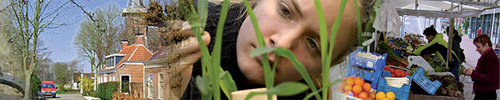
The thesis assignment is commissioned by Dutch Sustainable Development Organisations, COS Gelderland & OIKOS. There is an additional option to include your internship.
The assignment is a feasibility study of a private network of (young) migrants, (inter)national students and others active in local sustainable development organisations. In order to encourage regional cooperation and to improve the quality of the activities by exchanging knowledge.
Wageningen UR Science Shop accepted the assignment of COS Gelderland & OIKOS to do this feasibility study of the project ‘Participand’. The research will make you familiar with ‘Action Research’ and is a chance to achieve work experience in the field of the Science Shop and Dutch Sustainable Development Organisations. The research will start mid September.
Are you interested? Please contact project leader Margriet Goris (cocreation@live.nl or 06-28109539). The research is guided by Ina Horlings of the Rural Sociology Group (lummina.horlings@wur.nl or 06-51126725).
Human Values and Place-based Development – WASS seminar by dr Marilyn Hamilton
WASS Seminar Human Values and Place-based Development by dr Marilyn Hamilton: Tuesday August 30th, 13.30-15.30, Venue: Room C75, Leeuwenborch
How can human values be the starting point for community and regional development? How can capacities be built, leadership developed and community learning in multi-cultural places be enhanced? How can we create an integral framework for place-making and place-caring?
This seminar is a unique opportunity to hear about Dr. Hamilton’s work in cities and eco-regions and how she sees that sustainability for both are interlinked as a complex adaptive system. Marilyn Hamilton ‘meshworks’ or weaves people, purpose, priorities, profits, programs and processes to develop strategies for resilience. She facilitates sustainable development programs, develops practical tools and supports multi-stakeholder groups in transforming cities and eco-regions into a glocally resilient ‘meshwork’. She states that we need to balance subjective/ intersubjective capacities of people (‘the inner dimensions’) with objective/interobjective capacities (‘the outer dimensions’).
An example is Abbotsford, which had been headlined by the media as the ‘murder capital of Canada’. Here the youth perceived that community didn’t value them as a resource for community. Community workers wanted Abbotsford’s food-based agricultural sector to “cook up cultural harmony” by renewing opportunities for the youth linked to the food chain. The research project used an integral framework and meta-mapping (based on the theory of ‘spiral dynamics integral’) to identify differences and opportunities for the city and develop a monitor (the vital signs monitor) for strategic planning.
Dr. Marilyn Hamilton is Professor of Sustainable Community Development and Leadership Studies at Royal Roads University in Canada. She is a leader, coach, teacher, researcher and Founder of “Integral City Meshworks Inc” http://www.integralcity.com/, and Jury Member of Globe Sustainable City Awards. She wrote the book, “Integral City: Evolutionary Intelligences for the Human Hive”.
More information: Ina Horlings, Rural Sociology Group (lummina.horlings@wur.nl) or Anouk Brack, Education and Competence Studies (anouk.brack@wur.nl).
Internship possibility with Stroom Den Haag
 In 2009 Stroom Den Haag (www.stroom.nl) kicked off the program Foodprint. Food for the city. The program takes place over the course of several years and focuses on the influence food can have on the culture, shape and functioning of the city, using The Hague as a case study. The program invites artists and designers to develop appealing proposals on the subject, while at the same time establishing a clear connection with entrepreneurs, farmers, food experts and the general public.
Foodprint as a project ends in 2012. To mark the end of the three year project, a book will be published and a symposium organised around the same theme: How do we feed our cities of the future (2050) in a sustainable way? Stroom is looking for a student to assist them with the organisational work but also to do additional research. For instance, there is an idea to create a visual essay with a timeline starting around 2050 B.C. (Sumerian clay tablets being the oldest judicial document, communicating about barley) with on it the most important laws and inventions in the field of production and trade of food in urban areas.
If you are curious about the possibilities, please contact Els Hegger (els.hegger@wur.nl).
Afstudeermogelijkheid bij OIKOS
De Wetenschapswinkel Wageningen heeft een opdracht van COS Gelderland & OIKOS aangenomen om een haalbaarheidsonderzoek te doen voor het project ‘Participand’. Projectleider is Margriet Goris; het onderzoek wordt begeleid door Ina Horlings van Rurale Sociologie.
Met het project ‘Participand’ wil COS/OIKOS diverse doelgroepen -migranten, (inter)nationale studenten en anderen actief op het gebied van duurzame internationale ontwikkeling- bijeenbrengen om ondersteuning te bieden, samenwerking te stimuleren en om de kwaliteit van de activiteiten door kruisbestuiving te verbeteren.
Het onderzoek bestaat uit twee delen; inzichtelijk maken van wat er op dit gebied gebeurt in Wageningen en omgeving en hoe dit functioneert. Om vervolgens aanbevelingen te genereren voor een faciliteit die de verschillende initiatiefnemers in staat stelt hun werk te verbeteren door interactie met zusterorganisaties van verschillende oorsprong en culturele afkomst.
Het project omvat literatuuronderzoek, inventarisatie van initiatieven, interviews maar ook het organiseren van groepsbijeenkomsten met de verschillende initiatieven in samenwerking met de projectleider.
We zoeken een (Nederlands sprekende) masterstudent die zijn of haar afstudeeronderzoek op dit terrein wil doen. Het onderzoek start bij voorkeur rond half september.
Meer informatie tot 12 augustus bij Ina Horlings: lummina.horlings@wur.nl of 06-51126725; of na 8 augustus bij Margriet Goris: 06-28109539 (cocreation@live.nl).

