Marie Curie programme SUSPLACE will kick-off October 1 2015

marie curieOur Marie Curie Action Initial Training Network Programme SUSPLACE (Sustainable place-shaping) will be funded by the EU-commission and kick-off October 1, 2015. SUSPLACE has a budget of €3,8 million and offers a three year position for 15 Early Stage Researchers. Ina Horlings and Dirk Roep will coordinate SUSPLACE.

The overall aim of the SUSPLACE programme is to train 15 Early Stage Researchers (ESR) in innovative, interdisciplinary approaches to study sustainable place-shaping practices. Vacancies for these 15 ESR positions will be published midst of August at this blog and the respective websites of the host universities.

The SUSPLACE approach will provide insight into how to utilize the full potential of places and communities for development and help to build capacities of people to engage in place-shaping processes and thus strengthen connectivity between policy-makers, academics, businesses and civil society. Sustainable place-shaping is seen as a way to strengthen the participation, collaboration, collective agency, self-efficacy and leadership of people, engaging in places. Continue reading
Participants needed for online survey about sustainable urban and peri-urban food provision!

SUPURBFOOD logo

SUPURBFOOD is an international research project carried out by a consortium of ten research and ten SME (small and medium-sized enterprises) partners, in which novel solutions to urban and peri-urban food provision have been examined in three thematic areas. These thematic areas are: (i) nutrient, water and waste cycles, (ii) short food supply chains, and (iii) multi-functional land use. While positive developments are found in all of these, additional steps are needed to make full use of the potential of these innovations. Hence, the project team formulated a set of recommendations and would like to ask relevant stakeholders (e.g. policymakers, entrepreneurs, civil society organisations) for their opinion about their effectiveness. For that purpose an online survey has been launched, which takes 10-15 minutes to complete. If you considers yourself to be a relevant stakeholder, you are kindly requested to complete the online questionnaire, which is available in seven languages: English, Dutch, German, Italian, Latvian, French and Galician.

Globalization and Europe’s Rural Regions – Ashgate

Globalization and Europe’s Rural Regions is edited by John McDonagh, Birte Nienaber and Michael Woods. Read their Introduction: Globalization and Europe’s Rural Regions – Challenge and Opportunity. Check the Contents or have a Preview.

This book examines the multiple ways in which rural regions in Europe are being restructured through globalization and the regional development responses that they have adopted. It provides an understanding of the key challenges and opportunities for rural regions arising from the major economic, social, political and cultural changes associated with globalization, including trade liberalization and economic deregulation, increased international migration, and the rise of global consciousness about environmental issues. Drawing on examples and findings from a major European research project, DERREG, the book presents detailed case studies of ten regions in different parts of Europe, exploring the factors that lead to different experiences of globalization in each of the regions, and highlighting examples of good practice in regional development responses. The book concludes by proposing a typology of regional responses to globalization and considering the policy implications of the research findings. As such, ‘Globalization and Europe’s Rural Regions’ is important reading for geographers, sociologists, planners and economists interested in understanding the impact of globalization in rural regions, and for rural development professionals seeking to mobilize effective responses.

Chapter 3 Raising Self-efficacy and Resilience in the Westerkwartier: The
Spin-off from Collaborative Leadership by Dirk Roep, Wiebke Wellbrock and Lummina  (Ina) Horlings is a contribution of the Rural Sociology Group. Continue reading

RETHINK – Farmers from Salzburg (Austria) explain diversification as a strategy to strengthen resilience

RETHINK is a transdisciplinary research project supported by the European Commission and funding bodies in 14 countries under the umbrella of FP7 and the RURAGRI ERA-NET. The Rural Sociology Group has a seat in the RETHINK Advisory Board.

Researchers from BOKU have made three short films (also with English undertitles) in which farmers explain their family farm strategie in terms of strengthening their resilience.

Resilience refers to the capacity of social, economic, and environmental systems to cope with a hazardous event or trend or disturbance, responding or reorganizing in ways that maintain their essential function(s), identity, and structure

1. Resilience needs diversity – Diversity needs balance

Five farmers form Salzburg (Austria) farmers talk about the advantages of having different income sources (both on- and off farm) to strengthen their resilience. But they also point out the challenges related to managing diversity. They talk about what it takes to successfully manage diversity, especially to ensure that the workload for the various family members is not too high and that quality of life does not suffer.

Continue reading

MSc course Sociology of Food Provisioning and Place-based Development

On the 16th of March 2015 the MSc course ‘Sociology of Food Provisioning and Place-based Development’ (RSO-31806) starts. Students that want to participate in this course can contact the course coordinator Han Wiskerke (han.wiskerke@wur.nl) as the deadline for online registration has passed.

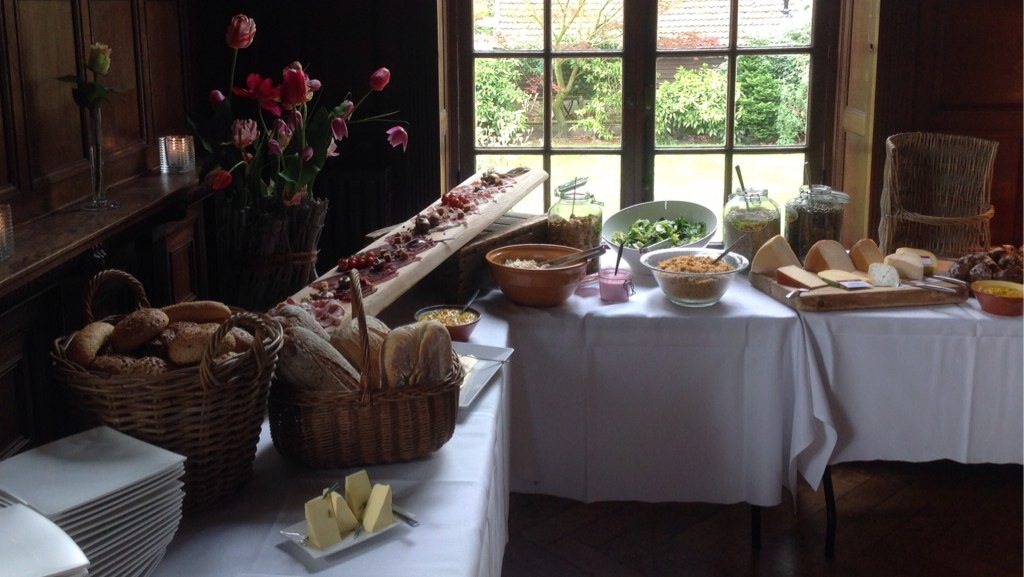
IMG_0315

The course aims to provide a theoretical, empirical and methodological understanding of place-based development processes, with an emphasis on food provisioning and rural and territorial dynamics in urbanizing societies. The course is based upon recently completed and ongoing research activities within two of the main research domains of the Rural Sociology Group:

  1. The sociology of food provisioning;
  2. The sociology of place-based development.

Being based on recently completed and ongoing research projects implies that this course provides an up-to-date  insight into current theoretical debates and research findings. These are mainly derived from international collaborative research programmes (see ‘our projects’), carried out by multi-disciplinary research teams in different countries inside and outside Europe. Within and linked to these programmes the Rural Sociology Group has approximately 30 ongoing PhD projects. Some of these projects will also feature during this course.

The course is divided into four main themes: Continue reading