
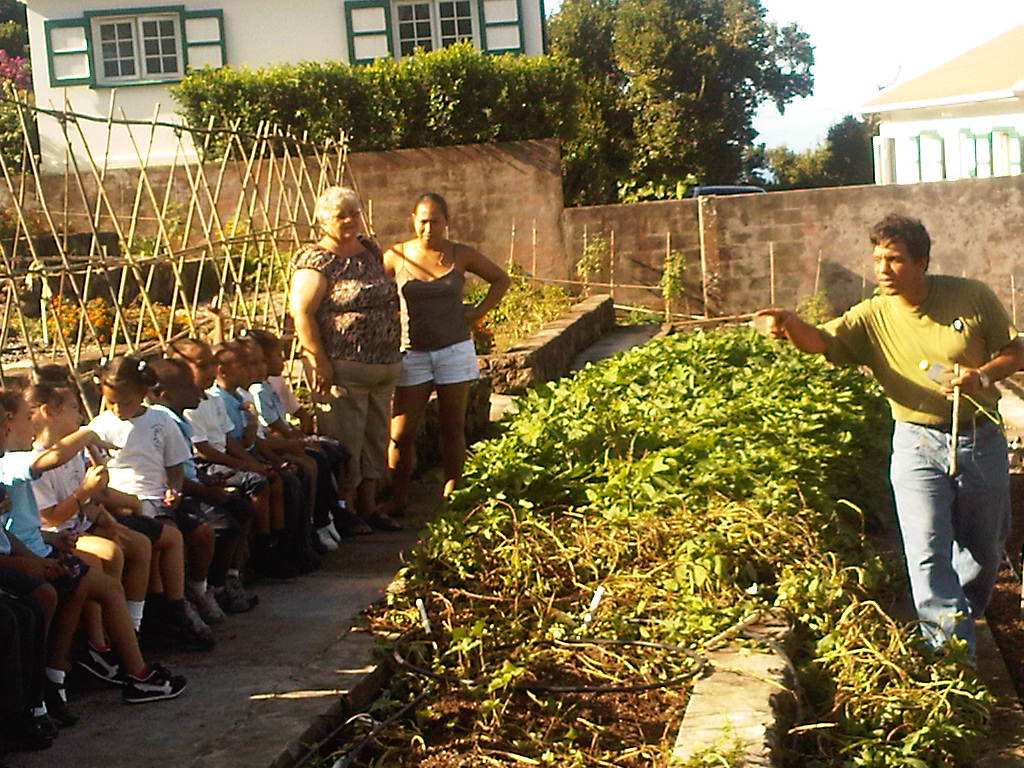
 The assignment is a participatory scenario development on the different possibilities to achieve a local food supply at Saba. Saba is a Caribbean island and the smallest special municipality of the Netherlands. At the moment most food is imported which makes food expensive for the inhabitants of Saba. At the same time agriculture fields aren’t being fully used. The assignment is to develop different scenarios for a local food market. Optional is a thesis assignment including an internship.
Wageningen UR Science Shop accepted the assignment of FSWS. The research will make you familiar with ‘Participatory Scenario Development’ and is a chance to achieve work experience in the field of the Science Shop and Regional Food Supply. The research will start in September.
Are you interested? Please contact project leader Margriet Goris (cocreation@live.nl or 06-28109539).
Category Archives: Rural Development
Learning about the role of agriculture and natural resources in sustainable rural development
Together with four students of Wageningen University, I spend two weeks in Kaunas, Lithuania to represent Wageningen University, and the Rural Sociology Group, at this years’ ‘Intensive Programme’ on rural development. In this post I would like to reflect on this interesting experience and share some of the activities, impressions and outcomes.

Intensive programme?
An ‘Intensive Programme’ (or IP) is a short study programme bringing together different EU member states’ students and teachers from higher education institutes to study a relevant topic, in this case: rural development. EU’s main motivation to finance these programmes is to encourage multinational learning and teaching in the EU. The Rural Sociology Group has been participating in IP’s on rural development for some years now. Last years’ IP, hosted by colleagues of Padova University, focused on ‘the role of agriculture in territorial identity’ and took place in the Belluno province in the Italian Dolomites. We have also participated in IP’s with other themes. More recent, colleague Petra Derksen participated in an IP on traditional foods and micro-organisms in Romania. In a series of posts on this weblog she, and participating students, reflect on their experiences in this programme.
The role of agriculture and natural resources in sustainable rural development
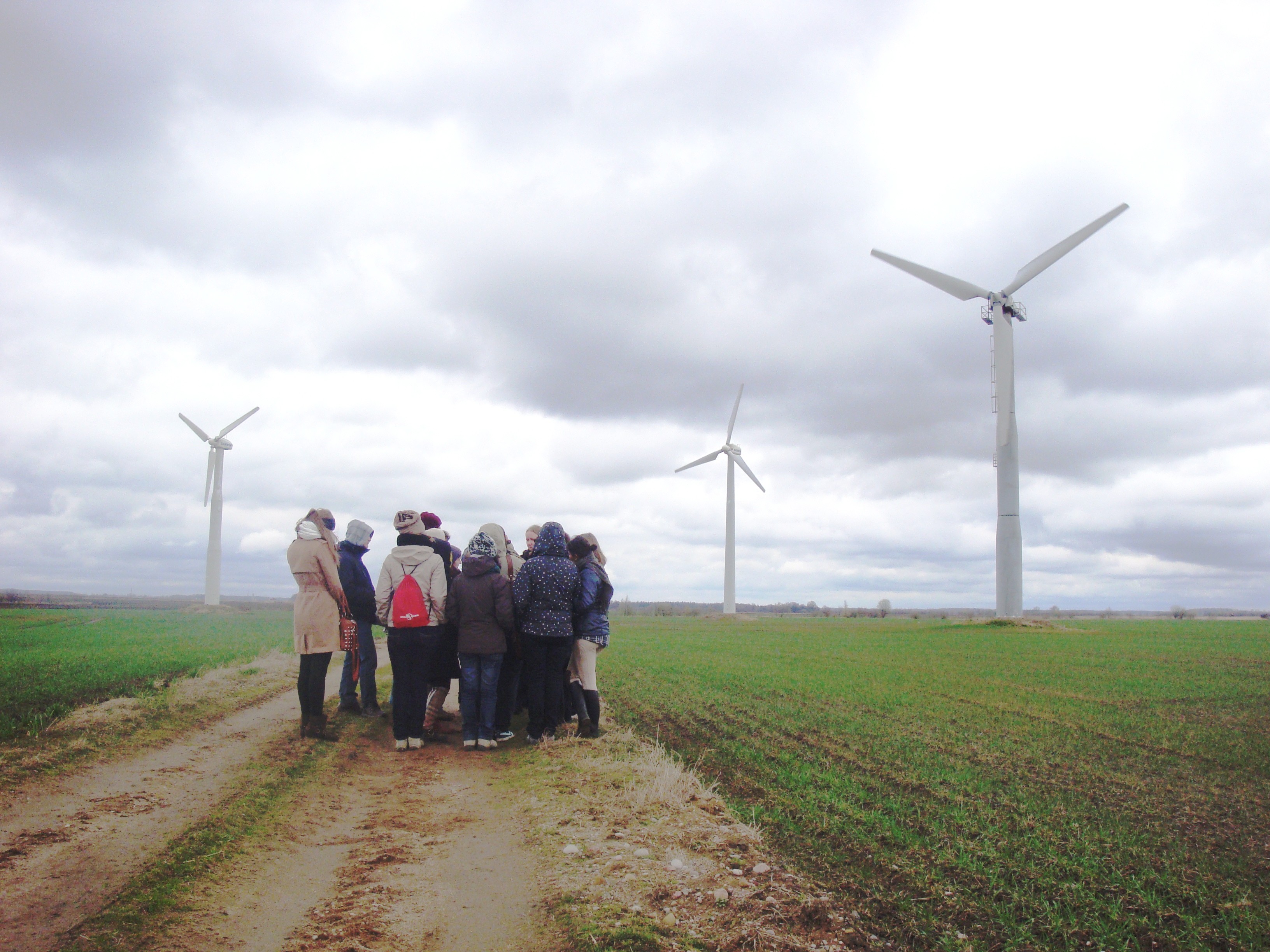
This years’ IP, on rural development, focused on ‘the role of agriculture and natural resources in sustainable rural development’. The programme was hosted by colleagues from the Aleksandras Stulginskis University in Kaunas, Lithuania. Twenty tutors and more than forty students came together for two weeks to discuss and learn about (Lithuanian) rural development. Participants represented universities from: Slovenia, Hungary, Slovakia, Italy, Belgium, Lithuania, Estonia, Latvia, Poland, Spain and the Netherlands.
Continue reading
Request for a master student in the ‘Reestdal’ (Drenthe)- new call
The PeerGrouP is a location-art group that specializes in site-specific theatre and visual arts in the northern provinces of the Netherlands. The PeerGrouP consists of a lively mix of theatre makers and artists who are inspired by the landscape, the location and the local inhabitants. The quality of food, ecology, practical knowledge of the landscape, community spirit and the supply of energy are recurring themes within the PeerGrouP’s projects.
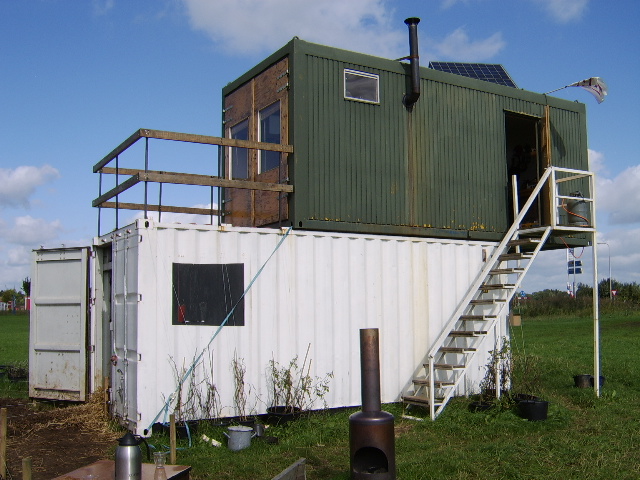
The PeerGroup is looking for artists and researchers willing to participate in their P.A.I.R. (Portable Artist in Residence) project. The P.A.I.R.-project promotes artistic social commitment while focusing attention on man and his surroundings. This year the P.A.I.R. theme is Landscape Population: the landscape and its meanings in relation to the inhabitants and other users will be looked at on different levels. The P.A.I.R. will be visiting the Wolden in the ‘Reestdal’, near the village De Wijk, in the north of the Netherlands (Drenthe) from the second half of September till the end of October to meet local inhabitants and to investigate their surroundings. On 13th of September also an art-route initiated by inhabitants will be opened in this area.
The Rural Sociology Group and the Peer Group are looking for a master student interested in landscape, place, values and population, who is enthusiastic to do his/her internship or thesis in this site-specific project, starting preferably around July-September. The student-researcher will actually stay in the P.A.I.R. (see photo) in September in the ‘Reestdal’ and participate with inhabitants. The P.A.I.R. will then partly be a ‘Reestdal-library’ and partly accomodation for the student-researcher. Preliminary research questions are:
– What is ‘sense of place’ for the local population in the Wolden?
– Which meanings to people give to the landscape? What do people appreciate? What are important cultural markers in the landscape?
– Do inhabitants experience local identities? Which stories can be told related to the landscape?
– How are meanings, identities and sense of place linked to underlying values of people?
– How can meanings identities and sense of place be translated to recommendations for practice and policy? (people’s participation, community cohesion, networks)
Methods that can be used are e.g. social (deep) mapping, visualization methods, appreciative inquiry, integral theory. The student researcher will carry out ‘on-site’ participatory research on the sense of place and values of the local population in this area. The research will be supervised by the RSO group (Ina Horlings) and the Peer Group (Henry Alles). If you are interested, please send a mail as soon as possible to Ina Horlings (lummina.horlings@wur.nl).
Afstudeerproject Kloosterburen: student(en) gevraagd
Stichting SintJan is een bijzonder particulier initiatief uit Kloosterburen, gemeente De Marne, in de provincie Groningen. Het initiatief SintJan Kloosterburen is voortgekomen uit het traject ‘Korensantoverleg’ (1997-2000) en het ontwikkelen van de dorpsvisie Kloosterburen 2003.
In dit traject zijn burgers met kennis, inzicht en een grote maatschappelijke betrokkenheid bezig hun eigen leefomgeving vorm te geven. Wat SintJan vernieuwend maakt, is de integrale benadering die aan het plan ten grondslag ligt: de initiatiefnemers willen wonen, werken, zorg en cultuur zodanig in Kloosterburen borgen dat de leefbaarheid en vitaliteit van het dorp versterkt wordt.
Dergelijke vitale gemeenschappen en burgerinitiatieven krijgen steeds meer een cruciale rol te vervullen, juist ook in regio’s die te maken hebben met bevolkingsdaling (Breman, 2011). Waar de gemeente De Marne op dit moment nog ongeveer 11.000 inwoners kent, wijzen de prognoses uit dat dit aantal tussen nu en 2040 zal dalen naar ongeveer 8.000 (Gemeente De Marne, 2011a). Daarmee behoort de gemeente tot één van de sterkst krimpende gebieden in Noord Nederland. Behalve een krimpend aantal inwoners leidt dit ook tot een veranderende samenstelling van de bevolking (ontgroening en vergrijzing).
Hoewel het bewustzijn en de erkenning van de meerwaarde van dit soort burgerinitiatieven groeiende is, ook in de gemeente De Marne en de provincie Groningen (zie o.a. de visie op burgerparticipatie, Gemeente De Marne, 2011b) blijken er in de praktijk nog veel valkuilen en obstakels die de doorontwikkeling van burgerinitiatieven in de weg staan.
Wij zijn op zoek naar een student of een groep studenten die aan de slag gaat met ‘het verhaal van Kloosterburen’ in termen van ‘storytelling’ als aanpak. Vragen die daarbij aan de orde komen zijn:
‘Wat is de achtergrond / ontstaansgeschiedenis van dit initiatief?’, Hoe is het de afgelopen jaren verlopen? Wie heeft de kar getrokken op welk moment? (gedeeld leiderschap? , vitale coalities? Etc.), Wat zijn belangrijke mijlpalen of keerpunten. Wat is de spin-off van het initiatief (Wat is tot stand gekomen / bereikt? ) en hoe kijken diverse direct of indirect betrokken hier gedurende de tijd (op wellicht andere wijze) tegen aan?
Guest lecture on Migration
Open Guest Lecture Professor David Brown, Professor of Development Sociology (Cornell University, USA) on Friday March 3oth
Title: “Challenges in researching migration”
Time: 13.30-15.00
Place: Leeuwenborch building, room: C78
David L. Brown is professor and chair of Development Sociology, co-director of the Community & Regional Development Institute, and associate director of the Population Research and Training Program at Cornell University in Ithaca. He was awarded the SUNY Chancellor’s Award for Professional Excellence in 2009, and holds an honorary doctorate from the University of Rousse in Bulgaria. He is past president of the Rural Sociological Society. He has written and edited eight books on rural population and society. His most recent books include: Rural Communities in the 21st Century: Resilience and Transformation (2011), Rural Retirement Migration (2008) (with Nina Glasgow), Population Change and Rural Society (2006), and Challenges for Rural America in the 21st Century (2003).
Lecture: The traditional definition of migration is at odds with contemporary migration processes. Migration is traditionally seen as a disrupt of everyday social relationships. Brown however argues that contemporary migration is socially embedded (embedded in a social structure) and that social relations are often continued. Professor Brown’s research focuses on migration and population redistribution in the US and Europe with a particular focus on how migration affects and is affected by local community organization. His work also focuses on the production and reproduction of social and economic inequalities between regions and rural v. urban areas. In his guest lecture he talks about the conceptual and methodological challenges in researching migration.
 Rural Sociology Wageningen University