
First generation Farmers: values, practices and relations – MSc-thesis by Laura Genello
 Laura Genello, MSc-student Organic Agriculture, Wageningen University.
The average age of farmers is steadily rising across the United States and Europe, while the proportion of young and beginning farmers declines. Challenging economic conditions, coupled with agricultural consolidation and rising costs, have led to a decrease in farm successions. Simultaneously, the popular media has reported on increasing interest in agricultural careers among those from non-farming backgrounds.
This emerging population of first generation farmers has largely been ignored by the academic literature, with only a handful of studies that suggest the ways in which these farmers differ from others. This study aims to characterize the values, practices and supply chain relations of first generation, beginning farmers (FBFs). By incorporating concepts from research on farming styles, agricultural paradigm shifts and identity, I investigate to what extent FBFs represent change in agricultural attitudes and practice. To do so, I position their farming styles between the archetypes of the productionist and agroecological paradigms. These paradigms hold specialized, commoditized and production-centric traditions in agriculture on one side of a spectrum, and ecologically oriented, community embedded alternatives on the other. I took a comparative, exploratory approach, recruiting farmers who were both first generation (did not take over a family farm), and beginning (approximately less than 10 years experience) from two countries, the Netherlands and the U.S. state of Maryland. Data collection occurred in two phases: an online survey distributed using snowball sampling, followed by semi-structured interviews with 33 participants (15 in the Netherlands; 18 in the U.S.), selected strategically to represent a diversity of survey respondents. The survey yielded 95 responses that met the inclusion criteria: 38 from the Netherlands and 57 from the United States. Most FBFs were practicing small-scale, diversified agriculture, marketing direct to consumer, and using some level of unmapped organic methods. Interviews revealed FBFs to be motivated by a search for meaningful work, and generally have a strong environmental and community ethic. These principles were balanced with a high valuation of the business of farming. FBFs faced a variety of challenges, predominantly financial constraints, access to land and labor, lack of knowledge and regulatory barriers. Their farm practices and structure were the result of a negotiation between their values and business ethic as filtered through practical constraints. The solutions they employed included small scale, low-investment configurations, direct marketing, judicious application of web-based and small farm technology, strong online and in-person networks, and collaborations to access land, share knowledge and market products. While their practices, relations and values are heterogeneous, overall FBFs represent a shift towards the agroecological paradigm.
Key Words: beginning farmers, first generation farmers, new entrants, agroecology,
farming styles, farmer identity, alternative food networks.
The full thesis From Food Forest to Microfarm can be downloaded from the WUR-Library
The rise of Community Supported Agriculture in China

Image from Cultivate https://www.facebook.com/collectivecultivate/
On April 16th, Shi Yan, pioneer of the Community Supported Agriculture movement in China will visit Wageningen after participating in FAO’s International Symposium on Agroecology. During the day she will visit a selection of CSAs and in the evening she will give a presentation at Wageningen University.
Where: Room C013/VIP Room Forum Building
When: 19:00-21:30
In 2008 Shi Yan started the first CSA of China in the area of Bejing as a joint project with her university, the district government, and the Renmin Rural Reconstruction Centre. By now some 800 CSA’s are operating around China.
Shi Yan had been inspired by her experience of working with Earthrise Farm, a small CSA in Minnesota, USA. “It changed my life,” says Shi Yan. She arrived there thinking that she would study its business model, “but when living there, I realised that farming is not just a model, it’s a lifestyle.” But she decided to move to the northwest corner of Beijing’s Haidian district to found and manage Little Donkey farm, going against the trend of young people abandoning rural villages for jobs in the city. After that she started Shared Harvest farm (http://sharedharvest.cn/), where she produces fresh food and also trains both farmers and school children.
With a growing middle class and expanding cities, fresh produce has become hard to come by in China. Novel food production and distribution systems are successfully meeting demands of urban residents in search of fresh and local produce. As the story of Shi-Yan tells, the CSA movement also offers opportunities to young people to shape their lifes according to a different set of principles from the average ‘big city’ way of life.
Shi Yan was a speaker at FAO’s Agroecology Symposium from 3-5 April 2018 where over 700 people attended. Learn more about Shi Yan and the CSA movement in China and join us on April 16th. More details here: https://www.facebook.com/events/413668762416251/
Are you too curious to wait? Check out this article in Farming Matters (June 2015): https://www.ileia.org/2015/06/09/community-supported-agriculture-thriving-china/
The state of Sitopia
The state of Sitopia. Report of the 8th AESOP Sustainable Food Planning Conference
By Paul de Graaf, External PhD Candidate, Rural Sociology Group
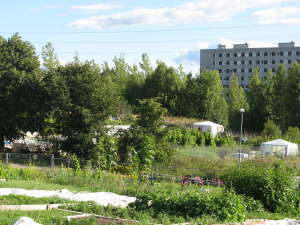 In the fall of 2017 the 8th AESOP Sustainable Food Planning Conference took place in Coventry, hosted by the Center for Agroecology, Water and Resilience (CAWR). Since its inception in 2009 the Sustainable Food Planning department is one of the most active within AESOP (the Association of European Schools of Planning), indicating that food is back on the urban agenda, at least in academia. As a budding urban agriculture planner and researcher I attended the first two AESOP SFP conferences (Almere, 2009 and Brighton, 2010). Both were exciting meetings where pioneers from Europe and America – not only planners but also initiators, activists and scientists from other disciplines and people like Carolyn Steele (architect and writer of the seminal book Hungry City) – came together to discuss the then relatively new theme. I went to Coventry curious to see how the discussion has developed since those days and what is the state of affairs in the field in international perspective.
From hunger to obesity – MSc-thesis by Sonia Zaharia
By Sonia Zaharia, MSc-student Organic Agriculture.
Many low-income countries deliberately pursue agricultural specialization to increase yields and thereby lift their population out of hunger and poverty. Trade is supposed to offset the implied lower diversity of food production and deliver a food supply that supports the health of their population. This study challenges this assumption. I investigate the link between the prevalence of overweight and agricultural specialization. Using a fixed-effects panel regression on data from 65 low- and middle-income countries over the period 1975-2013, I find that countries in which agricultural production is more specialized have a larger share of overweight women. The positive relationship is higher in countries with lower per capita income. The correlation is not statistically different from zero for the male population, which confirms existing empirical evidence that malnourishment tends to be more frequent for women than for men. My results suggest that there are negative health implications of agricultural specialization in poor countries.
My full thesis From hunger to Obesity: agricultural specialization and obesity in low- and middle income countries can be downloaded from the WUR-Library.

