IFSA 2012 workshop ‘The meaning of semi-subsistence farming in different cultural contexts’

Together with Imre Kovach and Catherine Darrot,  I will be hosting a workshop at the IFSA symposium in Aarhus, Denmark from the 1st of July until the 4th of July 2012.

The workshop is aimed at exploring the multiple meanings of semi-subsistent food production strategies in different cultural context. Two questions are at the centre of attention: 1) How has the meaning of semi-subsistent food production changed over time for producers, society and institutions? and 2) What recommendations can be derived from the research for policy makers of multi-state institutions (e.g. EU?). We invite researchers from diverse countries to present their empirical research in order to stimulate a fruitful discussion and knowledge exchange.

The deadline for submitting abstracts is the 31st of December 2011.  More information and a link to submitting your abstract can be found here. I hope to see you there!

Conference ‘Agriculture in an Urbanizing Society’ – call for abstracts (reminder)

From 1 – 4 April 2012 a conference entitled ‘Agriculture in an Urbanizing Society: International Conference on Multifunctional Agriculture and Urban-Rural Relations‘ will take place in Wageningen. Some time ago a call for abstracts was launched. This is to inform or remind you that the deadline for submitting abstracts is 20 December 2011. Abstracts can be submitted by email to the coordinating convenor of a working group (call for abstracts for all WGs can be accessed through this link). The following working groups have been approved by the Scientific Programme Committee:

  • WG1 Green care
  • WG2 Agri tourism: Critcal Perspectives on Dilemmas and Opportunities
  • WG3 Exploring ‘civic food networks’ and their role in enabling sustainable urban food systems
  • WG4 Rural education   
  • WG5 Environmental services
  • WG6 Economic impact at the farm level
  • WG7 Business models; farm enterprise development models
  • WG8 Entrepreneurial skills and competences: challenges and opportunities
  • WG9 Learning for innovation – new challenges in an urbanizing world
  • WG10 Regional branding; the socio-economic impact at the regional level
  • WG11 Urban, peri-urban and regional planning
  • WG12 Land-use transformations
  • WG13 What are the challenges of future urban agriculture?
  • WG14 Public food procurement
  • WG15 Consumers, multifunctional agriculture and urban dynamics
  • WG16 Multifunctionality, rural policy and governance
  • WG17 Social exclusion and poverty in rural areas
  • WG18 Migration and mobility
  • WG19 Transition approaches
  • WG20 Multifunctional agriculture as a coupled human-natural system

Presenting my Colombian case study area

During the last two weeks, I was in Bogotá to talk to experts from the IER at the Javeriana University as well as the Ministry of Environment and Sustainable Development to find out about public support for joint capacity building in rural Colombia. Now, I am back in the department of Santander to start my field work.

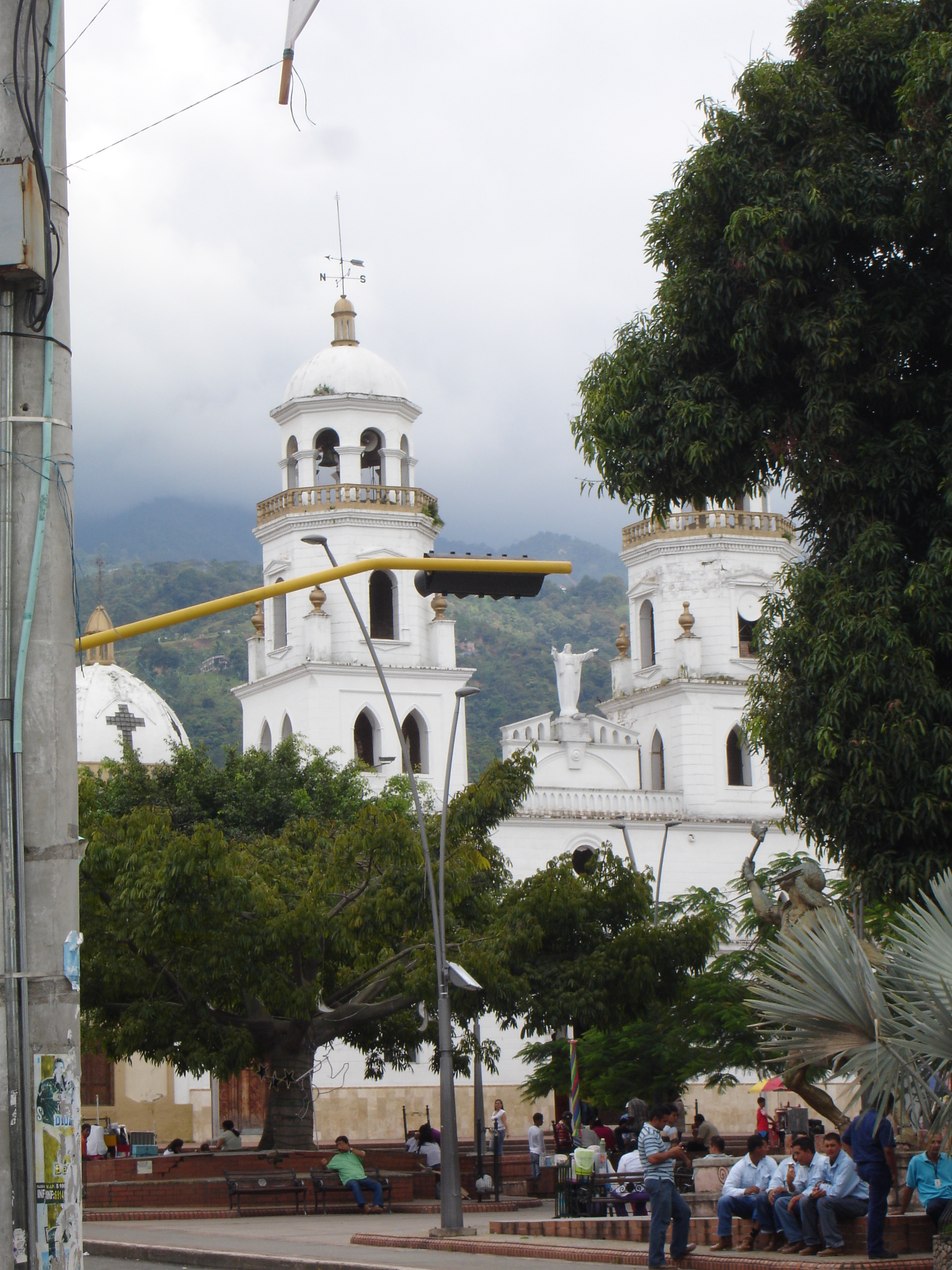
In order to be able to do an in-depth study of a) how support for joint capacity building in rural areas is organized and b) how this support is evaluated by its beneficiaries, I narrowed my case study area down to one municipality: Floridablanca.

Main square in Floridablanca

Continue reading

Excursion to Los Maklenkes nature reserve

Last Monday (21st of November), I participated in a field trip to Los Maklenkes nature reserve on top of the mountain La Judía in the municipality of Floridablanca, close to Bucaramanga. This nature reserve is managed by the peasants living around the reserve and, amongst others, sponsored by the Dutch state lottery. The field trip was part of the festival for urban-rural dialogue, in which I participated the previous weekend.

Los Maklenkes Nature Reserve, Floridablanca, Colombia

The day started with a gathering of all participants to make our way up the mountain to the nature reserve. It was an adventurous drive with 16 people in one Jeep, going up steeper and steeper mud-paths. I dared not to look to the right where the mountain was falling as steep to the ground as the road was crawling up.

Upon arrival at the entrance of the park, we were greeted by the local peasants and informed about the history of the nature reserve and its aim to protect biodiversity and water reservoirs. Following the introduction, we switched into our rubber boots and commenced with a three hour hiking tour through the reservoir.

Getting ready for our hike

Here, we saw the organic agro-forest farming activities which are being initiated under the facilitation of Fundaexpresión, a local NGO for promoting participatory research activities and education in peasant communities. I saw plantain and banana trees, coffee plants and avocado trees.

Banana tree

Following our hike, we settled in the communal house of the reserve to discuss nature protection activities in the high Andes and their impact on the livelihoods of peasants. At the end of the discussion, it was agreed that the provision of information and the creation of knowledge at local level was the most crucial point in enabling local peasants to deal with the resulting pressures on their livelihoods. The provision of information and the facilitation of capacity building were, however, regarded as poor. It was agreed that more attention must be given to the provision of information and the facilitation of capacity building at local level should peasants be enabled to deal with pressures on their livelihoods resulting from nature protection activities.

Guest lectures on ‘A global sense of place’

In the context of the new Capita Selecta course ‘A global sense of place’ several guest lectures are organized by the Rural Sociology Group. These lectures are open for all students, PhD’s and staff members. Coming up are the following events, please join! More information: lummina.horlings@wur.nl.

Monday May 23th (15.30-17.00, room C63): Will Day.

Will Day is a PhD candidate in Harvard University’s dual PhD program in Middle Eastern Studies and Social Anthropology. His main interests are in economic and political anthropology, Marxist thought and its legacy in anthropology, urbanization and urban political economies defined by displacement and dispossession, and political geography and political ecology. He has carried out two years of ethnographic fieldwork in Diyarbakir, Turkey (June 2007-June 2009). His dissertation is focused on urban livelihoods and cultural politics in Diyarbakir the wake of massive state counterinsurgency campaigns that led to the displacement and dispossession of, very likely, well over 1,000,000 rural Kurds. He is interested in how family histories of rural displacement and dispossession and subsequent urban realities of mass unemployment have resulting in the transformation of not only the practices of work, but also the meaning of productivity, work, and masculinity, wealth, value, masculinity, and, ultimately, political belonging and citizenship and the imagination of political futures in this space of rapid and radical political economic transformations.
Content of the lecture: Will Day will talk about urban development in a place in Turkey. He will focus on ”political economy and urban livelihoods in the city through the lens of Massey’s concepts about thinking spatially which might help to clarify what it means to think of a space (a city, a village, etc) as less a fixed, stable entity and more a temporary, contingent crystallization of dynamic processes that link localities to wider geographies and relations of political community, economic life, and cultural imagination”.

Continue reading