The PeerGrouP is a location-art group that specializes in site-specific theatre and visual arts in the northern provinces of the Netherlands. The PeerGrouP consists of a lively mix of theatre makers and artists who are inspired by the landscape, the location and the local inhabitants. The quality of food, ecology, practical knowledge of the landscape, community spirit and the supply of energy are recurring themes within the PeerGroup’s projects.
The PeerGroup is looking for artists and researchers willing to participate in their P.A.I.R. (Portable Artist in Residence) project. The P.A.I.R.-project promotes artistic social commitment while focusing attention on man and his surroundings. The P.A.I.R. will be visiting three different locations (Veenkoloniën, Donderen, de Wolden) in the north of the Netherlands (Drenthe) to meet local inhabitants and to investigate their surroundings. In the past three years, the PeerGrouP realized three P.A.I.R.-projects every year. In 2012, the P.A.I.R.’s fourth year, the theme is Landscape Population. The landscape and its meanings in relation to the inhabitants and other users will be looked at on different levels.
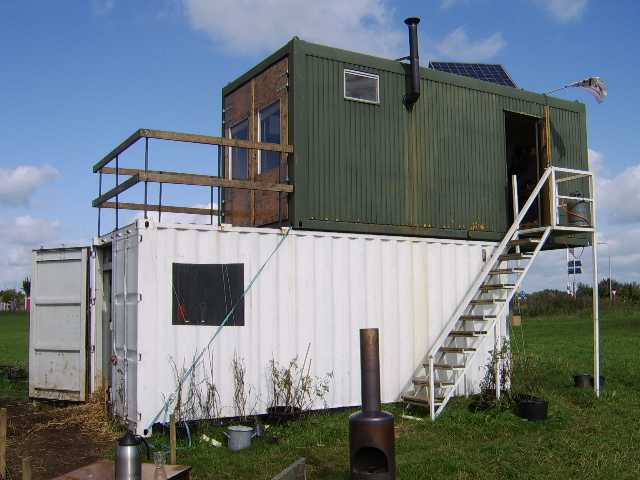
The Rural Sociology Group and the Peer Group are looking for a (preferably Dutch speaking) master student interested in landscape, place, population and art, who is enthusiastic to do his/her internship or thesis in this site-specific project, starting preferably around August. The student-researcher will actually stay in the P.A.I.R. (see photo) for a while in September, in the area of the Wolden (near Meppel) in the north of the Netherlands, while doing participative research. 
Possible research questions are for example:
– What is ‘sense of place’ for the local population in the Wolden?
– Which meanings to they give to the landscape?
– Do inhabitants experience local identities? Do they have story-lines related the landscape?
– How are meanings, identities and sense of place linked to underlying values of people?
– How can meanings identities and sense of place be translated to recommendations for practice and policy? (people’s participation, community cohesion, networks)
Places are constituted by sedimented social structures and cultural practices, endowed with meaning and the constitution of identities, subjectivities and difference. In other words: culture sits in places. ‘Sense of place’ refers to an individual’s connection with a place (location, building, landscape) and to their experience of place, including different senses (sight, hearing, smell, movement, touch, imagination, purpose and anticipation). It is both individual and inter-subjective, closely connected to community as well as to personal memory and self. Sense of place has many components such as place attachment, place identity, place commitment and dependency, belongingness or rootedness or community connectedness and community cohesion. We will focus here on ‘Sense of landscape’. Sense of place is rooted in underlying values, about what people perceive as important for their quality of life. People value places and express agency and take leadership in shaping their own place. On the local level people reflect on and negotiate the conditions of engagement/participation, rooted in underlying values. If people become more aware of their source of passion, values, feelings and sense making, this can enlarge our ‘cultural repertoire’ and lead to a more inspired use of our environment.
The student researcher will carry out ‘on-site’ participatory research from a development and/or historic perspective on the sense of place and values of the local population in the Wolden in Drenthe, in the early autumn of 2012. The student will potentially cooperate with students from other educational institutes (AOC’s).The research will be supervised by the RSO group (Ina Horlings) and the Peer Group (Henry Alles). If you are interested, please send a mail before March to Ina Horlings (lummina.horlings@wur.nl).


 Rural Sociology Wageningen University