Lekkergroen – zaterdagbijlage Trouw

De zaterdagbijlage van Trouw van 30 mei stond volledig in het teken van een regionalisering van de voedselvoorziening. Dit naar aanleiding van het recente bezoek van Michael Pollan (zie eerdere blog over Pollan) aan Nederland en de kritische reactie van Louise Fresco op Pollan’s ideeën.

Naast interview met Michael Pollan (‘Eten komt niet uit de fabriek’) en reactie van Louise Fresco (‘Een moestuin voedt de wereld niet’) bijdragen over o.a. Vechtdal producten, stadslandbouw in Toronto en groene stadsplanning, Stadsboer Jan Duindam (Hoeve Biesland) en Marqt.

Regional identity and wine walks in the Alsace region (Fr)

I recently traveled to France for a short walking spring break. In the north eastern part of the country I visited the Alsace region. I stayed in the area left of the city of Colmar near the village called Munster (well known for its ‘smelly’ cheese). Although the break was a way of resetting my brain, I couldn’t stop myself from observing some interesting things.

The Alsace region
Although the Alsace is French, the area is characterized by many German influences. Not surprisingly because the area changed hands many times. The area has a strong regional identity which expresses itself physically, culturally and historically (architecture (timber framed houses), landscape, dialect, kitchen and regional products). The stork can be seen as the region’s main symbol and almost disappeared in the 1970’s. The region put a lot of effort in bringing baThe Alsace region (Wikipedia)ck the bird (by starting breeding programs) and now storks can be found on roofs of houses and public buildings everywhere. All these things are characteristic to the Alsace region.

Wine walks
An important and unnoticeable regional product is wine (Vin d’Alsace) like Riesling, Gewürztraminer and Pinot Blanc. Since Roman times the Alsace has a strong tradition in growing grapes and over time has developed as a centre of viticulture. The area has an excellent terroir: good weather, climate, fertile soils and sunny slopes. Part of the rocky hilltops every small piece of the area is cultivated for growing grapes. This viticulture can bee seen as the (historical) backbone of this region into which over time whole sets of other activities got interwoven: visiting historical villages, local products / food, touristic walks etc. Central to this all is the wine and the attractiveness of the region. On my break I explored one of these really nice walks near the village of Kaysersberg. The walk started in climbing a woody and rocky hill and lead through the village of Riquewihr and via extensive vineyards back to were we started. In the vineyards information panels were placed to give information growing techniques, pruning, different varieties and the winemaking process. During the walk we stopped at several wine farmers / cooperatives for some refreshments and wine tasting. 

These wine walks are an interesting way of using regional identity and products for regional development. The combination of activities, services and goods attracts tourists, strengthens the regional economy and contributes to the vitality and livability of this specific region. I got the impression the Alsace region is very succesful in this!

Wine walk

Sioux City and Community Development

Monday, I embarked on a 15 day travel with Cornelia and Jan Flora, stopping by various meetings, projects and conferences in a south west direction from Ames, Iowa to Arizona and back. The amount of car miles involved would get me twice around the Netherlands I suppose. We started with a meeting in Sioux City, a city in the north west of Iowa bordering Nebraska.

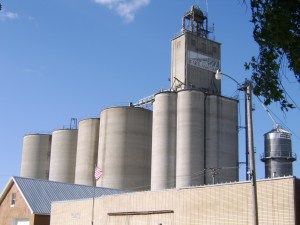
STA71678We are meeting in a recently restored old boiler building which once served 46 building in this neighborhood. This old industrial neighborhood is being redeveloped as Sioux City tries to reinvent itself as an arts and cultural city. However, its history is tightly connected to agriculture through the stock yards, the traditional trading place for farm animals. Therefore it stays as somebody said “a cowmen’s town with an opera”.

Well, I heard last night that it was not only about men. Traditionally, the stock yard was surrounded by cowboy saloons and brothels. The brothels, where a Madame ruled, were important places for local business and access to capital.The Madame had a very powerful position and was often involved in providing micro loans and other financial services in a time where banks were not easily accessible.

However, we are here for another type of community development…. Faculty members of 5 Midwestern universities discuss here the Community Development On-line Master’s Program in which they are involved together. This is quite a unique situation, a full online course offered jointly by the universities of Iowa State, North Dakota State, Kansas State, South Dakota State and Nebraska-Lincoln under the Great Plains Interactive Distance Education Alliance.

The Community Development Program began in the fall of 2005, and it was initially funded through a National Higher Education grant. Since the grant has ended, the program continued and supports itself. Students in the program are from all over the United States, as well as other countries. Many of them combine the Master with their (community) work and/or family. The program won two awards in 2008, a state and a national award. Jan and Cornelia Flora are both involved in the Program as teachers and Jan Flora won two grants in 2008 which allow for the development of two new courses within the Master, one on Sustainable Communities and the other on Immigrants in Communities.

Online Bachelor and Master programs are becoming rapidly popular. For universities, such as those in the Midwest it represents an opportunity to new attract students to universities in States which show a downward demographic trend. And the online – placeless programs also attract new categories of students, such as those who are forced to come out of retirement because of financial problems and need to ‘rewire’ themselves.

FOODTUBE – Corsicaanse varkenshouderij, verwerking en afzet

Op FoodTube, met naar eigen zeggen de grootste en leukste online verzameling Nederlandse filmpjes over eten, staan ook aantal filmpjes over een excursie naar de Corsicaanse varkenshouderij, over het ras en de wijze waarop ze worden gehoudenhet slachten en het uitbenen en verwerken, de moderne opslag van typisch Corsicaanse droge producten en bereiden van ragout. In de Boerderij  van 2 juni j.l. is een uitgebreid artikel ‘Leven van 120 dieren‘ verschenen over de Corsicaanse varkenshouderij van Monica Commandeur (monicacommandeur@yahoo.com), die ter plekke onderzoek heeft gedaan, en Boerderij-redacteur Leo Tholhuijsen.

Kringlooplandbouw – CLM-rapport

Op de site ‘Duurzaam boer blijven‘ meldt Frank Verhoeven, zelf trekker van kringloopdenken (zie eerdere blog),  het verschijnen van het CLM-rapport over kringlooplandbouw ‘Van top down naar bodem up‘ :

In dit rapport wordt, aan de hand van interviews en bronnenonderzoek, een omschrijving gegeven van kringlooplandbouw in de melkveehouderij. Daarbij wordt uitgegaan van een bedrijfsvoering waarin optimaal gebruik wordt gemaakt van op het bedrijf beschikbare en geproduceerde hulpbronnen en voorraden. Onderzoek naar en praktijkervaringen met op kringlopen gebaseerde melkveehouderij geven aan dat meer aandacht voor kringloopdenken maatschappelijk gewenst is. Daarbij wordt vooral gedacht aan certificering van kringloopmelkveehouderij, meer aandacht voor kringlopen in het agrarisch onderwijs en een uitvoerig communicatietraject richting gangbare melkveehouderij.