What if the Trucks Stop Coming? – PhD thesis by Cheron Constance

On Wednesday 21 June 2017 at 13.30 hrs Cheron Constance will defend her PhD thesis entitled ‘What if the trucks stop coming? Exploring the framing of local food by cooperative food retailers in New Mexico’ in the Auditorium of Wageningen University. The ceremony will be live streamed by WURTV but can be viewed later as well.

The full thesis will be available online after the defence ceremony.


Summary of the thesis

Proponents of local food cite a variety of economic and environmental advantages of short food supply chains. Consumer interest in local food has also offered a point of differentiation for many players in the food industry, including restaurants and grocery stores. Engaging with local food has significant challenges, however, and many production and distribution systems engender and support more diffuse food provisioning, not less. Though food can travel thousands of miles from its point of origin to consumption, many cooperative (co-op) grocery stores have long sold locally-produced food and have deep ties to their supplier communities. This thesis offers case studies of two co-ops in the natural and organic food sector and examines how they think about and work with local food. The theories of embeddedness (after Polanyi) and diverse economies (from Gibson-Graham) undergird the analyses of these co-ops’ involvement with local food and how the cooperative business model relates to it.
Boekpresentatie ‘Boeren in de Food Valley’

Voor het boek Boeren in de Food Valley sprak Janneke Blijdorp met vijftien agrariërs uit de Gelderse Vallei. Door schaalvergroting verdween de afgelopen decennia tachtig procent van de boerenbedrijven in dit gebied. De overgebleven boeren zetten in op de internationale voedselindustrie of juist op ambachtelijkheid en de lokale markt. De boeren vertellen in het boek over hun motivatie en toekomstverwachting. Vaak zijn zij al generaties lang met het gebied verbonden. Samen leveren de verhalen een verrassend divers beeld op van veerkrachtige ondernemers. Eric Veltink maakte fotoportretten van de boeren en hun bedrijf. U bent van harte welkom bij de presentatie van Boeren in de Food Valley op donderdagmiddag 24 November van 15.00 – 16.30 uur in De Schaapskooi op het erf van melkveehouder Cor den Hartog, Grote Veenderweg 10, 6741 MC Lunteren. Continue reading

Possible Thesis Topics: Trends in Global Food Security Governance

We are looking for good and motivated BSc and MSc students to conduct research on the following four topics:

  • Deconstructing the discourse of evidence-based policy making.

Project: Calls for evidence-based policy making are increasing evident in global food security policy processes, and beyond. For example, the follow up and review process for the Sustainable Development Goals (SDGs) aim to be “rigorous and based on evidence, informed by country-led evaluations and data which is high-quality, accessible, timely, reliable and disaggregated” (UN General Assembly, 2015, para. 74). Behind this push for evidence-based decision making lies a set of highly political questions about what evidence is considered appropriate? How should it be selected? Why? And by whom?

This thesis project will identify and analyse calls for evidence-based policy making made in food security policy processes at the multinational level so as to better understand the political nature of evidence and the implications this has for policies and claims to knowledge and expertise. Continue reading

Food growing practices in rural Hungary – vlog about MSc thesis by Zsolt Varga

Zsolt Varga, student Master of Development and Rural Innovation, made a video blog about his MSc-thesis research to what extend people in rural Hungary still grow their own food.

https://www.youtube.com/watch?v=U9ULejzNqfI&feature=youtu.be%5B/embed%5D

Sacks of hope: Sack Gardening in Kibera slum (Kenya) as sustainable place-shaping

Sack_gardeningBy Merel Scheltema – Msc. Urban Environmental Management, specialisation in Spatial planning, WUR.

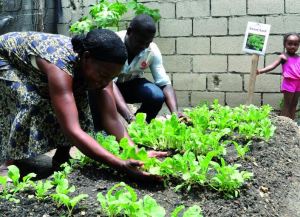
I propose that an investment in quality public space, through urban agriculture and multi-functional land use, can improve the access of people to basic needs. According to the UN habitat executive Director of Joan Clos i Matheu public spaces are therefore a vital asset. The quality of public spaces affects the quality of private spaces and the city as a whole. A ‘good’ public space is part of the solution to create ‘healthy’ cities, by revitalizing the environment, economic development and fostering social capital. The concept of ‘sustainable place-shaping’, answers this call for healthy public spaces. It is a holistic approach to strengthen collective agency, participation and leadership of people who engage in places.

In my essay for the RSO course ‘A global sense of Place’, I applied the SUSPLACE framework, developed by the Rural Sociology Group to investigate: how urban agriculture as an investment in public space contributes positively to sustainable place-shaping. I studied this by examining urban sack farming in the Kibera slum of Nairobi, the largest Slum in Africa.  I reason that  urban gardening offers basic needs as well as improves social capital, environmental quality and economic opportunities. Continue reading