Presenting my Colombian case study area

During the last two weeks, I was in Bogotá to talk to experts from the IER at the Javeriana University as well as the Ministry of Environment and Sustainable Development to find out about public support for joint capacity building in rural Colombia. Now, I am back in the department of Santander to start my field work.

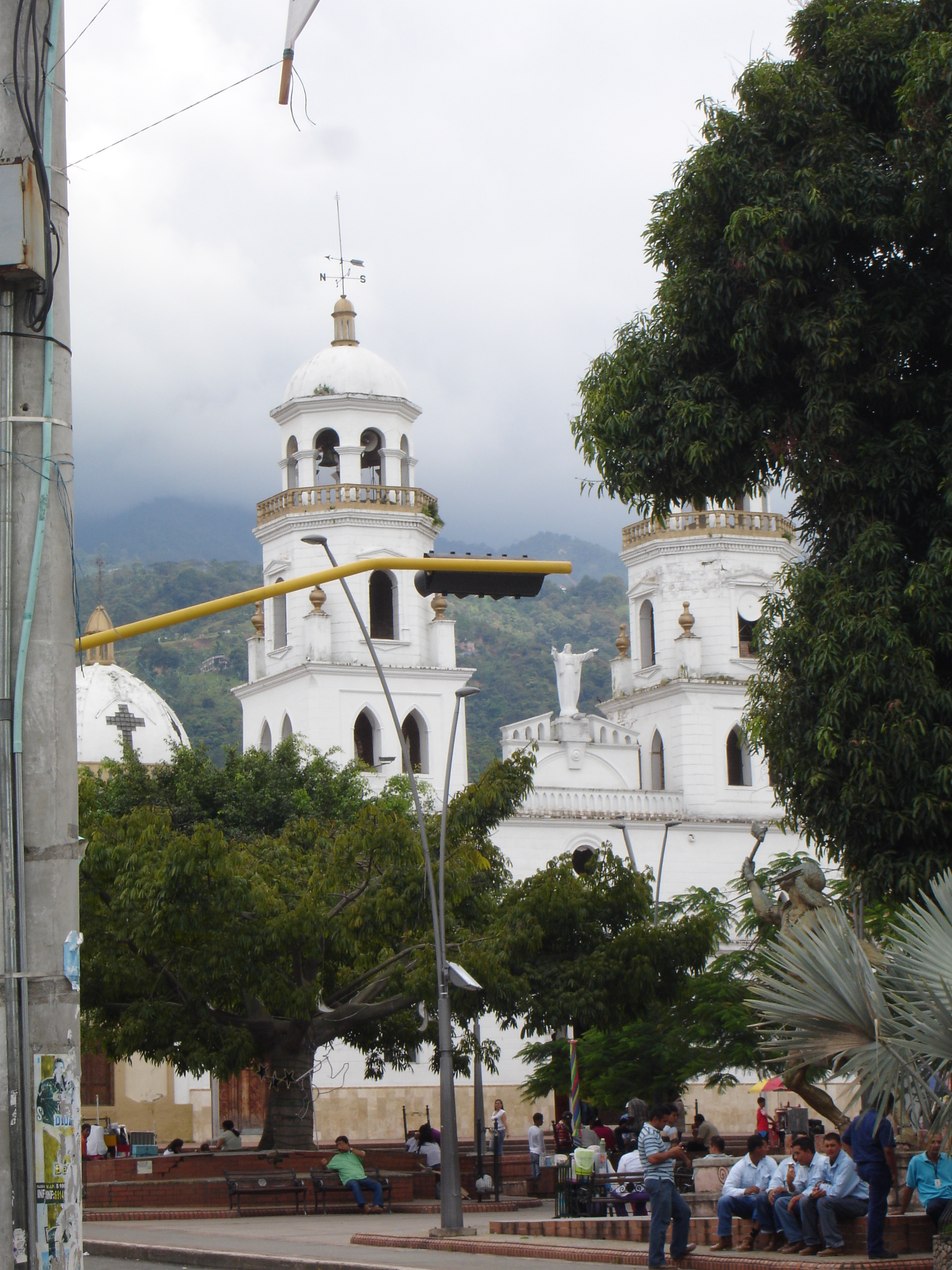
In order to be able to do an in-depth study of a) how support for joint capacity building in rural areas is organized and b) how this support is evaluated by its beneficiaries, I narrowed my case study area down to one municipality: Floridablanca.

Main square in Floridablanca

Continue reading

Conference Call – Agriculture in an Urbanizing Society

A major demographic milestone occurred in May 2007. For the first time in the history of mankind the earth’s population became more urban than rural. This process of urbanization will continue in an accelerated pace in the forthcoming decades: the growth of the world population from 6 billion people in 2000 to 9 billion people in 2050 will mainly occur in urban areas. By 2050 the urban population will approximately be twice the size of the rural population.

However, this does not mean that urban areas are or will become of greater importance than rural areas. On the contrary, the urban and the rural have always heavily relied on each other and will do so even more in an era characterized by rapid urban population growth. Cities will continue to need resources such as food, fibre, clean water, nature, biodiversity, and recreational space, as well as the people and communities that produce and provide these urban necessities and desires. Hence, key questions for the next decades are how, where and by whom these urban necessities and desires will be produced and provided and if and how this can be done in manner that is considered to be socially, economically and ecologically sustainable and ethically sound.

In recent years the concept of multifunctional agriculture has emerged as an important reference in debates on the future of agriculture and the countryside and its relations with the wider and predominantly urban society. This is an expression of the fact that agriculture is not only valued for its contribution to food and fibre production and the economic development of the agro-industry, but needs to be assessed according to a much wider range of social, environmental, economic and ethical concerns. At farm level multifunctional agriculture is characterized by a variety of entrepreneurial strategies and activities, such as processing and direct marketing of food products, energy production, care for elderly and disabled people, and tourism. But multifunctional agriculture is also expressed at higher scales, such as the regional level (e.g. collective nature and landscape management schemes and regional branding) and the national level (e.g. policymaking and implementation).

Due to the multiplicity of activities, the multi-scalar character of multifunctionality and the geographical contextuality of expressions of multifunctional agriculture, research on multifunctional agriculture and changing urban-rural relations is highly fragmented, disciplinarily as well as geographically. Hence, this conference aims to advance the scientific state of the art in research on multifunctional agriculture and urban-rural relations by bringing together scholars of different disciplines (sociology, economics, spatial planning, land use planning, regional planning, urban planning, crop sciences, animal sciences, soil sciences, architecture, etc…) from all parts of the world.

Working group themes
The conference facilities allow for a maximum of 21 parallel working group sessions. The scientific committee has proposed 21 working group themes (see http://www.agricultureinanurbanizingsociety.com/UK/Working+group+themes/)   and is inviting prospective working group convenors to submit a short (max 500 words) call text for the theme they would like to convene. Proposals for a working group call text can be send to the chair of the scientific committee by email (han.wiskerke@wur.nl) before the 1st of September 2011. The deadline for submission of abstracts will be 1st of December 2011. Abstracts will have to be submitted to the convenors.

More information

Please check the conference website for more information.

“Urban Development with Rural Consequences”

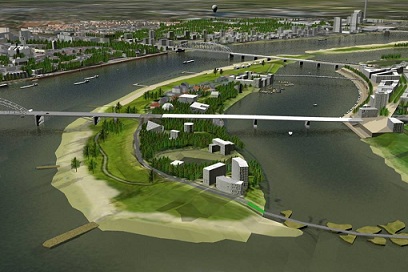
As part of the course Understanding Rural Development, a group of master students from France, Cameroon, Taiwan and the Netherlands plus staff from the Rural Sociology Group went on a study trip to Nijmegen-Lent to learn more on the developments in this area. The group was met by Karolien Andela, from the Municipality of Nijmegen. Gathered around a scale model of the area in the information centre De Waalsprong, she informed us on projects such as: ‘Space for the river Waal’, ‘the Waal Jump’ (new urbanisation in Lent), the ‘Waal front’ (reconstruction of an industrial area) and landscape development.

Her story revolved around the central meaning of the river Waal in the expansion of the city. The carrying capacity of the river is becoming too limited for the amount of water flowing through. In 1995 this already led to flooding in several parts of the city and as the water level tends to rise this is expected to have more negative consequences in the future. This is of course a concern to both local government as well as its citizens. In the past, the response to rising water levels in the Netherlands has been to strengthen dikes and increase its height, but this is not a long term solution. Therefore on a national level, the government decided to change its approach to this threat and introduced the idea to give more space to the river (“Geef de Rivier de Ruimte”) meaning to give the river more capacity. This is done for example by returning flood lands to the river, construct side dams, dig channels along the polder or streamline vegetation. The national government appointed 39 spots where this concept should be applied, concerning the rivers Maas, Waal and Lek. Most of these projects are located in predominantly rural areas but in this case it is right in the middle of a city.

In the case of Nijmegen, the suggested plan by the government entailed to relocate the existing dike more land inwards and in addition dig a channel in front of it to increase the capacity of the river and thus lower the water level. As a result, an island is created which will give opportunities for housing, recreation and cultural activities as well as nature development.

At first this plan was faced with a lot of public opposition as it implied the removal of houses and farming enterprises as well as other negative impacts such as a rise in the ground water level. The group of protesters even came up with an alternative plan which was accepted by the city council but eventually rejected by the national government who favoured the original plan. Initially the city was reluctant with this decision but managed to change it into an opportunity for urban development and even get the necessary public support. One of the factors enabling this public support was the creation of a platform that is involved  in different stages of the plan development and gives voice to various interest groups including a group of affected households.

The group from Wageningen was interested in aspects like: What is the effect of the plans on local farmers? Are the planned green spaces in the new part of the city going to be interconnected or just loose patches of green? How do the citizens of the village of Lent feel about the plans as they suddenly becoming part of a city? How are the urban planners going to create a shared feeling of identity between the inhabitants of the old and the new part of the city? What are the effects of the economic developments on the plan? And are sustainability concepts  taken into account in the design of the area and its houses?

After this informative talk by the Municipal spokesperson, the group took a short stroll over the bicycle bridge that connects the city of Nijmegen with the village of Lent. From here the group could see, with a bit of imagination, what the effects of the planned developments will be. Suddenly it became clear which households were going to be on the  “wrong” side of the new dike and will not be able to escape the new course of the river.

To voice your opinion about the plans you can interact with the project team on twitter (www.twitter.com/waalsprong) or follow the developments on YouTube (www.youtube.com/waalsprongnijmegen). The work is planned to start in 2013.

PUREFOOD – 12 vacancies for ESRs are open

As mentioned in an earlier post on this weblog, the Rural Sociology Group has been granted the the coordination of a Marie Curie Initial Training Network  entitled ‘Urban, peri-urban and regional food dynamics: toward an integrated and territorial approach to food (PUREFOOD)’ funded by the European Commission’s Seventh Framework PEOPLE program. The objective of PUREFOOD is to train a pool of 12 early-stage researchers (ESRs) in the socio-economic and socio-spatial dynamics of the (peri-)urban and regional foodscape. The PUREFOOD network is centred around food as an integrated and territorial mode of governance and studies the emergence of the (peri-)urban foodscape as an alternative (as opposed to a globalised) geography of food, including the ways in which, and the extent to which, sustainability aspects generally considered to be intrinsic to the alternative food geography are incorporated by the more conventional food companies.

As of now all 12 PUREFOOD research vacancies have been published (or soon will be) by the host universities. For information about the ESR vacancies and application guidelines, you can download the PUREFOOD vacancies leaflet. For more information about the objectives, training and research approach and training program of PUREFOOD you can download the PUREFOOD information pack for prospective ESRs. The deadline for application is 3 January 2011.

Eligibility criteria

The enhancement of transnational mobility to improve career perspectives of early stage researchers is the main goal of the Marie Curie Initial Training funding. To achieve this objective the following eligibility criteria for prospective ESRs have been formulated:

  • You are eligible as an ESR if you are, at the time of recruitment (i) in possession of a university degree, and (ii) have a maximum of four years of full-time research experience, including any period of research training. This is measured from the date when you obtained the degree which formally entitles you to embark on a doctorate, either in the country in which the degree was obtained or in the country in which the research training is provided. Please not that ESRs cannot be PhD holders.
  • You are eligible to the position if, at the time of the selection by the host university, you did not reside or carry out your main activity (work, studies, etc) in the country of the host university for more than 12 months in the 3 years immediately prior to your recruitment.

If you have any questions about a vacancy please contact the contact person mentioned in the vacancy announcement. For general question about PUREFOOD please contact me (han.wiskerke@wur.nl).

AESOP; the government in the garden

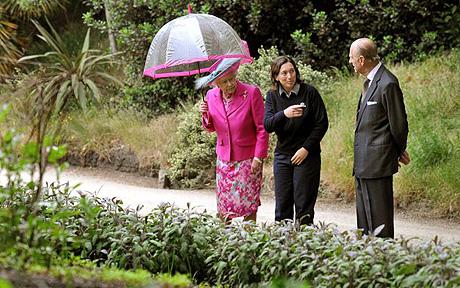
Queen Elisabeth's Vegetable Garden. Photo:John Stillwell/PA Wire

Why is the government in the garden? This was the title of the last presentation in our Working Group Urban Food Governance at the AESOP conference this weekend in Brighton. Some governments are getting into the garden, case studies presented by conference participants showed how and why. Food is ‘becoming public’ a process of taking responsibility for what has been seen until very recently as a pure free-market issue. Public planning and action occurs for various reasons; because of urban health and obesity, the Urban Heat Island effect, food security in poor neighborhoods or in response to civic actions and food movements.

Notwithstanding the promising examples, there is reason for worry too. The political climate has shifted markedly in countries such as the UK and the Netherlands and budget cuts are threatening the sustainable food agenda because this ‘additional’ issue came in last and is the first to be thrown out. A second reason is what seems to me a continuing planner’s identity crisis. The philosopher Hans Achterhuis admits in his recent book that neoliberalism became so much the norm that the process of how it slipped into virtually every policy by small pragmatic adjustments happened unseen even for many of the critics.

Planning seems the opposite of neoliberalism. At the conference, we were stimulated to start planning again, the word master plan fell and was heavily debated. Planning –by default – seems to restrict choice. And free choice is the symbol and myth of neoliberalism with which few people dare to interfere. It is an unproductive and misleading contrast. As if no planning takes place now. Urban planners who decide upon the location for a supermarket are planning, the question is, which criteria are used and which of those do conflict with other public interests? The neoliberal idea of planners restricting choices has encroached the belief that planners can counteract private business interests. They can and should I think. The case studies often showed that current successful examples developed from a particular local  ‘culture’ among those working with urban food planning incorporating public values such as equity, fairness, access and community.

The presentations and keynotes will be made available over the course of the coming week at the conference website