
Voor het boek Boeren in de Food Valley sprak Janneke Blijdorp met vijftien agrariërs uit de Gelderse Vallei. Door schaalvergroting verdween de afgelopen decennia tachtig procent van de boerenbedrijven in dit gebied. De overgebleven boeren zetten in op de internationale voedselindustrie of juist op ambachtelijkheid en de lokale markt. De boeren vertellen in het boek over hun motivatie en toekomstverwachting. Vaak zijn zij al generaties lang met het gebied verbonden. Samen leveren de verhalen een verrassend divers beeld op van veerkrachtige ondernemers. Eric Veltink maakte fotoportretten van de boeren en hun bedrijf. U bent van harte welkom bij de presentatie van Boeren in de Food Valley op donderdagmiddag 24 November van 15.00 – 16.30 uur in De Schaapskooi op het erf van melkveehouder Cor den Hartog, Grote Veenderweg 10, 6741 MC Lunteren. Continue reading
Tag Archives: plattelandsontwikkeling
From production-oriented farming towards multifunctional entrepreneurship – PhD-thesis Pieter Seuneke

On the 9th of May, I (Pieter Seuneke) will defend my PhD-thesis entitled:
From production-oriented farming towards multifunctional entrepreneurship: exploring the underlying learning process
Context
My thesis focusses on the many European and Dutch farming families which, urged by the environmental, social and economic crisis in agriculture, have diversified their conventional production-oriented farming activities by developing new non-farming businesses on their existing farms. Currently, there are many farmers who are involved in agro-tourism, nature and landscape management, processing and selling of farm products and, more recently in The Netherlands, professional (child)care and on-farm education. The development of such new business activities by these farmers represents a shift away from conventional production-oriented farming towards a more ‘multifunctional’ farming model in which the role of agriculture goes beyond mass food production.
Focus
Based on four different studies, all drawing on the empirical work done in the context of the Dutch research project ‘Dynamics and Robustness of Multifunctional Agriculture’ (carried out by the Rural Sociology Group from 2009 to 2011), I unravel the learning process which is considered as underlying the switch towards multifunctionality and multifunctional entrepreneurship. In other words: the process by which farmers (men, women and their families) re-invent themselves as ‘multifunctional entrepreneurs’, gain the necessary knowledge, skills and networks ‘to do multifunctionality’ as well as finding their way on the multifunctional pathway. Apart from its contribution to theory – by bringing this complex learning process to light – my work ultimately supports practitioners (teachers, trainers, advisers) in fostering this, for today’s and tomorrow’s agriculture and rural areas, valuable form of agricultural entrepreneurship.
Supervision
During my PhD, I have been supervised by Prof. Han Wiskerke (professor of Rural Sociology at Wageningen University) and Dr Thomas Lans (ass. prof. Education and Competence Studies, Wageningen University).
The defence
My defence will take place on Friday the 9th of May, at 13.30, in the Aula of Wageningen University. The event is open to those who are interested and can also be followed/seen back on WURtv.
Contact
For more information: pieter.seuneke@wur.nl
Living the peasant way of life in Santa Cruz de la Colina
After a longer posting-pause in which I finalized my first research phase, identifying supporters of rural grassroots development initiatives in the Province of Soto, here a new update of my activities in Colombia:
Time is flying and I am finalizing my second research phase, asking grassroots development initiatives to evaluate the support they are receiving to build joint capacities. To be able to speak with rural development initiatives, I was invited to spend a week with a peasant family in the vereda St. Ana of Santa Cruz de la Colina.
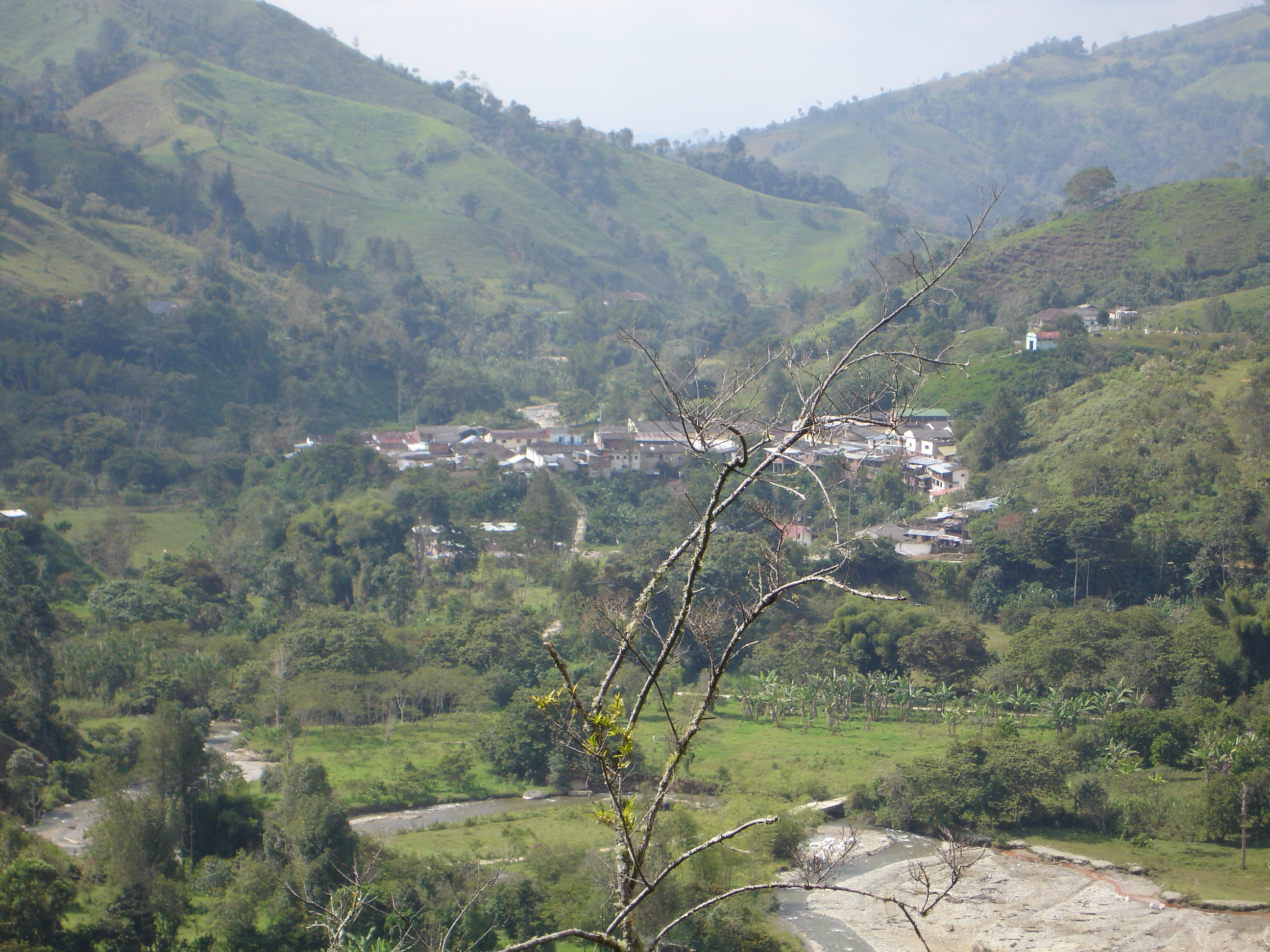
Santa Cruz de la Colina, Matanza, Colombia
DERREG film Westerkwartier
Over the last 3 years, we have been carrying out research in the Westerkwartier concerning global influences on rural regional development.
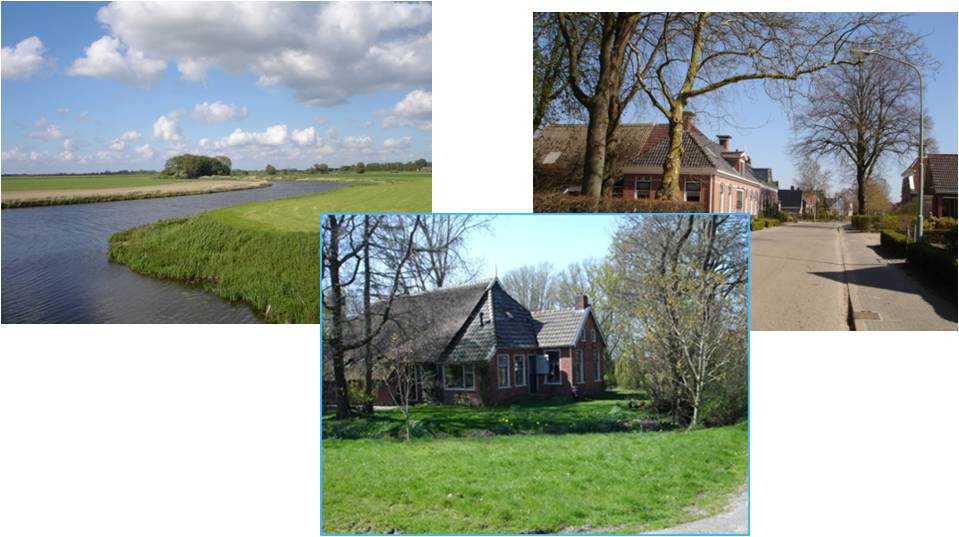
The Westerkwartier, Groningen Province, The Netherlands
This research was carried out as part of the European project DERREG. The Westerkwartier was involved in two work packages of the project: 1. Investigating arrangements through which public support for joint learning and innovation is provided to development initiatives active in the region (WP4) and 2. Investigating global networking activities among rural businesses in the Westerkwartier (WP1).
In the summer and fall of this year, three film students from the University of Aberystwyth in Wales made their way around Europe to visit all case study areas and to film the present development activities. In the Westerkwartier, the film focuses on our research conducted for WP4 (joint learning and innovation). In this film, several supporters as well as the beneficiaries were interviewed. Their stories describe the development activities in the Westerkwartier very lively and give a feeling of the enthusiastic and motivated engagement of the denizens in developing their Westerkwartier. The film is available on YouTube and can be viewed here. Enjoy!
Rural regional learning in the Comarca de Verín, Galicia, Spain
Within the European research project DERREG, we are investigating how public policy can best be arranged to stimulate capacity building within development initiatives operating at grassroots level in rural areas across the European Union.
To find out how public policy interventions can best be arranged, we and our research partners have spoken to various stakeholders in different rural regions across the European Union to find out how they intend to support and facilitate learning and innovation and- most importantly- how the support and facilitation agreed upon is actually provided to the grassroots development initiatives. To find out what is working well and what isn’t working well yet, we have spoken to a number of grassroots development initiators in the participating DERREG case study areas and ask them to evaluate the current support and facilitation received.
To be able to compare the results obtained in the different case study areas, I have travelled to Alytus County, Lithuania in October and Oberlausitz, Germany in December of 2010. In January of this year, I was able to visit our colleague Lola Dominguez Garcia of Universidade de Vigo in the Comarca de Verín in the South-West of Galicia, Spain. In this blog, we intend to share our experiences. Continue reading
 Rural Sociology Wageningen University