Video explaining design of Garden city Vreewijk (in Dutch)

Het Portaal, a socially engaged communication advice bureau in Rotterdam, just released a video explaining the making of the garden city Vreewijk in Rotterdam.

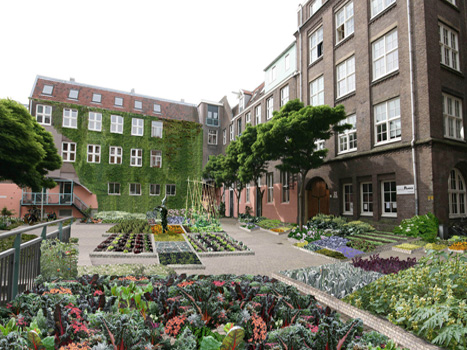
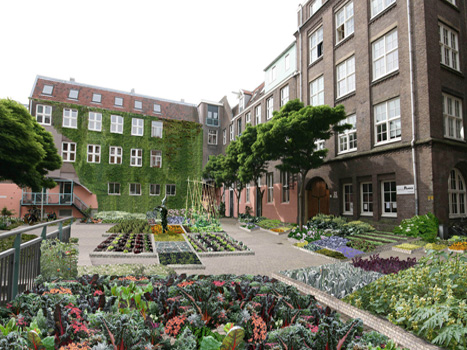
Architecture historian Marinke Steenhuis explains the background of the garden city concept and comments on the design of Tuindorp Vreewijk, the first realisation of this concept in The Netherlands. Garden cities were an enlightened response to the deplorable living conditions of factory workers during the early stages of industrialisation. Workers were supposed to live in well designed but efficiently built houses, in blocks with thoughtfully located backyard gardens and communal green spaces. They were supposed to grow their own vegetables and children could play in public green areas, where once there were meadows and cows on the Isle of Ijsselmonde, at the left bank of the river Maas.   

Prive (moes)tuinen en gemeenschappelijk groen

Het Portaal developed a project, sponsored by building society Com.Wonen, to produce a whole series of videos about the transformation of Vreewijk, a much debated subject as there are widely differing views on how this prachtwijk (beautiful district) of Rotterdam needs to be retrofitted to face the challenges of the 21 first century.

Wanted: Students for an international experience!

Every year, the Rural Sociology Group participates in a two week intensive programme on rural development in the EU. A diverse group of students from various European countries (a.o. Portugal, Poland, Germany, Hungary, Italy, Spain, Lithuania, Slovenia) work together on a case study. Through lectures and field trips scientific and practical knowledge will be aquired and then implemented in the case study analysis. See past experiences of Marlies, Petra and Wiebke
 
This year the IP is organised by the university of Padova and takes place in San Vito Di Cadore in the Italian Dolomites. The general topic is: “the role of agriculture in territorial identity and competitiveness of rural areas”. More specificly, the general question is related to how these (territorial identity and competitiveness) contribute to rural development in the Dolomites (Alps region). For more information on the content see below. 
 
Are you a student of Wageningen University and looking for an international learning experience? Then sign up for two intensive weeks from 3 to 16 April 2011! For subsciption or more information contact Els Hegger (els.hegger@wur.nl). 
 

Students, Broilers and Sustainability

Last week about 60 Msc students followed a week on socio-cultural sustainability of organic production chains, as part of the course ‘Analysis and Management of Sustainable Organic Production Chains’. Each week of the course focused on a specific component of sustainability (consumer, socio-cultural, environmental, economic), given by a different chair group. Last  week was under supervision and teaching of our Rural Sociology group.The lectures and assignments focused on socio-cultural sustainability and discussed chain perception from a societal point of view and the context dependency of indicators for socio-cultural sustainability.

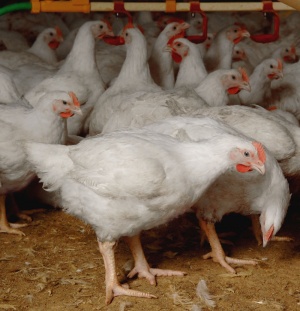
During the course, the students worked in multidisciplinary and multicultural groups of 6 students. Each group represented a stakeholder in the broiler production chain (e.g. fodder company, farmers, retailers, animal welfare organization, slaughterhouse). Of the 60 students, only 1 student had a background in sociology. Others were involved in economics, agronomy or other natural-science based disciplines. Consequently, it was challenging for many of the students to change their way of thinking and reasoning to a more sociological mindset.  Moreover, one week is extremely short to do this. This resulted in hard working students and heated debates among group members.

By the end of the week, the students were requested to  – on the basis of earlier assignments that week – come up with actions that would make the broiler production chain more socio-cultural sustainable  from their stakeholder perspective. Several groups raised suggestions  like shorter production chains, more regional production and stronger embeddedness in the region. Although these themes were not explicitly tackled during this week, I was happy to hear these suggestions, because our Rural Sociology group is engaged in such themes.  

Overall, it was a week of hard working – for the students as well as the teacher 😉 – but when I look back, it makes me happy that the students themselves came up with interesting and creative ideas in just one week!

Urban Agriculture: Havana as inspiration for the Hague

Yesterday the movie ‘Borders in Our Mind’ about urban agriculture in Havana and the Hague had its premiere at Stroom in the Hague. The documentary was made by artists Annechien Meier and Gaston Wallé. Central theme of Annechien’s work is the communication between people in urban and rural environments. With her installations she tries to rouse people’s curiosity about their interaction with the environment around them. Producing food in the city, is one way of doing this. She departs from the idea that allotment gardens reflect values of a culture in a specific time and place and give possibilities for people to come in touch with each other and the (natural) world around them.

Annechien also started the project ‘Panderplein’ in the Brouwersgracht in the Hague. Here, she built a vegetable garden in cooperation with the inhabitants. Since this summer, the first vegetables have been harvested! It is amazing and wonderful to discover such a green spot in the center of the city, and moreover the project contributes to social cohesion in the neighborhood.

For the film ‘Borders in Our Mind’, Annechien went to Cuba, Havana, to learn more about the possibilities for urban agriculture. Havana has a history of urban agriculture since the 1990s  due to petrol shortages, food shortages and economic crisis. Today more than 50% of Havana’s fresh produce is still grown within the city limits. No wonder Annechien choose this city to visit as inspiration for her work in the Netherlands. In the one-hour- movie many different forms, features and possibilities of urban agriculture pass in review. The result is indeed inspiring for anyone who is engaged in or concerned about food production in urban areas.

Boerenwijsheid en waarden van het land

Op vrijdag 15 oktober werd in Berg en Dal het prachtige boek Boerenwijsheid; inspiratiebron voor een duurzame samenleving, gepresenteerd van Anselm Grün, Ton Duffhues en Hein Pieper.

Anselm Grün is een Duitse Benedictijer pater, bekend schrijver van spirituele boeken, referent in spirituele thema’s, geestelijk verzorger en cursusleider voor meditatie en contemplatieve trainingen. Hij is tevens abt en zakelijk directeur van een klooster, waar hij duurzaamheid niet alleen predikt maar ook in praktijk brengt: de kloosterboerderij werd binnen enkele jaren CO2 neutraal.

Tijdens een workshop waaraan ondergetekende mocht meedoen zijn een aantal thema’s geformuleerd die vervolgens aan Grün zijn voorgelegd met het verzoek essay te schrijven. Ton Duffhues en Hein Pieper, beiden werkzaam voor  het project Waarden van het land, hebben het boek gecomplementeerd met essays  over waarden en boerenwijsheid. Het boek beschrijft de thema’s 1) Spiritualiteit en landbouw 2) Persoonlijke ontwikkeling 3) Waarden en normen-ethiek van het boerenwerk 4) Landbouw en samenleving 5) Verantwoord ondernemen en duurzaamheid en 6) Aanzetten voor een hedendaagse spiritualiteit. Grün laat zich niet alleen inspireren door het katholiek-christelijke gedachtengoed maar ook door leermeesters als Lao Tse en Griekse filosofen.

Continue reading