
Food Chains – viewing and debating fair food issues, April 23 19.00 C222 Forum
Image

Feeding 9 billion by 2050?: A critical review of international policy proposals
Food security was thrust back onto the international agenda in 2008 when the FAO declared that for the first time, more than 1 billion people were going hungry. At this moment of enhanced crisis, others looked ahead and asked if we have trouble feeding the world’s 7 billion people now how will we feed the estimated 9 billion in 2050? This focus on feeding 9 billion by 2050 resonated with international policy actors who responded with multiple strategies to potentially address this problem.
This BSc thesis will undertake a systematic literature review of the problem framings and policy proposals that have been advanced to address this challenge.
The thesis student is expected to:
Interested?
Contact Jessica Duncan jessica.duncan@wur.nl
On the 16th of March 2015 the MSc course ‘Sociology of Food Provisioning and Place-based Development’ (RSO-31806) starts. Students that want to participate in this course can contact the course coordinator Han Wiskerke (han.wiskerke@wur.nl) as the deadline for online registration has passed.
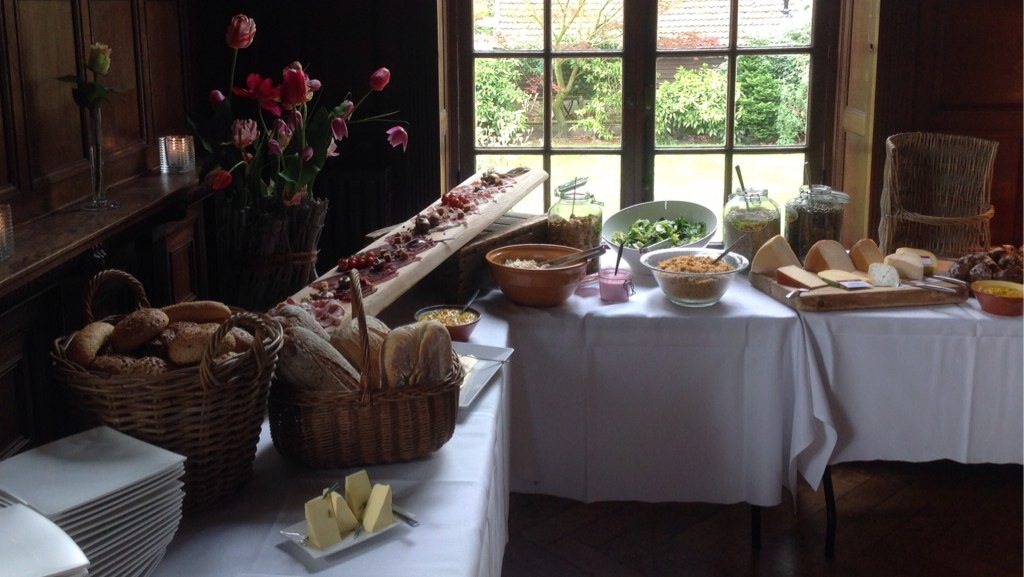
The course aims to provide a theoretical, empirical and methodological understanding of place-based development processes, with an emphasis on food provisioning and rural and territorial dynamics in urbanizing societies. The course is based upon recently completed and ongoing research activities within two of the main research domains of the Rural Sociology Group:
Being based on recently completed and ongoing research projects implies that this course provides an up-to-date insight into current theoretical debates and research findings. These are mainly derived from international collaborative research programmes (see ‘our projects’), carried out by multi-disciplinary research teams in different countries inside and outside Europe. Within and linked to these programmes the Rural Sociology Group has approximately 30 ongoing PhD projects. Some of these projects will also feature during this course.
The course is divided into four main themes: Continue reading
By Hilde-Marije Dorresteijn, MSc International Development Studies at Wageningen University
For my MSc thesis within the RSO chair group I did research on street food in Ghana. During the master programme I became more and more interested in food issues and its possibilities for local development. These possibilities are beautifully illustrated by the following quotation with which I started my thesis:
“Food provides an answer. Our landscapes and cities were shaped by food. Our daily routine revolves around it, our politics and economies are driven by it, our identities are inseparable from it, and our survival depends on it. What better tool, then, with which to shape the world.” (Steel, 2012 in Viljoen & Wiskerke, 2012:36).
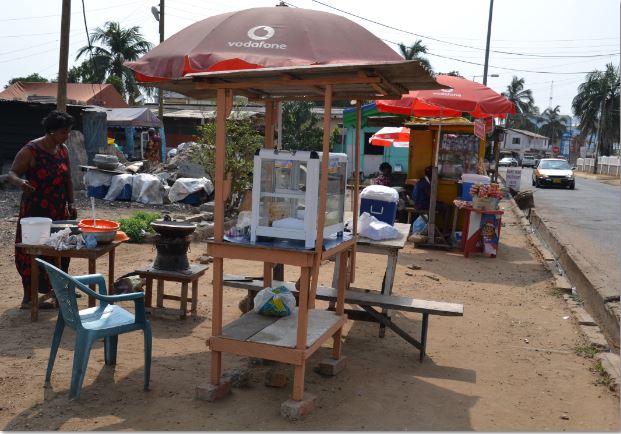
Despite its importance I found little scientific research on street food, a phenomenon that is particularly relevant in developing countries. Street food can be defined as: ‘ready to eat food or beverages prepared and/or sold in the street and other public places for immediate consumption or at a later time without further processing or preparation’ (FAO, 2012). I decided to look into this topic within the context of Ghana’s capital Accra. An estimated 85% of the urban population in Ghana patronize it, cutting across socio-economic boundaries and thus also designating the important cultural role of street food In Accra, from early morning till late at night all sorts of food are being sold on the streets. Also, there is a great variety in the professionalism of microenterprises. There are many hawkers walking around trying to sell their products, well established enterprises that have fixed stands and seating facilities, and the informal eating houses called ‘chop bars’. Street food make an essential contribution to nutrition of the urban population by providing easily accessible and affordable food, as well as they provide a good livelihood strategy by creating employment and increasing incomes for a large number of urban dwellers. Hereby street food thus makes a great contribution to the local economy. This informal sector requires low start-up capital and low levels of education are needed, making it a good business opportunity for especially women.
“The cheapest way to make money, is to cook food. You are a secretary, or you have a shop, and the shop collapses. You can buy a pot, buy silver, cooking utensils, buy water, the pepper, yam and you cook and you’ll get people to buy. Very, very cheap. So day in day out people have been coming into the system. That is why they are plenty. And automatically when you cook, you will get people to buy.” (Mr. Ansong, PRO GTCA, 13 Jan. 2014) Continue reading
The programme committee of the Agriculture in an Urbanizing Society Conference, which will take place in Rome (Italy) from 14-17 September 2015, has opened the call for abstracts. Abstracts can be submitted through the conference system EasyChair until 31 March 2015 for one of the following 23 working groups (click on the working group for description and convenors or download pdf (500 KB)):
After a positive evaluation of the abstract the author will be asked to upload a paper of max 10 pages which will be published online on the website of the conference. There will also be the possibility to submit a short paper of max 2 pages enabling the authors to still publish their results in peer reviewed journals after the conference. Short papers will be published in a book of proceedings. The procedures for the papers will be published on the conference website soon.
 Rural Sociology Wageningen University