From production-oriented farming towards multifunctional entrepreneurship – PhD-thesis Pieter Seuneke

Multifunctional agriculture


On the 9th of May, I (Pieter Seuneke) will defend my PhD-thesis entitled:

From production-oriented farming towards multifunctional entrepreneurship: exploring the underlying learning process

Context

My thesis focusses on the many European and Dutch farming families which, urged by the environmental, social and economic crisis in agriculture, have diversified their conventional production-oriented farming activities by developing new non-farming businesses on their existing farms. Currently, there are many farmers who are involved in agro-tourism, nature and landscape management, processing and selling of farm products and, more recently in The Netherlands, professional (child)care and on-farm education. The development of such new business activities by these farmers represents a shift away from conventional production-oriented farming towards a more ‘multifunctional’ farming model in which the role of agriculture goes beyond mass food production.

Focus

Based on four different studies, all drawing on the empirical work done in the context of the Dutch research project ‘Dynamics and Robustness of Multifunctional Agriculture’ (carried out by the Rural Sociology Group from 2009 to 2011), I unravel the learning process which is considered as underlying the switch towards multifunctionality and multifunctional entrepreneurship. In other words: the process by which farmers (men, women and their families) re-invent themselves as ‘multifunctional entrepreneurs’, gain the necessary knowledge, skills and networks ‘to do multifunctionality’ as well as finding their way on the multifunctional pathway. Apart from its contribution to theory – by bringing this complex learning process to light – my work ultimately supports practitioners (teachers, trainers, advisers) in fostering this, for today’s and tomorrow’s agriculture and rural areas, valuable form of agricultural entrepreneurship.

Supervision

During my PhD, I have been supervised by Prof. Han Wiskerke (professor of Rural Sociology at Wageningen University) and Dr Thomas Lans (ass. prof. Education and Competence Studies, Wageningen University).

The defence

My defence will take place on Friday the 9th of May, at 13.30, in the Aula of Wageningen University. The event is open to those who are interested and can also be followed/seen back on WURtv.

Contact

For more information: pieter.seuneke@wur.nl

SOLINSA and FarmPath – joint Final conference in Brussels, December 3 2013

SOLINSA Final conferenceDecember 3 the EU-funded reserach projects FarmPath and SOLINSA will jointly present their findings at a final conference in Brussels. A detailed programme is available at the www.solinsa.net website. Location: Thon Hotel, Rue de la Loi / Wetstraat 75, B-1040. From 9.00 am till 4.30 pm.

Foodlinks News Issue 2

The latest issue of Foodlinks News is out!

You can read about our visit to the city of Vitoria-Gasteiz in Spain where we had a meeting with the City Council about new initiatives on organic peri-urban agriculture. We also share with you some stories from members of the urban food strategies community of practice (CoP). What kind of value did they get from participating in this CoP?

Furthermore you can see a list of upcoming and past events, new library resources as well as a list of some of our new members.

Would you also like to become a member? Sign up for the Short Food Supply Chain, Revaluing Public Sector Food Procurement or Urban Food Strategies CoP!

A key characteristic of the Foodlinks project is that it brings together different types of knowledge and experience from research, policy and civil society representatives. Foodlinks organises a collective process of sharing and integrating this knowledge around particular problems of food systems. You can read more about Foodlinks on our website and if you would like to receive the next edition of Foodlinks News you can subscribe here.  

SOLINSA video: what is SOLINSA about in a nutshell

Februari 1 and 2 we had our third SOLINSA project meeting in Paris. Apart from discussing the proceedings in the different Workpackages (see www.solinsa.net for more information and results) we had a workshop dedicated to making Participatory Video’s. In the workshop lead by Catcher Media and Chris High from the Open University, we as team of researchers learned to make our own participatory video: what is SOLINSA about?  This resulted in a short video ( 3 minutes only) that has been published at the front page of the SOLINSA website (www.solinsa.net) and at You Tube. If you want to get a quick impression of the SOLINSA project and our team have a look:

First results: analysis of the context (WP3)

Wageningen University (in casu: Communication and Innovation Studies and Rural Sociology Group) was the lead partner of WP3 Understanding the context. WP3 aimed at analysing the trends, relation to LINSA’s and structure of the Agricultural and Knowledge Systems in the participating 8 countries through desk study and a participatory SWOT analysis. This has resulted in two reports accessible at the website:

  1. A synthesis of the comparative analysis of the Agricultural Knowledge Systems in 8 countries
  2. Review of relevant EU Policy documents on innovation

For further information with regard to WP3 one can contact Frans Hermans  (Frans.Hermans@wur.nl).

Next event is the international dissemination workshop on the future of AKIS in Europe on March 5, 2012 in Brussels. The workshop is organised in partnership with the collaborative working group on Agricultural Knowledge and Information Systems (AKIS) of the Standing Committee on Agricultural Research (SCAR). Proceedings of the seminar will be available for download after the 15th of March. At the workshop a summary of the WP3 results will be presented.

Living the peasant way of life in Santa Cruz de la Colina

After a longer posting-pause in which I finalized my first research phase, identifying supporters of rural grassroots development initiatives in the Province of Soto, here a new update of my activities in Colombia:

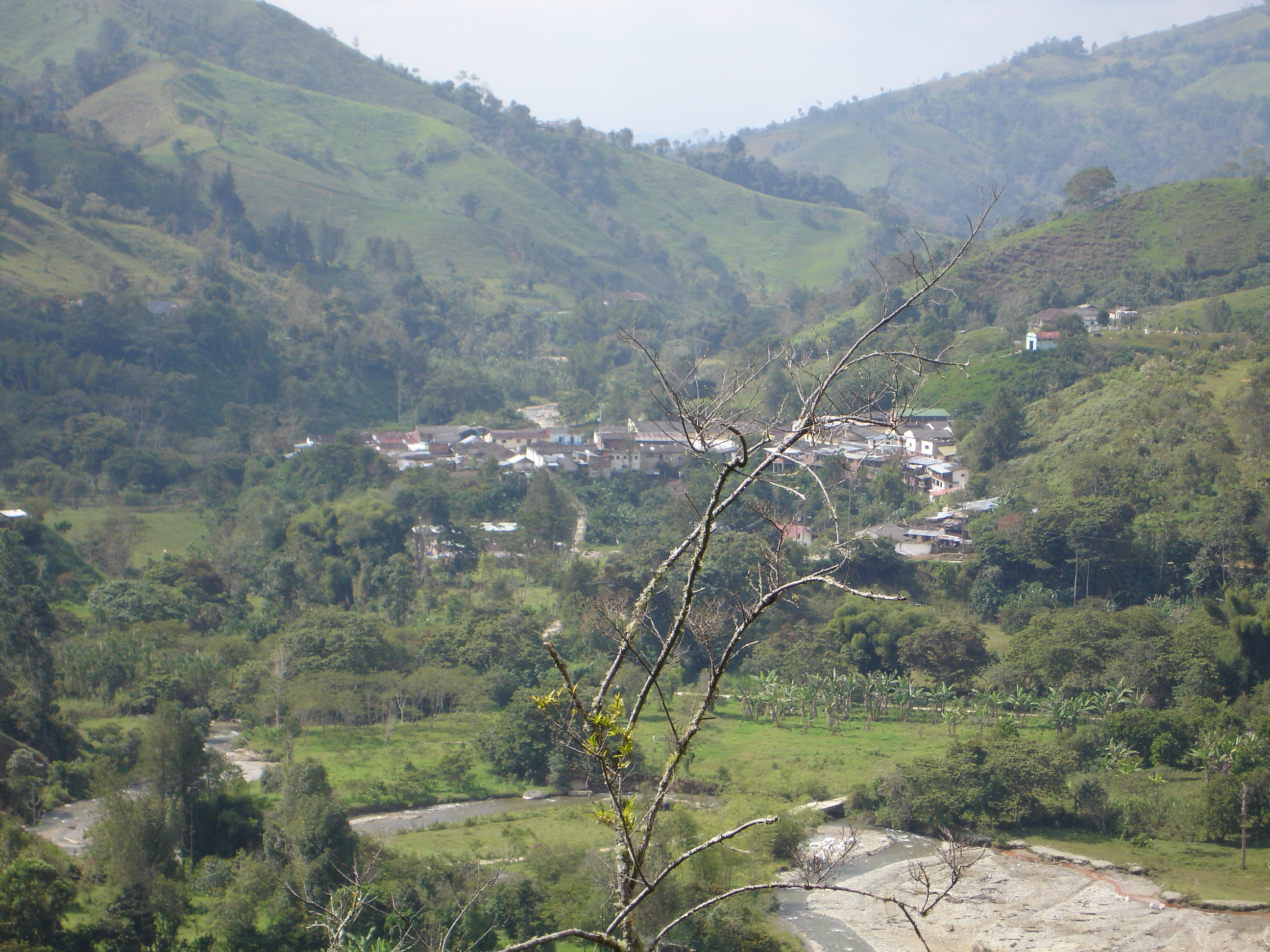
Time is flying and I am finalizing my second research phase, asking grassroots development initiatives to evaluate the support they are receiving to build joint capacities. To be able to speak with rural development initiatives, I was invited to spend a week with a peasant family in the vereda St. Ana of Santa Cruz de la Colina.

Santa Cruz de la Colina, Matanza, Colombia

Continue reading