Research Dispatches: Karibu mzungu!

This post is the first of three reports  by RSO student Florian Neubauer about the MSc research he is conducting in Kenya. Florian has kindly agreed to blog about his research and to provide us with a review of :

  1.  First reflections on researching in Kenya and his host institution, Maasai Mara University.
  2.  Living among the Maasai with a focus on their culture and way of living.
  3.  Results of the thesis. 
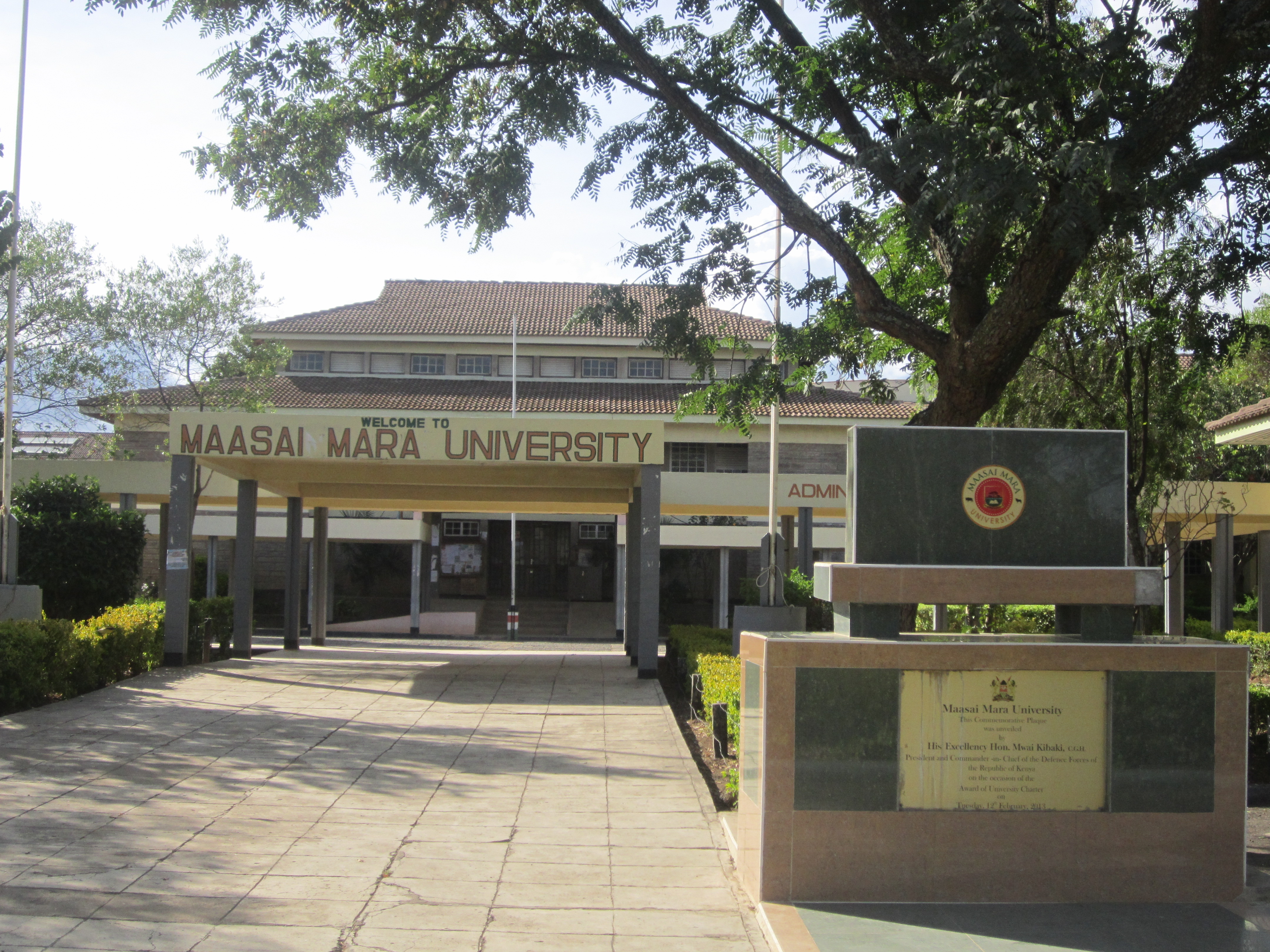
Main entrance of Maasai Mara University with the student library in the background.

Main entrance of Maasai Mara University with the student library in the background.

Part 1: Introduction and Maasai Mara University (MMU)

`Karibu´ and ´karibu mzungu` – `Welcome´ or `welcome white person´ – are probably two of the most frequent sentences, I have heard here, since I arrived in Kenya around three weeks ago. Here in the south of the country, I am conducting the field work for my master thesis with RSO group on Understanding changes in land tenure and livelihoods among the pastoral Maasai in southern Kenya.

Over the past decades, pastoral Maasai have been increasingly exposed to various pressures to their pastoral livelihoods such as demographic development, the spread of national and games parks or an increased privatization and commercialization of land. One of the biggest pressures and also the focus of my research are changes in land tenure, or more specifically, transformation processes from formerly communally owned land towards increasingly individualized and privatized land (ownerships) – a development thatroughly began during the 1970s and 1980s and continues since then. I am interested in investigating how this transformation in land tenure is shaping and impacting Maasai pastoral livelihoods and Maasai households on a local level, with a specific focus on implications and impacts on local food (in)security. I will explore the current situation at the local level, as well as retrospectively the past decision-making processes of households, in order to understand when, how and why a household decided for instance (not) to change, diversify or maintain a certain livelihood strategy.      Continue reading

Les Indomptables : An ethnography of niche novelty production in Walloon Agriculture (MSc-thesis)

By Vincent Delobel, MSc Regional Development & Innovation Wageningen University

My ancestors from both sides have been farming for ages. Peasants have continuously held this as ancestral as salutary art of nourishing “débrouillardise” (lit. problem-solving creativity) for ages; they have fed others in the plain as in the mountain, under dictatorship as under “democracy”. However, farmer newspapers today say we may disappear soon; ‘eternal’ peasant population rushes to the bottom.

Are we really going to disappear? How and why did we get to this situation? What is going on in farms today? What are farmers’ plans and projects? What futures do these projects lead to? This is in short the structure of my MSc-thesis ‘Les Indomptables : An ethnography of niche novelty production in Walloon Agriculture’. This alarming observation motivated me to go and see on farms in order to better see, understand phenomena going on in the reality of farms, and to reflect deeper on underlying issues. Thus, I phoned a few cousins and other colleagues and told them I was interested in their “inventivité” (inventiveness), their own way of doing things; I asked them to go and work with them in their own farm, in their daily activities -whatever it would be- to understand why and how they are looking to change their routines, i.e. for novelties.

Continue reading

Waarde van streekproducten voor het Groene Hart – een case study

Welke waarden voegen (Erkende) streekproducten toe aan het Groene hart? In navolging van een eerder ACT-opdracht gaan twee studenten dit in kaart brengen voor drinkyoghurt van de Veldhoeve, een officieel erkend Groene Hart streekproduct dat sinds aantal weken exclusief wordt verkocht in Hoogvliet supermarkten. Welke relaties onderhoudt de Veldhoeve en welke waarden voegt het bedrijf met het produceren van streekproducten toe aan het Groene Hart vanuit het perspectief van de relaties? Dat is de opdracht die Miriam Romero en Camilla Ponte komende 4 weken gaan uitvoeren voor o.a. de Stichting Groene Hart Kloppend Hart. Het is een vervolg op een eerdere ACT-opdracht uitgevoerd in het kader van Groene Cirkels: een samenwerking tussen de provincie Zuid-Holland, Heineken en Alterra.

Miriam en Camilla kunnen de medewerking van Nederlandstalige studenten goed gebruiken: bij uitvoeren van de hele opdracht of bij enkele onderdelen ervan. Zoals faciliteren en verslag doen van een focus-groep met alle relaties. De studenten krijgen hiervoor 6 ects via een capita selecta vak van Rurale Sociologie. Wie interesse kan zich melden bij dirk.roep@wur.nl of bij ilse.markensteijn@wur.nl coordinator Kenniswerkplaats Wageningen Universiteit. Deze opdracht kan ook een opstap zijn naar een stage of een afstudeeronderzoek. Niet alleen voor studenten van Wageningen Universiteit.

Thesis: evaluation of temporary use of wasteland in Wageningen

nobelveldje.wordpress.com

nobelveldje.wordpress.com

The civil initiative ‘Kerngroep Nobelveldje’ is very satisfied with its role and social activities for temporary use and food growing on wasteland ‘Nobelveldje’ in a Wageningen neigbourhood. They want to share their enthusiasm with people that have similar ambitions in their own neighborhood. However, first the ‘Kerngroep Nobelveldje’ wants to find out how their initiative is perceived in the neighborhood. The idea is to use these results to stimulate others that have similar ambitions. The ‘NatuurSUPER’ organization has been a supporter of civil initiatives like the ‘Nobelveldje’. This organization wants to evaluate their role in this kind of civil initiatives.
Hence, the Kerngroep Nobelveldje and NatuurSUPER have formulated the following research goals:
• To explore the range of qualitative and quantitative methods for the evaluation for this kind of civil initiatives, with a focus on neighborhood commitment and satisfaction
• To identify the best suitable and feasible method
• To test the method in the case of Nobelveldje
• To discuss the results in the context of the strategic intention of the use of these data
• Advising the NatuurSUPER organization in the use of an evaluation method fort their specific question.
The ultimate goal of the thesis can be to design a research method to value civil action in public space. If you are interested in the interface between participatory models, learning-in-action and civic action in urban agriculture, this could be your chance to do relevant research for external commissioners. For more information: Contact person for this project: jeroen.kruit@wur.nl

Puur & Eerlijk zonder zegeltjes – Topkoks over voedsel en koken

Door MSc-student Guido Verheul

Puur en Eerlijk zonder zegeltjes Koken staat volop in de belangstelling. De afgelopen jaren zijn kookprogramma’s op televisie als paddenstoelen uit de grond geschoten en onlangs is er zelfs een ‘kookkanaal’ opgericht waar men 24 uur per dag terecht kan voor lekkere recepten of documentaires over voedsel. Ook topkoks worden gelauwerd om hun kookkunsten in televisieprogramma’s, boeken, tijdschriften, kranten en andere media, wat hun mening maatschappelijk bezien erg relevant maakt. Ik heb daarom besloten om voor mijn MSc-thesis deze topkoks te interviewen. In ‘Puur en Eerlijk zonder zegeltjes; een analyse van de claim op ‘kwaliteitsvoedel’ van Nederlandse topkoks‘ doe ik verslag van mijn bevindingen. Continue reading