Traditional foods at IP in Romania

Two weeks of Intensive Program are currently in progress in Cluj-Napoca, in the North West of Romania. Coming from 7 different countries, 42 students are learning about Traditional foods in relation to micro organisms. The course is international and interdisciplinary, this week they first had lectures in Sensory Analysis from colleagues of France, Belgium and Denmark and yesterday they started with the social science part in which I gave the first lecture on Food Culture & Authenticity.

We started the week on Monday with student presentations of Traditional Foods from their countries which we closed with a tasting session on the many products they brought. I used many of their examples in my lecture yesterday. For example, not one of the products presented was related to the ‘breakthrough’ of new preservation techniques (such as freezing) which developed simultanously with industrialisation. Of course, but without realising I found out, everybody had chosen products that had ‘old’ preservation techniques such as salting, smoking and fermenting.

A product such as sour cabbage was presented as typical for Romania but disputed by other students, for sauerkraut – zuurkool  is a typical winterfood in many Eastern and Northern European countries. Cabbage, Pork, Cheese, Fruits such as plums, Walnuts were among the main ingredients of many traditional foods presented. Traditional because these products are rooted in rural self-subsistance household preservation. Pork, for example, is the pride of Romania. One of the traditional foods presented by a Romanian student group was the Ignat on the 20th of December. On this day, families in rural areas gather together and sacrifice the pig they have kept for this reason. It is a big ritual with particular techniques involved and roles to play for different members of the household. More than once, I heard the ‘joke’ that pork is the vegetable for Romanians.

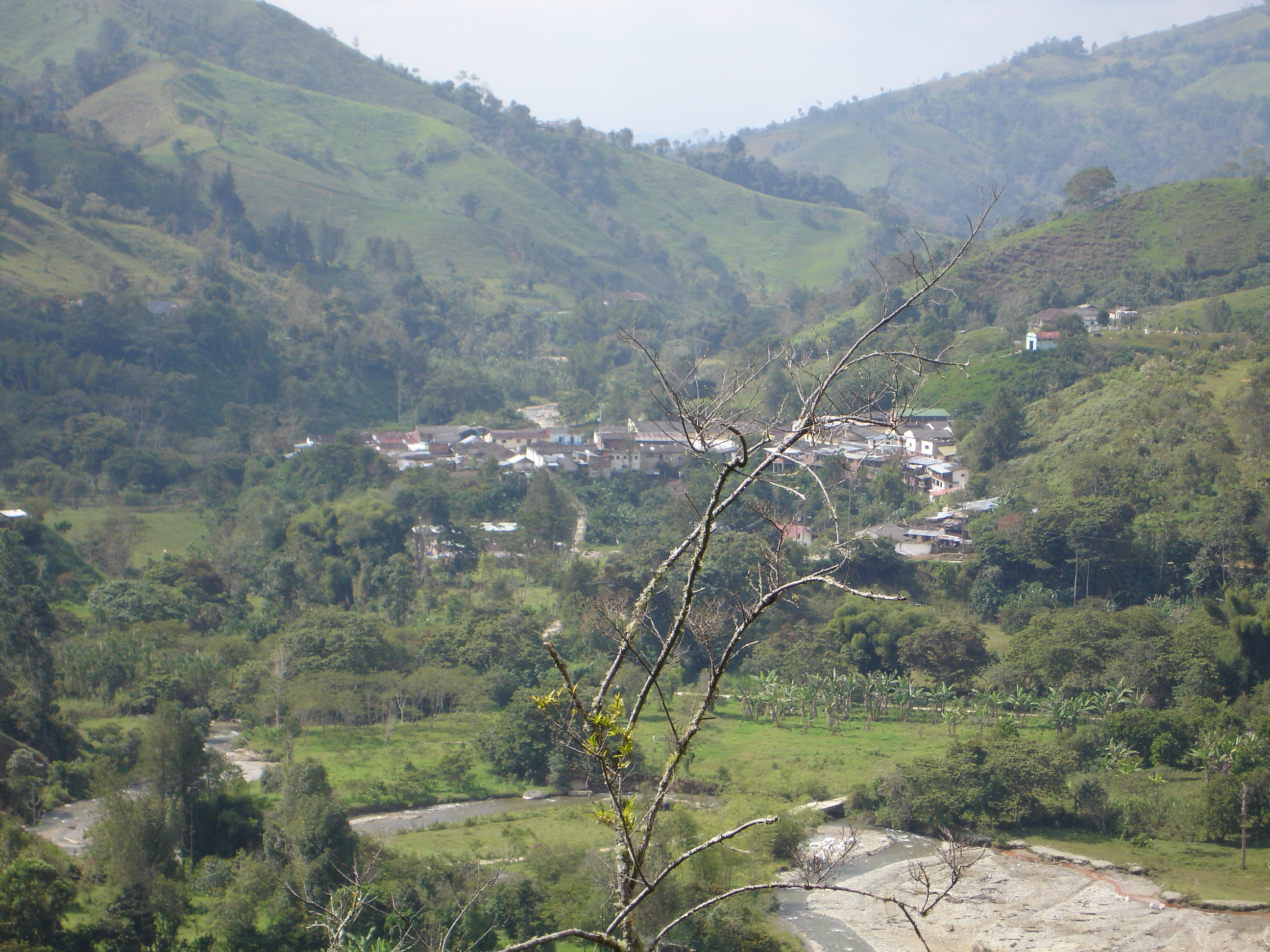
Living the peasant way of life in Santa Cruz de la Colina

After a longer posting-pause in which I finalized my first research phase, identifying supporters of rural grassroots development initiatives in the Province of Soto, here a new update of my activities in Colombia:

Time is flying and I am finalizing my second research phase, asking grassroots development initiatives to evaluate the support they are receiving to build joint capacities. To be able to speak with rural development initiatives, I was invited to spend a week with a peasant family in the vereda St. Ana of Santa Cruz de la Colina.

Santa Cruz de la Colina, Matanza, Colombia

Continue reading

Request for a master student interested in place, landscape and population

The PeerGrouP is a location-art group that specializes in site-specific theatre and visual arts in the northern provinces of the Netherlands. The PeerGrouP consists of a lively mix of theatre makers and artists who are inspired by the landscape, the location and the local inhabitants. The quality of food, ecology, practical knowledge of the landscape, community spirit and the supply of energy are recurring themes within the PeerGroup’s projects.

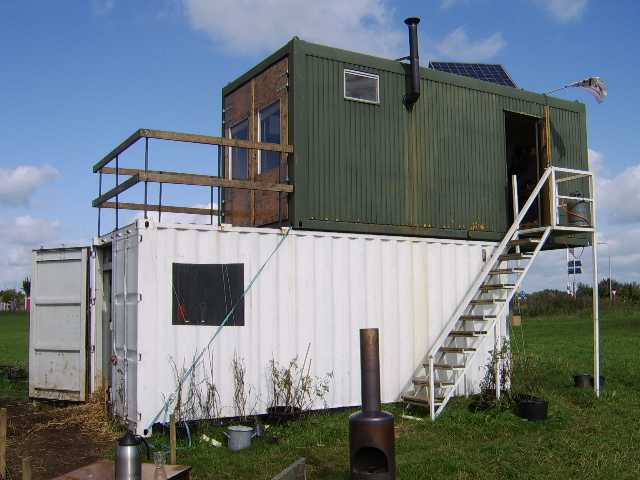
The PeerGroup is looking for artists and researchers willing to participate in their P.A.I.R. (Portable Artist in Residence) project. The P.A.I.R.-project promotes artistic social commitment while focusing attention on man and his surroundings. The P.A.I.R. will be visiting three different locations (Veenkoloniën, Donderen, de Wolden) in the north of the Netherlands (Drenthe) to meet local inhabitants and to investigate their surroundings. In the past three years, the PeerGrouP realized three P.A.I.R.-projects every year. In 2012, the P.A.I.R.’s fourth year, the theme is Landscape Population. The landscape and its meanings in relation to the inhabitants and other users will be looked at on different levels.

The Rural Sociology Group and the Peer Group are looking for a  (preferably Dutch speaking)  master student interested in landscape, place, population and art, who is enthusiastic to do his/her internship or thesis in this site-specific project, starting preferably around August. The student-researcher will actually stay in the P.A.I.R. (see photo) for a while in September, in the area of the Wolden (near Meppel) in the  north of the Netherlands, while doing participative research.

Possible research questions are for example:
– What is ‘sense of place’ for the local population in the Wolden?
– Which meanings to they give to the landscape?
– Do inhabitants experience local identities? Do they have story-lines related the landscape?
– How are meanings, identities and sense of place linked to underlying values of people?
– How can meanings identities and sense of place be translated to recommendations for practice and policy? (people’s participation, community cohesion, networks)

Places are constituted by sedimented social structures and cultural practices, endowed with meaning and the constitution of identities, subjectivities and difference. In other words: culture sits in places. ‘Sense of place’ refers to an individual’s connection with a place (location, building, landscape) and to their experience of place, including different senses (sight, hearing, smell, movement, touch, imagination, purpose and anticipation). It is both individual and inter-subjective, closely connected to community as well as to personal memory and self. Sense of place has many components such as place attachment, place identity, place commitment and dependency, belongingness or rootedness or community connectedness and community cohesion. We will focus here on ‘Sense of landscape’. Sense of place is rooted in underlying values, about what people perceive as important for their quality of life. People value places and express agency and take leadership in shaping their own place. On the local level people reflect on and negotiate the conditions of engagement/participation, rooted in underlying values. If people become more aware of their source of passion, values, feelings and sense making, this can enlarge our ‘cultural repertoire’ and lead to a more inspired use of our environment.

The student researcher will carry out ‘on-site’ participatory research from a development and/or historic perspective on the sense of place and values of the local population in the Wolden in Drenthe, in the early autumn of 2012. The student will potentially cooperate with students from other educational institutes (AOC’s).The research will be supervised by the RSO group (Ina Horlings) and the Peer Group (Henry Alles). If you are interested, please send a mail before March to Ina Horlings (lummina.horlings@wur.nl).

Request for a master student interested in product development and marketing for an organic farm and macro-distillery in Wales

Glynhynod is an organic farm where artisan cheeses are produced, situated in west-Wales and managed by a Dutch family. The firm is highly innovative, applying sustainability guidelines to all their activities and producing food of high quality; several cheeses have received prices on national and international level. The family is now developing the first organic Welsh whisky and an orange liqueur at their newly established organic micro-distillery. They are looking for a master student- preferably one in food technology- who will be able to do an internship and/or thesis inWales. The student should be interested in organic, artisan food production. The student will be during his/her intership:.

  1. actively involved in developing, testing and trying out new liqueur and spirit recipes using organic ingredients and trial batches of different orange liqueurs using different ingredients and different amounts of ingredients. The student will be required to accurately measure the amounts of ingredients e.g. total weight, of oranges, orange peel amounts of sugar etc; ‘age’ the different liqueurs for 3 different periods e.g. 40, day, 50 day and 60 day infusions. The same method will be used to develop various recipes for spirits e.g. sloe gin and seaweed gin.
  2. Doing research on marketing aspects to try out the new recipes such as implementing a sensory evaluation in a real life situation where the public will be asked to judge the product. The student will be expected to develop a statistical sensory evaluation method that will determine which liqueur the public prefers and this liqueur will then proceed to bulk production.

 His/her master thesis can be focused on of the following themes:

  1. Marketing and/or gastronomy: how to enhance the supply of local artisan products in this rural area;
  2. Consumer demands towards locally produced speciality products in west-Wales;
  3. Develop guidelines for food quality and taste of new alcoholic local products
  4. Research on food safety of organic artisan products

 The student will start around the beginning of April 2012 and stay on the farm for 3-4 months in the beautiful setting of the Teifi Valley in Llandysul near Carmarthen, not far from the sea in west-Wales. The research will be supervised by a staff member of the relevant chair group and co-supervised by Ina Horlings (Rural Sociology Group). If you are interested please apply or ask for more information by sending a mail to (lummina.horlings@wur.nl) before the end of February, 2012.

5 DERREG films: Dresden (G), Roscommon (Irl), Comarca de Verin (Sp) and Westerkwartier (NL)

Students from the University of Aberytswyth, assigned by DERREG coordinator Michael Woods and instructed by the respective partners, made video clips of four case study areas to highlight some of the particular developments in these rural regions. The video clips of Comarca de Verin (Spain), Roscommon (Ireland), the Westerkwartier (NL) and the two video clips of Regierungsbezirk Dresden Part 1 en Dresden Part 2 (Germany), are accessible at You Tube. Earlier Wiebke Wellbrock already posted a blog on the Westerkwartier film. Have a look at the DERREG Channel:

The DERREG project has come to an end. Results are published at the resource centre of the DERREG website www.derreg.eu. The online Journal European Countryside will soon publish two special issues on DERREG findings. Ashgate will publish a book based on the case study areas.