Kick-off Horizon 2020 project ROBUST

Recently a Horizon 2020 grant of € 6 million was awarded for a project entitled ‘Rural-Urban Outlooks: Unlocking Synergies’ (ROBUST). ROBUST has started on the 1st of June 2017 and is coordinated by Han Wiskerke of the Rural Sociology Group.

The overall goal of ROBUST is to a) advance our understanding of the interactions and dependencies between rural, peri-urban and urban areas, and b) identify and promote policies, governance models and practices that foster mutually beneficial relations.

The project focusses on five domains of urban-rural relations & interdependencies: 1) New businesses and labour markets; 2) Public infrastructures and social services; 3) Sustainable food systems, 4) Cultural connections, and 5) Ecosystem services. These domains will be studied in 11 place-based living labs: Ede (Netherlands), Tukums (Latvia), Helsinki (Finland), Mid-Wales (UK), Gloucestershire (UK), Frankfurt-Rhein-Main metropole (Germany), Ljubljana Urban Region (Slovenia), Styria (Austria), Valencia (Spain), Province of Lucca (Italy) and Lisbon and Tagus Valley Region (Portugal). Each Living Labs will focus on three domains of urban-rural relations. Domain-specific lessons and experiences will be shared across Living Labs in thematic Communities of Practice (five in total, each covering one of the aforementioned domains of urban-rural relations).

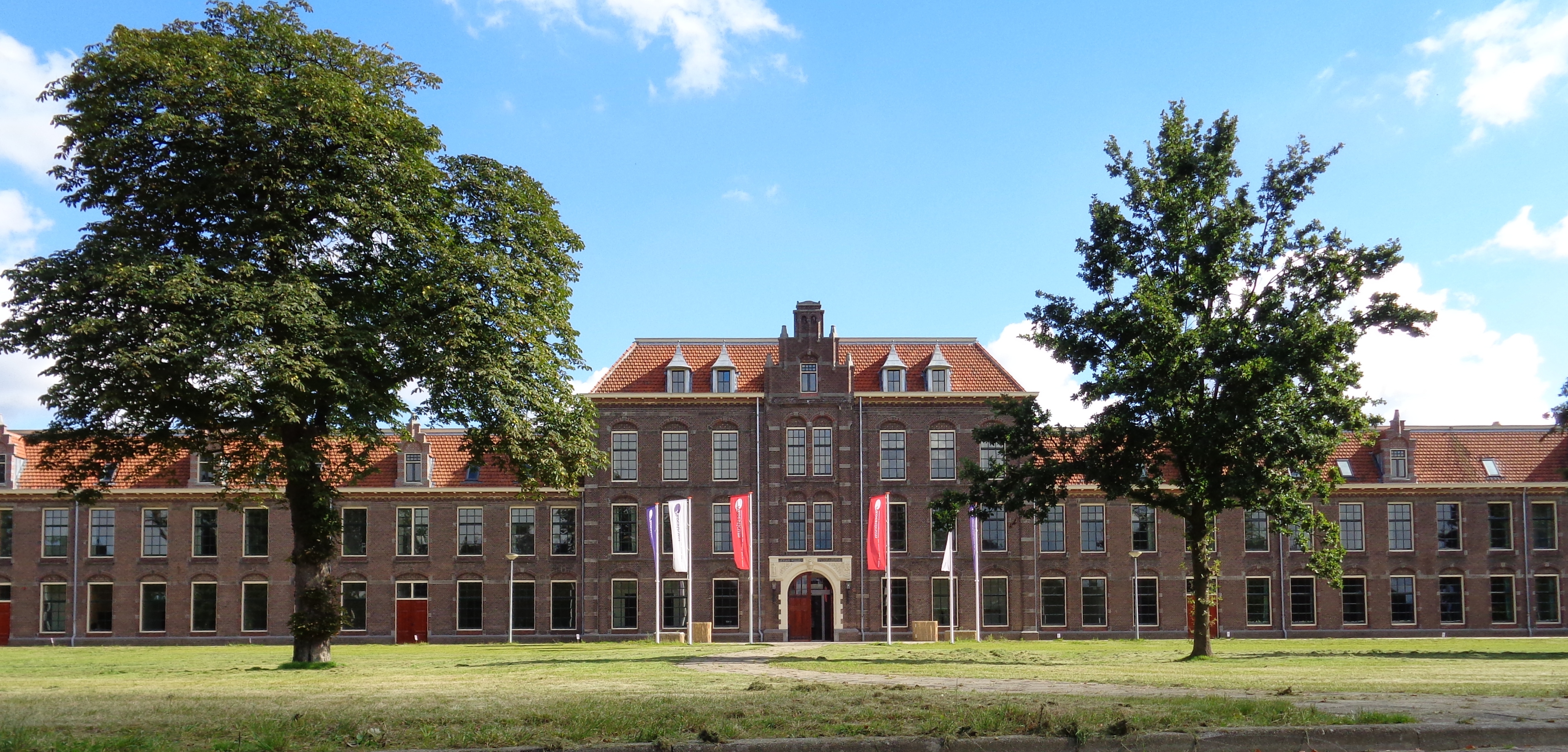
In each Living Lab a research organisation (university, research institute or consultancy firm) will collaborate with a local or regional authority. For the Dutch case the Rural Sociology Group will collaborate with Ede Municipality. In total the ROBUST consortium consists of 24 partners: 11 research organisations, 11 local or regional authorities and two umbrella organisations: the Peri-Urban Regions Platform Europe (PURPLE) and the European Secretariat of the International Network of Local Governments for Sustainability (ICLEI Europe).

The kick-off meeting will take place on 7, 8 and 9 June in the Akoesticum in Ede. The website of the project is expected to be ready by September 2017. For more information about ROBUST, please contact one of the members of the RSO ROBUST team: Han Wiskerke, Henk Oostindie, Rudolf van Broekhuizen, Jessica Duncan and Bettina Bock.

Muddy paddies and peace

By  Joëlla van de Griend

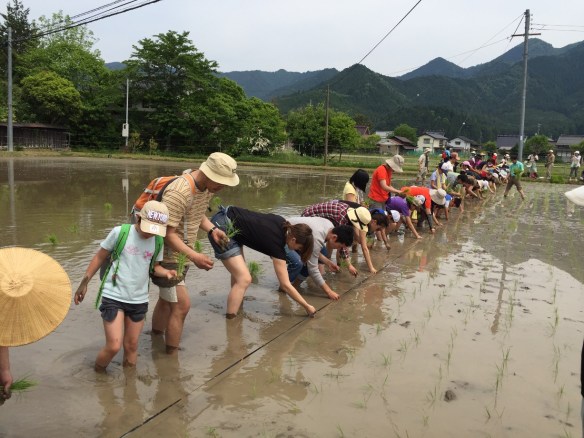
‘Mountains covered with woods’ is used to describe the green area of Keihoku, just outside of Kyoto City. As part of the AGST program, students and faculty members visited a farming event organized by the Shinfujin Kyoto (the new Japan Women’s Association) and the Nouminren Kyoto (Japan Family Farmers Movement).

Rice planting.jpg

Participants transplanting rice: Our academic hosts were not afraid to get their hands and feet dirty!

This event tries to make the connection between farmers and consumers and is visited by a lot of families. We can look at it as a celebration of what the earth has given to both farmers and consumers, illustrated by the waving flags showing the text: ‘Hug the Mother Earth’. For example, one of the farmers I met told me about how he grows his rice in the village at the foot of the mountain without making use of chemicals.

One of the organizations responsible for the event, Shinfujin, is a women’s organization that aims to promote environmental protection and emancipation but is also a movement to oppose the comeback of militarism in Japan. Many of the members of this organization are young mothers who are concerned with a variety of crises that could become a threat to their children’s future. This farming event however was more a celebration than a protest, with a vibrant temporary market with products and food stalls, activities, and the possibility to experience transplanting rice plants into the rice paddies. Continue reading

Book Launch: Yearbook of Women’s History 36 (2016)

yearbook-cover

You are all welcome to the launch of Gendered Food Practices from Food to Waste

  •  Wednesday 22 February 2017 / 15.00-17.00 
  • Impulse / Wageningen Campus, Building 115,Wageningen University
  • Address: Stippeneng 2, Wageningen

Program

There will be coffee and tea upon arrival. Guest-editors Bettina Bock and Jessica Duncan (from RSO) will give a short presentation and hand over the first copy to professor J.M. van Winter, professor emerita of medieval history, expert in food history, and main benefactor of the Yearbook of Women’s History.

Curator of the National Museum of Education Jacques Dane will give a presentation of his contribution to the volume on Domestic Science in and outside the Dutch Classroom in the period 1880-1930.

Registration:  Please RSVP before 19 February to e.c.walhout ( a ) hum.leidenuniv.nl (Evelien Walhout).

About the volume

In nearly all societies gender has been, and continues to be, central in defining roles and responsibilities related to the production, manufacturing, provisioning, eating, and disposal of food. The 2016 Yearbook of Women’s History presents a collection of new contributions that look into the diversity of these gendered food-related practices to uncover new insights into the shifting relations of gender across food systems. Authors explore changing understandings and boundaries of food-related activities at the intersection of food and gender, across time and space. Look out for intriguing contributions that range from insights into the lives of market women in late medieval food trades in the Low Countries, the practices of activist women in the garbage movement of prewar Tokyo, the way grain storage technologies affect women in Zimbabwe, through to the impact of healthy eating blogs in the digital age.

Editors: Bettina Bock and Jessica Duncan (guest-editors), Eveline Buchheim, Saskia Bultman, Marjan Groot, Evelien Walhout and Ingrid de Zwarte


Food forests as an upcoming phenomenon in the Netherlands

Eva de Groot wrote an essay about food forests and how this phenomenon is gaining momentum in the Dutch agriculture. In this blog she shares some of her findings. Continue reading

Boekpresentatie ‘Boeren in de Food Valley’

Voor het boek Boeren in de Food Valley sprak Janneke Blijdorp met vijftien agrariërs uit de Gelderse Vallei. Door schaalvergroting verdween de afgelopen decennia tachtig procent van de boerenbedrijven in dit gebied. De overgebleven boeren zetten in op de internationale voedselindustrie of juist op ambachtelijkheid en de lokale markt. De boeren vertellen in het boek over hun motivatie en toekomstverwachting. Vaak zijn zij al generaties lang met het gebied verbonden. Samen leveren de verhalen een verrassend divers beeld op van veerkrachtige ondernemers. Eric Veltink maakte fotoportretten van de boeren en hun bedrijf. U bent van harte welkom bij de presentatie van Boeren in de Food Valley op donderdagmiddag 24 November van 15.00 – 16.30 uur in De Schaapskooi op het erf van melkveehouder Cor den Hartog, Grote Veenderweg 10, 6741 MC Lunteren. Continue reading